
Table of Contents
Surya (Hinduism), the Sun God, is depicted riding a chariot drawn by seven horses, representing the seven days of the week or the seven colors of the rainbow.
Weekdays and the relation to Gods
Sunday – Sol
| God | Culture | Description | Relation |
|---|---|---|---|
| Sol | Roman | Sun god | Strong |
| Surya | Hindu | Sun god | Strong |
| Kinich Ahau | Maya | Sun god | Strong |
| Ra (or Amun-Ra) | Egyptian | Sun god | Strong |
| Sól (or Sunna) | Norse | Sun goddess | Strong |
| Taiyang Shen (太阳神) | Chinese | Sun god | Strong |
| Utu (Sumerian) or Shamash (Akkadian) | Sumerian/Akkadian | Sun god | Strong |
| Wala | Aboriginal | Solar goddess | Weak |
| Liza | African | Sun god (Vodun tradition) | Weak |
| Shamash | Babylonian | Sun god | Strong |
Monday – Moon
| God | Culture | Description | Relation |
|---|---|---|---|
| Luna | Roman | Moon goddess | Strong |
| Chandra | Hindu | Moon god | Strong |
| Ix Chel | Maya | Moon goddess | Strong |
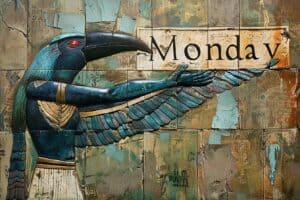
| Thoth (or Khonsu) | Egyptian | Moon god | Strong |
| Máni | Norse | Moon god | Strong |
| Chang'e (嫦娥) | Chinese | Moon goddess | Strong |
| Nanna (Sumerian) or Sin (Akkadian) | Sumerian/Akkadian | Moon god | Strong |
| Bahloo | Aboriginal | Moon spirit | Weak |
| Mawu | African | Moon goddess (Vodun tradition) | Weak |
| Sin | Babylonian | Moon god | Strong |
Tuesday – Mars
| God | Culture | Description | Relation |
|---|---|---|---|
| Mars | Roman | War god | Strong |
| Mangala | Hindu | God of war (Mars) | Strong |
| Buluc Chabtan | Maya | God of war | Weak |
| Set (or Sekhmet) | Egyptian | God (or goddess) of war and chaos | Weak |
| Týr | Norse | God of war and justice | Strong |
| Huǒxīng (火星) | Chinese | Fire Star (Mars), god of fire | Strong |
| Nergal | Sumerian/Akkadian | God of war, death, and destruction | Strong |
| Namarrkon | Aboriginal | Lightning spirit | Weak |
| Ogun | African | God of iron and war (Yoruba) | Weak |
| Nergal | Babylonian | God of war, death, and destruction | Strong |
Wednesday – Mercury
| God | Culture | Description | Relation |
|---|---|---|---|
| Mercury | Roman | Messenger god | Strong |
| Budha | Hindu | God of merchandise and planet Mercury | Strong |
| Kukulkan | Maya | Feathered serpent god, represents knowledge and learning | Weak |
| Thoth | Egyptian | God of wisdom and writing | Weak |
| Odin (Woden) | Norse | Chief god, associated with wisdom and knowledge | Strong |
| Shuǐxīng (水星) | Chinese | Water Star (Mercury), water god | Strong |
| Enki (Sumerian) or Ea (Akkadian) | Sumerian/Akkadian | God of wisdom, water, and creation | Weak |
| Daramulum | Aboriginal | Sky and weather god | Weak |
| Eshu (or Elegua) | African | Trickster god and messenger (Yoruba) | Weak |
| Nabu | Babylonian | God of wisdom and writing | Strong |
Thursday – Jupiter
| God | Culture | Description | Relation |
|---|---|---|---|
| Jupiter (Jove) | Roman | King of gods and god of thunder | Strong |
| Brihaspati (Guru) | Hindu | Teacher of the gods and planet Jupiter | Strong |
| Chaac | Maya | God of rain and thunder | Weak |
| Amun (or Horus) | Egyptian | King of the gods, sky god | Weak |
| Thor | Norse | God of thunder, strength, and protection | Strong |
| Mùxīng (木星) | Chinese | Wood Star (Jupiter), god of wood and growth | Strong |
| Enlil | Sumerian/Akkadian | God of air, wind, and storms | Weak |
| Wandjina | Aboriginal | Rain and cloud spirits | Weak |
| Shango (or Sango) | African | God of thunder and lightning (Yoruba) | Weak |
| Marduk | Babylonian | King of gods, god of storms | Strong |
Friday – Venus
| God | Culture | Description | Relation |
|---|---|---|---|
| Venus | Roman | Goddess of love and beauty | Strong |
| Shukra | Hindu | Teacher of demons and planet Venus | Strong |
| Ix Chel | Maya | Goddess of love, fertility, and medicine | Weak |
| Hathor | Egyptian | Goddess of love, beauty, and music | Weak |
| Frigg (or Freyja) | Norse | Goddess of love and fertility | Strong |
| Jīnxīng (金星) | Chinese | Metal Star (Venus), metal star god | Strong |
| Inanna (Sumerian) or Ishtar (Akkadian) | Sumerian/Akkadian | Goddess of love, beauty, and fertility | Strong |
| Baiame | Aboriginal | Creator god, representing fertility and life | Weak |
| Oshun (or Osun) | African | Goddess of love, beauty, and fertility (Yoruba) | Weak |
| Ishtar | Babylonian | Goddess of love, beauty, and fertility | Strong |
Saturday – Saturn
| God | Culture | Description | Relation |
|---|---|---|---|
| Saturn | Roman | God of wealth, agriculture, and time | Strong |
| Shani | Hindu | God of justice and planet Saturn | Strong |
| Ah Puch | Maya | God of death and the underworld | Weak |
| Osiris | Egyptian | God of the afterlife and resurrection | Weak |
| (No direct equivalent) | Norse | (Bath day in Norse culture: "laugardag") | Weak |
| Tǔxīng (土星) | Chinese | Earth Star (Saturn), deity of the earth | Strong |
| Ninurta | Sumerian/Akkadian | God of agriculture, healing, and hunting | Weak |
| Bunjil | Aboriginal | Creator god and ancestral spirit | Weak |
| Olorun (or Olodumare) | African | Supreme god overseeing time and cosmos (Yoruba) | Weak |
| Ninurta | Babylonian | God of agriculture, healing, and hunting | Strong |
The week of seven days in The Story of Chaldea
Zénaïde A. Ragozin, in The Story of Chaldea (1886), traces the seven-day week, and the dedication of its days to the sun, the moon and the five planets, to the ancient Chaldeo-Babylonians:
To the ancient Chaldeo-Babylonians we owe not only our division of time, but the invention of the sun-dial, and the week of seven days, dedicated in succession to the Sun, the Moon, and the five planets—an arrangement which is still maintained, the names of our days being merely translations of the Chaldean ones.
Zénaïde A. Ragozin, The Story of Chaldea (G. P. Putnam's Sons, 1886), p. 256
Heindel on the names of the days
Max Heindel, the Danish-born occultist who founded the Rosicrucian Fellowship, set out his teaching in The Rosicrucian Cosmo-Conception (1909). He traces the names of the days to the planets and the Norse gods.
Saturn to Venus
Heindel links each day to its planet through the Latin and the Norse names. He gives Tuesday to Tyr and Mars, Wednesday to Woten and Mercury, Thursday to Thor and Jupiter and Friday to Freya and Venus.
Saturday is plainly "Saturn's day"; Sunday is correlated to the Sun, and Monday to the Moon. The Latins call Tuesday "Dies Martis," which obviously shows its connection with Mars, the god of war. The name "Tuesday" is derived from "Tirsdag," "Tir" or "Tyr," being the name of the Norse god of war. "Wednesday" was "Wotensday," from Woten, also a Norse god; it is called "Dies Mercurii" by the Latins, showing its association with Mercury, as given in our list.
Thursday, or "Thorsdag," is named for "Thor," the Norse god of thunder, and is called "Dies Jovis" by the Latins, after the thunder gods, "Jove" and "Jupiter."
Friday is named for the Norse goddess of beauty, "Freya," and for similar reasons, the Latins call it "Dies Veneris," or Day of Venus.
Max Heindel, The Rosicrucian Cosmo-Conception, 3rd ed. (1911), part III, chapter XVI, p. 412

