Egypt is where the written history of the old world seems to begin, yet the Egyptians themselves said their kingdom was far older. The priests counted tens of thousands of years of gods and demigods before Menes, the first human king.
On this page I bring together what I have written about Egypt: the rulers, the gods, the king lists, the monuments, and what the Edgar Cayce readings say about the link with Atlantis.
Start here
A first look at the pharaohs, the gods of Egypt, the name Khem and the idea of Egypt as a colony of an older civilization.
Menes, Djoser, Akhenaten and the pharaoh of the Exodus. I gather what this site says about the kings of Egypt and the claim that they were living gods.
It will be conceded that a considerable degree of astronomical knowledge must have been necessary to reach the conclusion that the true year consisted of three hundred and sixty-five days and six hours
Fast we fled toward the sun of the morning, until beneath us lay the land of the children of Khem.
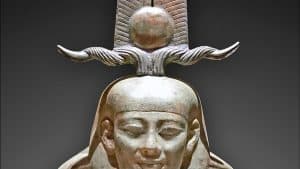
Osiris, Ancient Egypt’s God of the Underworld, symbolized death and resurrection.
Herodotus, the ancient Greek historian, wrote that Egyptian history spanned over 11,340 years before his own time. This assertion is found in his work Histories
In May 2017, researchers from the Max Planck Institute for the Science of Human History, led by Johannes Krause, made a groundbreaking discovery.
The name “Egypt” has an intriguing etymology rooted in ancient history. The term “Hwt-ka-Ptah” is a key element in this linguistic journey.
Gods of Egypt
Osiris, Horus, Anubis, Hathor and Ptah, and how the Egyptians tied their gods to the stars.
Osiris is a central god in ancient Egyptian religion. He is depicted as a mummified figure with green skin, a pharaoh’s beard, legs wrapped in mummy gauze, wearing an atef crown (white crown with ostrich feathers), and holding a crook and flail. Relation Name Parents Geb (earth), Nut (sky) Wife/Sister Isis Brother Set Sisters Nephthys,…
Inpu is the original Egyptian name for Anubis, meaning “to decay” or “to putrefy,” which aligns with his association with mummification and the afterlife.
Harriet: Do you have in your writings anything about Horus? S: Yes. He is what among the Egyptians was the first of the gods to walk upon the face of the earth when it was new. It is said that he … um , how do I put this; mated with the women of the…
Hathor was an ancient Egyptian goddess associated with several aspects of life, including love, beauty, music, fertility, and motherhood.
The first man, in the opinion of the Egyptians, was Hephestus, (afterwards the god Phtha,) who is also celebrated among them as the inventor of fire.
Ptah was often depicted as a creator god who fashioned the world through his thoughts and words.
Ancient Egypt had a rich and complex relationship with the stars, which played a significant role in their mythology, religion, and culture.
King lists and the first dynasties
Manetho, the Turin papyrus and the Chaldean lists give very long reigns before the first dynasty. I follow them from the gods to Menes, Memphis, Abydos and the Hyksos.
Abydos across the site: the cult centre of Osiris, the tomb said to be his, the royal tombs of the first kings, the Osirion behind the Temple of Seti I, the so-called helicopter hieroglyphs and the Atlantis readings of the place.
Memphis in the Greek historians and on this site: Menes damming the Nile to found it, the temple of Ptah, the palace of Athothis, the priests of the Rosetta Stone and the name Egypt itself.
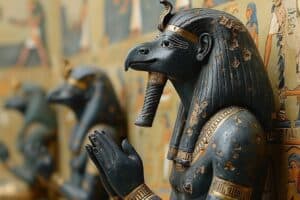
The god Thoth and King Thoth Debbie Solaris describes both the god Thoth and a King Thoth, a Pharaoh of Egypt’s First Dynasty, whose rule she links to the beginning of Egypt’s decline. God Thoth, the bird-headed god, symbolized knowledge, communication, and wisdom, and was believed to have originated in Sirius. King Thoth, a Pharaoh…
The Turin King List records gods and demigods ruling for 20,000–36,000 years before human kings (~3100 BCE).
Menes instructed the people in the worship of the gods and in the practice of living together in cities.
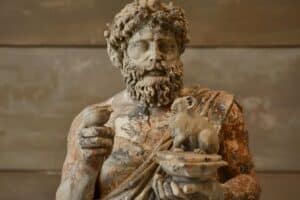
In gratitude for the divine intervention, Sethos is said to have erected a statue of himself holding a mouse
Herodotus describes Cheops (also known as Khufu) and his building of the Great Pyramid in Book 2, Chapter 124-127 of “Histories”
The first Pharaoh of Egypt, traditionally considered to have ruled around 3000 BCE. Randolph proposes that Menes ruled around 6000 years ago.
The First Dynasty consists of 86 Chaldean kings who reigned for a total of 34,080 years.
The Hyksos, whose name is often translated as “rulers of foreign lands,” were Semitic people who originated from the Levant.
Pre-dynastic Rulers refers to the period in ancient Egyptian history before the 1st dynasty and after the ruler Horus.
The First Dynasty and some parts of the Pre-Dynastic period, often referred to as the “Mythical Period” or the “Time of the Gods” and “Demigods.”
Manetho divided the rulers of Egypt into 30 (or sometimes 31) dynasties, beginning with the semi-mythical First Dynasty and extending to the conquest of Egypt by Alexander the Great.
Pyramids, the Sphinx and deep time
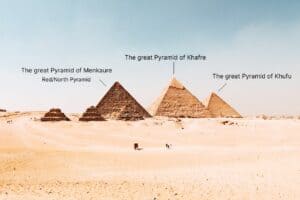
The Great Pyramid, the Red Pyramid and the Sphinx, the Nile sediments that point back 13,500 years and the inventions that turn out to be much older than we think.
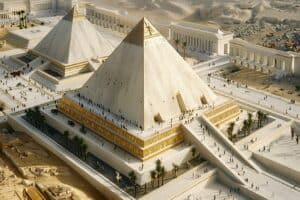
The Red Pyramid, also known as the North Pyramid, is the fertilizer factory.
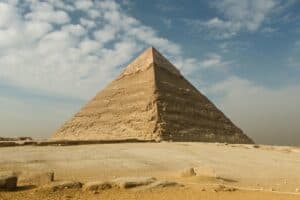
When was the Pyramid of Giza built? 77,000 years ago, around 12,000 years ago, or traditionally dated at 4,500 years ago.
Over the spaceship, erected a marker in the form of a lion yet like unto man.
Source (https://swami-center.org/en/text/treasure-beneath-pyramid.html) “Hear and understand: the Flame is the source of all things; everything existing is Its manifestation! “… Hold your thoughts on uniting the Light with your human body! “Light is the Source of all life; without the Great Light nothing can ever exist! “Know that Light is the essence of any material object.…
Horner’s findings suggested that fragments of pottery found in Nile sediment layers dated back approximately 13,500 years.
In ancient Sanskrit, the magnet was known as “the precious stone beloved of Iron,” and early Hebrew texts refer to it as Kalamitah.
Cayce readings, rituals and customs
What Edgar Cayce said about Atlantis and Egypt, the Temple Beautiful and Hept-Supht, and old customs such as skull shaping and the couvade.
Temple Beautiful is a temple in Egypt that Edgar Cayce described in a reading of 1935. It is also the name of a rejuvenation clinic in Taylor Caldwell’s novel The Romance of Atlantis. This page keeps the two apart.
According to Cayce’s readings, there were regenerative devices that would raise the vibrations of initiates so as to rejuvenate their bodies.
Cycle of creation and destruction orchestrated by the “Illojim,” with each civilization reaching a certain level of development before being eradicated for unknown reasons.
a symbolic mapping of Eliphaz, “eastward”, and the third eye within the combined framework of biblical symbolism
The Atlantean Hept-Supht played a crucial role during the later years of the civilization, particularly as it began to decline.
Thus I recreated in Greece all the best from the culture of Atlantis — hoping to preserve it in the memory of people on the Earth for many centuries.
The practice of artificially deforming the skull was prevalent among various ancient civilizations on both sides of the Atlantic Ocean.
Couvade ([kuvad]) is a term coined by anthropologist Edward Burnett Tylor in 1865. It refers to rituals in various cultures that fathers adopt during pregnancy.