
Table of Contents
This OAHSPE Bible tells of Capilya, Moses, and Chine, three great leaders chosen by Jehovih during the Dawn of Bon, around 3,500 years ago. While the upper book covers heavenly affairs under Lika, this lower book focuses on their earthly deeds through God, Jehovih’s son, to rescue and guide the Faithists—Jehovih’s chosen people.
Capilya: Restorer of Vind’yu’s Faithists
Beginnings in Vind’yu In the rugged mountains of Dharma, Vind’yu (India), God chose Capilya’s family to gather the scattered Faithists—called Vedes, Parsi’es, and others—who were enslaved or hiding from idol-worshipping tyrants. Six generations earlier, God sent 500,000 angels, led by Hirattax, to prepare a deliverer by inspiring Faithist marriages. Capilya’s lineage traced back through many ancestors, from Brahma to Yoshorvat, culminating in his birth as a natural iesu (sexless, spiritually pure) with su’is and sar’gis (spiritual sight and speech).
Born under a crescent light with Jehovih’s voice proclaiming him a deliverer, Capilya was guarded by 144 angels. His mother, secretly his nurse, swapped him with the barren queen of Yokovrana, king of Hafghanistun, to gain royal education and power.
Early Life and Mission Capilya grew wise beyond his peers, taught by angels from infancy. Yokovrana, ruling 40 provinces and 400 cities, outlawed Faithist learning, but the angels ensured Capilya mastered all knowledge. At maturity, he traveled Vind’yu for nine years, secretly studying the persecuted Faithists. Returning to Yokovrana, he revealed their plight—slavery, ignorance, and wasteland exile—earning the king’s praise as the wisest man.
Jehovih then spoke: “You are thyself of the race of Faithists, and have been prepared for this labor” (Book of the Arc of Bon, Chapter IV, verse 6). Capilya confirmed this with his nurse-mother, who admitted the angelic swap. Jehovih tasked him to liberate the slaves and reclaim their lands.
Building Communities Capilya began in Hosagoweth, finding starving Faithists. Proving his signs and pass-words, he gave them land, built altars, and taught unity. Miraculously, Jehovih sent ahaoma (food) to feed them, naming the place Maksabi (Suta-ci-ci, “I speak with food”). Over years, he established colonies like Tibethkilrath, gathering thousands, appointing rab’bahs (leaders), and feeding them through faith.
Facing the King Yokovrana summoned Capilya when sub-kings complained of fleeing servants. Capilya defended his work, arguing the king’s harshness drove them away. The Royal Council debated laws to curb Faithist learning, but angels kept them divided, stalling action. Capilya spoke of justice and liberty, securing the Faithists’ safety.
Protecting His Legacy After five years, as Yokovrana neared death, Capilya had him pass a law granting Faithists land and worship rights—the first such law globally. Crowned king briefly, Capilya ratified it and abdicated to Heloepesus, remaining a protector. He traveled Vind’yu, teaching farming, weaving, and virtues like cleanliness, industry, and love, restoring Zarathustrian ways. His maxims—“Your life is your preacher” and “Harmony in soul is the greatest blessing”—revived peace and plenty.
Moses: Deliverer of Egupt’s Israelites
Origins in Egupt In Egupt (Egypt), a land of 13 million, including 4 million Faithists (Israelites), God sent loo’is to raise Moses. After generations—from Baksa to Amram—angels chose Yokebed to bear Moses, a large, copper-skinned I’huan. Egupt’s Sun laws enslaved Faithists, banning education and worship of Jehovih, favoring Osiris. Angels swapped Moses into Princess Leotonas’ arms, hiding his mother as nurse, to gain royal learning.
Rise and Awakening Moses grew strong, mastering languages and serving as Pharaoh’s ambassador for 12 years. Ousted for his Israelitish blood, he traveled Egupt, finding his people oppressed—tasked beyond endurance, denied justice, and diseased from evil spirits. Jehovih spoke: “Take them out to their ancient lands.” At a burning bush, an angel confirmed Moses as “leader-forth,” sent by the I AM.
Preparing the Exodus For three years, Moses and Aaron rallied Israelites, appointing 20 chief rab’bahs (e.g., Rasak, Ashimel) to lead from cities like Hagor and Ranna. Pharaoh Nu-ghan, succeeding the dying king, banned escape under Baal’s influence. Moses confronted him, predicting plagues—locusts, frogs, and death of the first-born—to prove Jehovih’s power. Nu-ghan resisted, increasing Hebrew burdens.
Miracles and Escape Jehovih struck Egupt: locusts devoured crops, frogs plagued the land, and on Abib 9, a hot wind killed every Eguptian first-born while sparing Israelites during their lamb sacrifice covenant. At sunrise, 3.75 million Israelites and 400,000 Levites (uncircumcised allies) fled westward from Sukkoth. Eguptians, awed, gave gifts, but Moses rebuked acceptance as debt.
Pharaoh pursued with chariots, but Jehovih parted the Red Sea with wind, letting Israelites cross dry land. The chasing army drowned as waters returned. At Shakelmarath, Moses sang of Jehovih’s might, with Miriam leading dances.
Establishing Faith Camped 12 days, Moses re-established Zarathustrian laws—families under rab’bahs, no kings but Jehovih—via the emethachavah rite. He wrote Levitican laws for outsiders, taught peace, and warned against idolatry. His four-year mission ended Pharaoh’s glory, proving Jehovih’s deliverance.
Chine: Founder of Chine’ya (China)
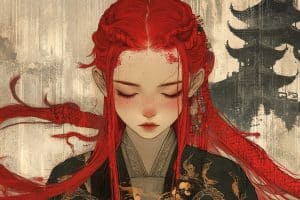
Birth and Early Signs In Jaffeth (China), ravaged by Te-in’s wars, God chose Chine from Zarathustrian descendants like T-soo Yong. Born to Ah Sho’e, a basket-maker, Chine was a sexless iesu with red hair, thin and dull as a child. Angels marked his birth—neither boy nor girl—naming him “no sex” (i-e-su), a deliverer. Seven physicians witnessed it, recording it in Ha Ta’e King.
Chine moved objects without touch, was carried by angels, and ate only fruit, growing large at 22. After mastering books in a day, he spoke as Jehovih for four years, stunning scholars with wisdom.
Silent Years and Covenant Silent for seven years, angels then ignited Chine’s soul. He swore to Jehovih alone, rejecting war and Gods, vowing to aid the poor and live purely. His covenant—“I will not serve myself while others want”—spread to his hunted Faithist kin.
Rebuilding Jaffeth Amid ruins, Jehovih told Chine to gather his people while Te-in’s forces rested. In A’shong, he revived Brahmin Faithists, teaching plowing and peace. He taught that the spirit comes before the body, and said: “For the heathen and idolater, who labor for self, what are they but servants unto the flesh?” (Book of the Arc of Bon, Chapter XXIV, verse 8). Establishing 4,000-person cities with 200-family limits, he banned war and outsiders, naming the land Chine’ya (China) as Jehovih’s temple of peace.
Teachings and Departure Chine said: “I am only a man. I have no authority in myself.” (Book of the Arc of Bon, Chapter XXIV, verse 15). He urged industry, virtue, and walls against barbarians, renewing covenants monthly. After years, as Te-zee mourned his call to heaven, a fiery cloud took Chine skyward. His edicts, upheld by four kings, freed Faithists, making Chine’ya a beacon of peace.
Connecting the Threads
Capilya, Moses, and Chine, guided by Jehovih through Lika, rescued Faithists from tyranny in Vind’yu, Egupt, and Jaffeth. Capilya rebuilt communities with wisdom, Moses led a mass exodus with miracles, and Chine walled a peaceful nation. Each fulfilled Jehovih’s plan—marked by the pyramid—to shift from stone temples to spiritual abodes, uniting Faithists under one Creator against false gods like De’yus, reflecting the cosmic-colonization theme of enduring purity amid chaos.


Comments are closed.