
Table of Contents
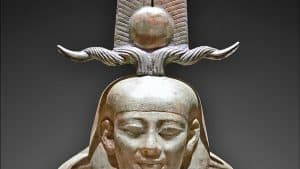
Osiris is a central god in ancient Egyptian religion. He is depicted as a mummified figure with green skin, a pharaoh’s beard, legs wrapped in mummy gauze, wearing an atef crown (white crown with ostrich feathers), and holding a crook and flail.
| Relation | Name |
|---|---|
| Parents | Geb (earth), Nut (sky) |
| Wife/Sister | Isis |
| Brother | Set |
| Sisters | Nephthys, (Horus the Elder as sibling in some accounts) |
| Son | Horus the Younger |
Orion connection
Osiris had a huge Orion connection. The precursor to the Egyptian gods—(the Sumerians)—had huge Orion, Sirius and Lyra connections as well.
The Prism of Lyra
OAHSPE Bible
Osiris is a high-grade angel, a sub-God under Anuhasaj, appointed to govern Arabin’ya (Middle East) and parts of Guatama (Americas) (~6,000 BCE) (Book of Wars Against Jehovih, Chapter VI).
Manipulative: Osiris uses his spiritual power to deceive mortals, claiming divine status (Book of Wars Against Jehovih, Chapter VII).
He adopts the name Osiris, aligning with Egyptian mythology, to consolidate worship (Book of Wars Against Jehovih, Chapter VIII).
False God of Egypt: Osiris establishes a hadan heaven in Arabin’ya, inspiring mortals to build temples and worship him, contributing to Egyptian idolatry (~6,000–4,000 BCE) (Book of Wars Against Jehovih, Chapter VIII).
He competes with Te-in and Sudga for dominance, inciting wars among mortals (Book of Wars Against Jehovih, Chapter IX).
Cpenta-armij imprisons Osiris in a hell during her invasion of hadan heavens (~2,400 BCE), liberating his enslaved spirits (Book of Cpenta-armij, Chapter III).
Osiris’ influence shapes Egyptian spiritual traditions, opposing Faithist prophets like Moses (~1,400 BCE), and his defeat marks a step toward Jehovih’s restoration (Book of Cpenta-armij, Chapter IV).
The Gods were: Anubi; Hikas, now called Te-in; Wotchissij, now called Sudga; Chele- mung, now called Osiris; Baal, Ashtaroth, Foe-be, Hes-loo, He-loo, Orion, Hebe and Valish.
Book of Wars


Comments are closed.