
Table of Contents
Hea, also known as Ea, is a central figure in Mesopotamian mythology and is prominently featured in the Nineveh tablets, part of the vast library of cuneiform texts discovered at the site of the ancient Assyrian capital, Nineveh. These tablets provide insights into the religious beliefs and cosmology of the Sumerians, Akkadians, and Babylonians.
Identity and Attributes
- Hea/Ea was the Sumerian god Enki, a name meaning “Lord of the Earth” or “Lord of the Below.”
- Associated with water, wisdom, creation, and magic, Hea was believed to reside in the Apsu, a freshwater subterranean ocean that symbolized life-giving waters.
- He was seen as a benefactor of humanity, often intervening in myths to assist humans, teach them skills, or save them from disaster.
Role in Mesopotamian Mythology
- Creation and Order:
Hea played a role in organizing the cosmos and creating humanity. In myths like the Enuma Elish, the Babylonian creation epic, he helps establish order by defeating Apsu, the primal waters of chaos, and becomes the custodian of wisdom. - Protector of Humanity:
In the Epic of Atrahasis, Hea warns Atrahasis (a Noah-like figure) about the impending flood sent by the gods and instructs him to build an ark, saving humanity and animals. - Wisdom and Magic:
Hea is often portrayed as a god of wisdom, possessing vast knowledge. His temple, the E-Abzu, was a center for religious and intellectual activity. - Mediator:
As a wise and compassionate deity, Hea frequently acts as a mediator in conflicts among gods, balancing their often harsh decrees with his concern for humanity.
Representation in the Nineveh Tablets
The Nineveh tablets, part of Ashurbanipal’s library, contain many myths, hymns, and rituals where Hea plays a central role:
- The Epic of Gilgamesh: Hea advises Utnapishtim (another flood survivor) and shows concern for human welfare.
- The Descent of Inanna: Hea’s wisdom is referenced as pivotal in helping gods and humans navigate challenges.
- Incantations and Rituals: Many prayers and magical texts invoke Hea for protection and blessings, reflecting his association with purification and healing.
Symbolism and Legacy
Hea/Ea embodies the Mesopotamian understanding of the dual nature of water—both as a life-giving and potentially destructive force. His role as a mediator between divine will and human needs reflects the cultural values of balance, wisdom, and protection.
The legacy of Hea/Ea lives on through the insights provided by the Nineveh tablets, shedding light on ancient Mesopotamian spirituality and their view of the universe.
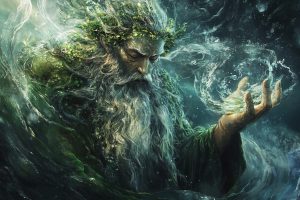
Hea (or Ea) is depicted in Mesopotamian art and texts with a range of symbolic elements that emphasize his divine attributes and domain over water, wisdom, and creation. His representations vary depending on the context, but the following characteristics are commonly associated with him:
Artistic Depiction
Appearance:
Human Form: Hea is typically depicted as a bearded man, a common way to portray male deities in Mesopotamian art.
Horned Crown: Like other major gods, Hea is often shown wearing a horned crown, a symbol of divine authority.
Flowing Water: Streams of water (sometimes accompanied by fish) flow from his shoulders or a vase he holds, representing his association with the life-giving Apsu and his role as the god of fresh water.
Attire:
He is often dressed in elaborate garments that signify his high rank among the gods.
His clothing might be adorned with symbols related to water or the cosmos.
Symbolism
Iconic Symbols:
The Goat-Fish (Capricorn): Hea’s symbol is the goat-fish, a creature blending a goat’s body and a fish’s tail. This symbol represents the connection between the earth (goat) and water (fish).
The Apsu Vase: A vase or jar pouring water symbolizes his mastery over freshwater sources and his life-giving qualities.
Sacred Objects:
The Abzu (Apsu): Often symbolized in depictions, the Abzu is the primordial sea beneath the earth where Hea resides. It is represented as a watery expanse or as waves emanating from Hea’s figure.
Context in Reliefs and Cylinder Seals
Hea frequently appears in reliefs or cylinder seals, small engraved stones used to imprint designs on clay.
He might be shown sitting on a throne in a temple, emphasizing his role as a wise ruler and counselor.
He is sometimes accompanied by streams of water, fish, and mythological creatures symbolizing fertility and abundance.
Depiction in the Nineveh Tablets
In the texts from Ashurbanipal’s library, while visual depictions aren’t present, Hea is vividly described through his attributes:
- He is often described as residing in the Abzu, surrounded by water and dispensing wisdom.
- His actions, like advising gods and humans or using his magical powers, paint a picture of a benevolent and omniscient figure.
Cultural Legacy
The imagery of Hea as a water deity influenced later depictions of gods in other cultures:
- He may have inspired the iconography of Poseidon/Neptune, the Greco-Roman god of the sea.
- His association with wisdom parallels the characteristics of other ancient deities like Thoth in Egypt and Hermes in Greece.
Hea’s visual symbolism in Mesopotamian art and his literary descriptions together convey a god deeply connected to water’s life-sustaining and transformative power, emphasizing his role as a benefactor and protector of humanity.


Comments are closed.