
Table of Contents
- Overview of Disney’s Atlantis: The Lost Empire
- Key Plot Points
- Mythological Origins of Atlantis
- Plato’s Account
- Comparative Mythology
- Linguistic Connections
- Speculations on the Historical Atlantis
- Archaeological Evidence
- Genetic Studies
- Global Myths of Underground Civilizations
- Symbolism of the Atlantean Crystal
- Esoteric Symbolism in the Film
- Conclusion
Overview of Disney’s Atlantis: The Lost Empire
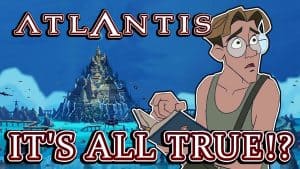
The video discusses Disney’s film Atlantis: The Lost Empire, exploring its narrative, mythological influences, and connections to real-life Atlantis theories. The film is set in 1918 and follows Milo, a scholar who leads an expedition to find the lost city of Atlantis, described in Greek mythology as a civilization that sank beneath the ocean. The team discovers remnants of a surviving Atlantean civilization, including its princess, Kida, and an energy crystal integral to the city’s survival.
Key Plot Points
- Discovery of Atlantis: Milo and his team find the remnants of a dying Atlantean civilization in an underwater cavern, supported by a magical crystal containing the spirits of ancestors.
- Crisis of the Crystal: The crystal’s energy fades after thousands of years. It merges with Kida, prompting Milo and the team to save her and restore the crystal’s power.
- Themes of Mythology: The film blends Greek mythology and esoteric symbols, tying the Atlantean story to various mythological and historical interpretations.
Mythological Origins of Atlantis
Plato’s Account
- The story of Atlantis originated from Plato’s writings around the 4th century BCE.
- Plato described Atlantis as a prosperous society ruled by semi-divine kings, descendants of Poseidon.
- As the kings became corrupt, Zeus sent a flood to destroy Atlantis.
Comparative Mythology
- Atlantis mirrors themes from other mythologies:
- Canaanite Mythology: The rivalry between the thunder god Baal and the sea god Yam parallels Zeus and Poseidon’s conflict.
- Jewish Tradition: The Leviathan, a sea monster mentioned in the Old Testament, shares similarities with sea creatures in Atlantis myths.
- Babylonian Mythology: Myths involving gods battling sea monsters, such as Marduk versus Tiamat, reflect a common narrative theme.
Linguistic Connections
- In the film, the Atlantean language is suggested to predate modern languages, stemming from the biblical Tower of Babel narrative.
- The concept ties Atlantis to myths about a shared linguistic and cultural origin, emphasizing its influence on global mythology.
Speculations on the Historical Atlantis
Archaeological Evidence
- Geological Studies: Hypotheses about shallow seafloor areas in the Atlantic Ocean suggest they could have been above sea level, possibly supporting an Atlantis-like landmass.
- Cooled Lava Samples: Some evidence indicates volcanic activity above water in regions linked to Atlantis theories.
Genetic Studies
- DNA markers like Haplogroup X suggest potential shared ancestry between Europeans and Native Americans, possibly connected to Atlantis.
Global Myths of Underground Civilizations
- Aztec Mythology: Describes a subterranean origin in “The Place of Seven Caves.”
- Indian Mythology: Mentions the Naga, serpent-like beings inhabiting a vast underground world.
These myths echo the idea of ancient civilizations surviving cataclysms by retreating underground.
Symbolism of the Atlantean Crystal
- The crystal represents a collective spiritual energy, rooted in ancestor worship traditions from ancient cultures like Egypt.
- It also parallels myths involving sacrifice and resurrection, such as Osiris in Egyptian mythology.
Esoteric Symbolism in the Film
- The spinning crystal evokes imagery of Saturn, a planet historically associated with myths of the Golden Age and significant disasters.
- The circle-and-dot motif in the film’s logo and Atlantean writing ties to ancient symbols representing the sun, Saturn, or cosmic cycles.
Conclusion
The video highlights how Atlantis: The Lost Empire serves as a narrative bridge between mythology, history, and speculative theories about the lost city. By weaving real-world myths and esoteric symbols into its story, the film offers a rich tapestry for exploration and interpretation. The creator encourages viewers to engage with other mythological deep dives, further connecting storytelling to historical mysteries.
Comments are closed.