
Table of Contents
- The Atlanteans: Divine Survivors of a Lost Civilization
- The Sumerian King List: Echoes of Atlantis
- The Turin King List: Divine Kings in Egypt
- The Popol Vuh: Sacred Text of the K’iche’ Maya
- The Æsir: Nordic Sky Gods and Cosmic Order
- Shared Themes Across Cultures
- A Hypothesis of Global Connections
- Conclusion
Throughout human history, myths and legends have described divine beings, catastrophic floods, and extraordinary rulers who shaped humanity’s destiny.
Could these stories be more than symbolic tales? By exploring Edgar Cayce’s readings, the Sumerian King List, the Turin King List, the Popol Vuh, and Norse mythology, we see a lost global civilization—Atlantis—and its lasting influence.
This article weaves together the threads of the Atlanteans, Nephilim, Daityas, Æsir, and other mythological figures to propose that these myths may be encoded memories of a shared ancient past.
The Atlanteans: Divine Survivors of a Lost Civilization
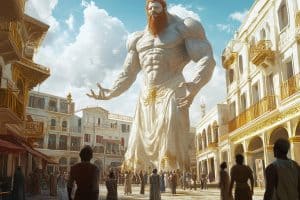
Edgar Cayce described Atlantis as a highly advanced civilization that thrived tens of thousands of years ago. Spiritual leaders ruled it, the Sons of the Law of One, who lived in harmony with divine principles. However, their rivals, the Sons of Belial, misused advanced technologies, ultimately leading to Atlantis’s destruction around 10,500 BCE.
Survivors of Atlantis, according to Cayce, migrated globally, influencing cultures in Egypt, Mesopotamia, and the Americas. This diaspora may explain the striking similarities between myths of divine beings and catastrophic floods worldwide.
The Sumerian King List: Echoes of Atlantis
The Sumerian King List, an ancient Mesopotamian text, recounts rulers with impossibly long reigns before a great flood reset civilization. For example:
- Alulim ruled for 28,800 years.
- Alaljar ruled for 36,000 years.
These extraordinary figures resemble the long-lived Atlantean priest-kings described by Cayce. After the flood, the King List transitions to shorter, more human-like reigns, reflecting the decline of divine influence and the beginning of recorded human history.
The Turin King List: Divine Kings in Egypt
The Turin King List follows a similar pattern, beginning with gods and semi-divine rulers who reigned for thousands of years before transitioning to mortal pharaohs. Cayce’s readings suggest that survivors from Atlantis, such as the high priest Ra-Ta, settled in Egypt and brought their advanced knowledge. According to Cayce, Ra-Ta helped establish Egypt’s spiritual practices and possibly oversaw the construction of the Sphinx, which some researchers date to 10,500 BCE.
The Popol Vuh: Sacred Text of the K’iche’ Maya
The Popol Vuh, a creation epic of the K’iche’ Maya, mirrors other global myths of divine beings, floods, and cycles of destruction. Key themes include:
- Flood Myths: The gods destroy the soulless wooden people in a flood, much like the Biblical flood and the destruction of Atlantis.
- Hero Twins: Hunahpú and Xbalanqué, semi-divine beings, restore cosmic balance by defeating the lords of the underworld. They parallel the Nephilim and other hybrid beings in mythology.
The Popol Vuh’s flood and cosmic resets suggest a shared memory of catastrophic events preserved independently by the Maya.
The Æsir: Nordic Sky Gods and Cosmic Order
In Norse mythology, the Æsir are powerful gods who maintain order in the universe, often battling the Jötnar (giants) who represent chaos. Key parallels to other traditions include:
- Conflict with Giants: The Æsir’s battles with the Jötnar mirror the struggles between the Daityas (Hindu giants) and Devas, or the Olympians overthrowing the Titans in Greek mythology.
- Hybrid Beings: The Æsir occasionally intermarry with humans, producing semi-divine offspring, much like the Nephilim.
- Ragnarök and Floods: The Norse apocalypse, Ragnarök, includes a great flood and cosmic reset, paralleling the destruction of Atlantis and the Popol Vuh’s cycles of creation and destruction.
The Æsir may represent another cultural echo of Atlantean survivors, remembered as divine beings in the North.
Shared Themes Across Cultures
The recurring themes in these myths suggest universal archetypes or a shared memory of ancient events. These include:
- Conflict Between Divine Beings: Battles between gods and giants (Æsir vs. Jötnar, Devas vs. Daityas, Sons of the Law of One vs. Sons of Belial) symbolize the tension between order and chaos.
- Floods as Divine Resets: The Biblical flood, the Popol Vuh’s destruction of the wooden people, and Ragnarök’s flood all point to catastrophic resets of civilization.
- Semi-Divine Offspring: Hybrid beings, from the Nephilim to the Hero Twins, bridge the divine and mortal worlds, shaping humanity’s destiny.
- Advanced Knowledge: The Atlanteans, Æsir, and other divine figures are often depicted as bringers of wisdom, from the runes of Odin to the agricultural knowledge of the Popol Vuh’s gods.
A Hypothesis of Global Connections
By combining these myths and Cayce’s readings, I propose a speculative hypothesis:
- Before the Flood: A global civilization (Atlantis) thrived, ruled by semi-divine beings who balanced spiritual and technological power.
- The Great Flood (~10,500 BCE): A cataclysm destroyed this civilization, leading to migrations of survivors.
- Post-Flood Migrations:
- Kushite Lineage: Survivors settled in Africa, influencing Egypt and the Biblical traditions.
- K’iche’ Legacy: Others reached Mesoamerica, where their knowledge became the foundation of Maya mythology.
- Nordic Influence: Some survivors reached Northern Europe, remembered as the Æsir.
- Myths as Memories: These stories encode humanity’s shared memory of a lost chapter, passed down through oral and written traditions.
| Theme | Æsir (Norse) | Atlanteans (Cayce) | Nephilim (Bible) | Daityas (Hindu) | Hero Twins (Popol Vuh) |
|---|---|---|---|---|---|
| Conflict with Chaos | Fight Jötnar (giants) | Sons of Belial vs. Law of One | Disrupt divine order | War with Devas | Defeat Lords of Xibalba |
| Influence on Humanity | Guides and protects humans | Teach early civilizations | "Heroes of old" | Teach but also challenge | Restore cosmic balance |
| Hybridization | Divine-human offspring | Advanced beings intermixing | Nephilim as hybrids | Some Daityas interact with humans | Semi-divine twins |
| Cosmic Reset | Ragnarök and rebirth | Atlantis destroyed and knowledge spread | Flood destroys Nephilim | Cycles of creation and destruction | Flood and recreation of humans |
| Cosmic Knowledge | Odin and the runes | Advanced Atlantean knowledge | Nephilim teach forbidden knowledge | Daityas known for mystical power | Knowledge tied to the cosmos |
Conclusion
From the Æsir to the K’iche’, and from the Sumerian King List to the Popol Vuh, myths across cultures share striking similarities. They speak of divine beings, catastrophic floods, and the struggle to maintain cosmic order. Could these stories preserve echoes of a lost civilization, like Atlantis? Edgar Cayce’s readings, combined with these ancient texts, invite us to reconsider the origins of humanity and the enduring legacy of advanced knowledge.


Comments are closed.