
Table of Contents
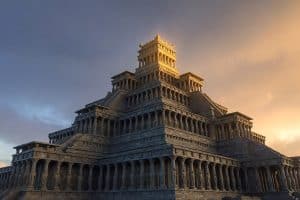
Temple of Zul (Temple of the Lord of Light) in “Atlantis: The Book of the Angels” by D. Bridgman-Metchim
This is the temple from the 1903 visionary/interpretive work Atlantis: The Book of the Angels (sometimes styled Atlantis, the Book of the Angels), which presents a dramatic, often grim account of pre-flood Atlantean civilization centered on the characters Azta (Tizin Azta, empress/queen figure), Tekthah, Huitza, and others.
Zul functions as both the name of the sacred capital city of Atlantis (described as greater than Babylon, built by conquered nations) and the central deity — a hermaphrodite Sun/Lord of Light figure worshipped with awe, idolatry, and elements of obscenity. The Temple of Zul (also linked to worship of the Sun/Lord of Light) is the national religious heart of the city, crowning a volcanic hill above the waters. It features prominently in processions, sacrifices, and political/religious intrigue involving Azta.
Exterior and Location
The temple crowns the hill above the waters in the city of Zul. It appears as a massive, grim, cyclopean structure of tower, pyramid, and pylon in endless grouping — mass above mass, terrace above terrace. It is four-sided and flat-topped, with pyramidal stages (each smaller than the one below) rearing its mighty mass to Heaven. Roofs are adorned with waving flames; the topmost tower flashes like a polished mirror in the sunrise. Enormous masonry, thronging columns, colossi, and a confusion of magnificence create an impression of awful majesty. A wide moat and fortifications surround parts of the city, with an arm of the sea flowing around the walls.
“There lay Zul! from East to West horizon stretching, dark against the moonlight; and afar, standing out in white sheen and misty beauty, rose tower, pyramid and pylon in endless grouping, mass above mass, terrace above terrace, in cyclopean gloom.”
“A sound fell on my ears above all the rest and grew louder and louder. It was the drum of the great temple of Zul, crowning the hill above the waters, that, being struck, rolled out like the awakening voice of Heaven over the city of the Sun.”
Interior
The interior is vast, gloomy, and cold, with thick walls that keep out external heat. It features bold, often obscene paintings (serpents with sun emblems, vultures as messengers of the gods, etc.), cold tall columned vaults, intricate passages, dark altars upheld by dragons, and colossi with diabolical faces. Lower levels include chambers with a stone sarcophagus and a “sea of molten gold” or lurid pit/crater-like burning fires watched by colossal rock-carven figures. Upper chambers have a lurid glow from a central light and flickering phosphoric representations of mystical conceptions. A square aperture leads upward to vast chambers. One notable feature is a brazier holding a globe of lambent fire (self-contained crystalline light used for scrying by the High Priest).
Central Features: Flame, Light, and Idols
The temple is strongly associated with fire and light. There is a “columnar flame” on Zul’s highest tower and waving flames on the roofs. Worship includes an imperishable or eternal flame element. Idols and colossal images surround the lurid pit or fires; certain imperial dead were lowered into the arms of these “awful idols” that looked upon the crater/fires of Zul, consumed by the flames, with ashes placed in the temple (hearts sometimes thrown to vultures). A central or upper “globe of lambent fire” on a brazier serves divinatory purposes under the High Priest Acoa.
Priests, Worship, and Ceremonies
Ministered by yellow-robed priests (symbolizing joy) and black-robed attendants for sacrifices; eunuch priests and female co-ministers/priestesses also serve. The High Priest Acoa (“Voice of God”) leads key rites. Ceremonies include sunrise processions up stairways with chanting, incense/smoke rituals (expelling smoke to the four quarters), rolling drums from the tower, and human sacrifice: a victim is bound to the altar, the High Priest slits the breast with an obsidian dagger, tears out the heart, and offers it to the Sun amid rapturous shouts. The temple houses the national standard (a four-armed cross) and is the site of imperial consecrations and atonement processions.
Zul is worshipped as the hermaphrodite Lord of Light/Sun deity (partaking of both sexes), alongside other gods. Rites mix grandeur with elements described as obscene or idolatrous.
Azta’s Connection and Journeys
Azta (as Tizin/High Priestess of the land) has privileged access to the temple and participates in imperial processions and ceremonies there with the Emperor’s household, nobles, and priestesses. She ascends with the throng for worship on the highest platforms/roofs. She also gazes upon the temple from afar (e.g., from a palanquin or palace), believing she can perceive the long red building beneath it and the gardens with fountains. The temple features in political intrigue and visions tied to her story.
Overall Atmosphere and Role
The Temple of Zul symbolizes Atlantean imperial power, religious centrality, and eventual moral/spiritual decline. Its cyclopean pyramidal form, terraces, flames, lurid fiery pit, idols, and sacrificial rites create a sense of grim majesty mixed with foreboding. It is repeatedly linked to the Sun/Lord of Light while also tied to volcanic/fire imagery and the city’s fate.
This account draws on biblical flood themes and presents a more dramatic, sacrificial, and visually intense temple than the meditative, unfed-light-focused Incalithlon in Oliver’s work.


Comments are closed.