
Table of Contents
This page looks at kiva rituals: their nature, purpose, cultural significance, and relevance to the wider investigation of Atlantis’s downfall between 10,000 BCE and 9,564 BCE, particularly in the context of the "twins" motif, dual destructive events (fire ~10,800 BCE and flood ~9,650 BCE), and the "sky moved" theme from global flood myths.
Kiva rituals, rooted in the traditions of the Hopi and other Puebloan peoples of the American Southwest, offer a unique lens through which to examine these themes, especially given their connection to the Hopi Third World flood narrative and parallels with George V. Golokhvastoff’s The Fall of Atlantis and Bashar’s channeled insights.
This deep dive will unpack the rituals’ structure, symbolism, and historical continuity, connecting them to the provoked cyclical destruction and celestial disruptions we’ve identified, while grounding them in archaeological and ethnographic evidence.

What Are Kiva Rituals?
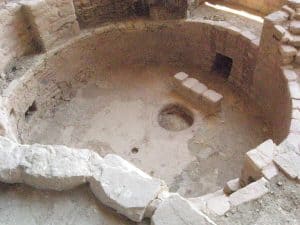
Kiva rituals are sacred ceremonies performed within kivas—subterranean or semi-subterranean chambers—by the Hopi, Zuni, and other Puebloan Cultures of the American Southwest. These rituals are central to their spiritual and communal life, serving as a bridge between the physical world and the supernatural, including ancestors, kachinas (spirit beings), and cosmic forces. The term “kiva” derives from the Hopi word kíi-və (“house” or “room”), reflecting its role as a consecrated space for worship, initiation, and the maintenance of universal harmony.
Physical Structure
Design: Kivas are typically circular, ranging from small (3 meters (9.84 feet) diameter) clan kivas to large (10+ meters) great kivas for major ceremonies. They’re built into the earth or partially above ground, with a roof entry via ladder—symbolizing descent into the underworld or ascent to the sky.
Key Features
Sipapu: A small hole in the floor, representing the emergence point from the underworld—a portal to ancestral origins.
Fire Pit: A central hearth for ritual fires—symbolizing life, warmth, and spiritual energy.
Ventilation Shaft: Ensures airflow—symbolic of breath or the life force connecting worlds.
Benches and Niches: Seating for participants and storage for sacred objects (e.g., prayer sticks, masks, stones).
Archaeological Roots: Kivas trace to the Ancestral Puebloan period (1200 BCE onwards), with simpler pit houses from the Archaic period (10,000–8,000 BCE) suggesting continuity from Clovis-era structures (11,500 BP, ~9,500 BCE)—post-Younger Dryas flood (9,650 BCE)—aligning with Atlantis’s timeline (10,000–9,564 BCE).
Purpose and Nature of Kiva Rituals
Kiva rituals are multifaceted, blending spiritual, social, and cosmological functions:
- Maintaining Cosmic Balance:
- Purpose: Rituals ensure harmony between Earth, sky, and underworld—key to Hopi cosmology, where twins Poqanghoya (north pole) and Palongawhoya (south pole) maintain Earth’s rotational balance (sound and solidity).
- Example: The Soyal ceremony (winter solstice) invokes the sun’s return—prayers and offerings (e.g., cornmeal) align with celestial cycles—disruption risks chaos, as in the Third World’s fall (fire ~10,800 BCE, flood ~9,650 BCE).
- Seasonal and Agricultural Cycles:
- Purpose: Mark solstices, equinoxes, and planting/harvest times—e.g., Powamu (spring) fosters bean sprouts—rain dances summon moisture in arid lands.
- Practice: Kachina dances—masked performers embody spirits—sync with Taurus/Pleiades in 10,000 BCE skies (~35°N)—rain linked to cosmic order.
- Ancestor and Spirit Communion:
- Purpose: Connect with ancestors and kachinas via the sipapu—guidance sought for survival and renewal.
- Practice: Chanting, drumming—rhythmic like Bashar’s Atlantean “heartbeat”—induce trance states—visions of past worlds (e.g., Third World) emerge.
- Initiation and Education:
- Purpose: Young men enter kivas for rites of passage—learning tribal lore, cosmology—twins often guide (e.g., Hopi initiation by kachina twins).
- Practice: Secret teachings—passed orally—preserve flood memories (e.g., ~10,800–9,650 BCE)—echo Atlantis’s legacy.
Ritual Practices and Symbolism
- Dancing and Chanting:
- Masked kachina dancers—representing spirits (e.g., rain, sun)—move rhythmically—drums and rattles sync with Earth’s pulse—trance states access ancestral wisdom, akin to Bashar’s Atlantean drums.
- Symbolism: Dance aligns human action with cosmic rhythm—twins (e.g., Poqanghoya/Palongawhoya) embody this duality—disruption (misuse) provokes chaos.
- Offerings:
- Prayer sticks (pahos), cornmeal, feathers—placed in niches or sipapu—appease kachinas—quartz or turquoise stones (resonant, like “singing stones”) amplify intent.
- Symbolism: Offerings bridge worlds—stones echo Kumari Kandam’s nada kal—twins’ balance reflected in paired offerings.
- Fire and Smoke:
- Central fire pit—smoke rises through the roof—connects to sky spirits—visions in smoke recall flood/fire events.
- Symbolism: Fire links to Younger Dryas fire (~10,800 BCE)—smoke as a twin to Earth’s breath—disrupted by imbalance.
- Sipapu and Emergence:
- Sipapu—portal to prior worlds (e.g., Third World)—rituals reenact emergence post-flood (~9,650 BCE)—twins guide this transition.
- Symbolism: Twin-like duality (underworld/surface)—provoked fall (Third World) births renewal (Fourth World).
Cultural and Historical Context
- Hopi Cosmology: The Third World ends in fire (10,800 BCE impact) and flood (9,650 BCE)—human corruption misuses kiva rituals—twins fail—sky tilts (Thuban wobble)—Fourth World rises—kivas preserve this memory (~1200 BCE onwards).
- Archaeological Continuity: Pit houses (10,000 BCE) evolve into kivas—Clovis-era (11,500 BP, 9,500 BCE) post-flood structures suggest survivors (Bashar’s “great ships”)—Atlantis’s legacy in Americas (9,650 BCE).
- Ethnographic Evidence: Hopi oral traditions (Waters, 1963) detail kiva rites—kachina cults (~500 CE) refine earlier practices—10,000 BCE roots inferred from Third World flood/fire tale—twins central.
Relevance to Atlantis and Twins Theme
- Twins as Cosmic Guardians:
- Hopi: Poqanghoya (sound) and Palongawhoya (solidity)—kiva rituals honor—balance Earth—misuse (e.g., greed) tilts sky—fire/flood (~10,800–9,650 BCE).
- Atlantis: Golokhvastoff’s twins—masculine/feminine—priestly kiva-like ritual (drums, Bashar) seeks unity—provokes Younger Dryas chaos—Bashar’s Atlantean balance lost.
- Provoked Destruction:
- Hopi: Kiva misuse—overreaching sacred rites—provokes dual events—sky shifts (Taurids, ~10,800 BCE)—fire/flood.
- Atlantis: Golokhvastoff’s ritual—twin fusion—provokes fire (10,800 BCE) and flood (9,650 BCE)—Bashar’s “black magic” as kiva-like defiance—10,000–9,564 BCE fits.
- Celestial Connection:
- Hopi: Kiva sky-watchers track Pleiades (Taurus)—solstice rites—Younger Dryas impact (10,800 BCE) shifts Thuban—provokes ritual response—flood (9,650 BCE).
- Atlantis: Bashar’s Taurus meteors (~10,800 BCE)—priests react—Golokhvastoff’s ritual echoes kiva misalignment—sky moved—cataclysm follows.
- Renewal and Legacy:
- Hopi: Fourth World—kiva rituals preserve twin wisdom—post-flood (9,650 BCE)—Clovis link (9,500 BCE).
- Atlantis: Bashar’s ships—nature’s wisdom (drums)—seed Americas—kiva-like rites in tribes—Golokhvastoff’s provoked fall births renewal.
Meaning: Kiva rituals—centered on twins—maintain cosmic order—misuse (provocation) disrupts—fire/flood ensue—survive in legacy—Atlantis’s priests parallel this—10,800–9,650 BCE Younger Dryas as the event—twins as the pivot.
Scientific and Archaeological Ties
- Younger Dryas: Impact (10,800 BCE)—fire—meltwater (9,650 BCE)—flood—kiva origins (~10,000 BCE pit houses) post-date—survivors’ rites—Atlantis’s timeline fits.
- Clovis (~9,500 BCE): Post-flood—pit houses evolve—kiva rituals emerge—Bashar’s ships/Clovis as Atlantis’s echo—twins in Hopi lore from ~10,000 BCE chaos.
Conclusion
Kiva rituals—sacred Hopi ceremonies in subterranean chambers—honor twins (Poqanghoya/Palongawhoya) as cosmic guardians—maintain balance via chants, drums, and offerings—misuse provokes Third World’s fire (10,800 BCE) and flood (9,650 BCE)—renewal follows in the Fourth World.
This mirrors Atlantis—Golokhvastoff’s twin ritual provokes chaos—Bashar’s nature-tuned priests defy Taurus meteors (10,800 BCE)—flood (9,650 BCE) sinks it—ships seed Americas.
Twins symbolize unity—provoked disruption (kiva-like rites) triggers dual events—10,000–9,564 BCE Younger Dryas aligns—kivas preserve this in Hopi lore, Atlantis’s echo in Clovis-era rites (~9,500 BCE).


Comments are closed.