
Table of Contents
The Incident at the Top
We reached the top of the climb as the sun set and the temperature dropped significantly, about 30 degrees. This was in March, in the Canadian Rocky Mountains on the Icefields Parkway. It is seriously cold, serious wilderness, and very dangerous. We knew that going into it, but we were unprepared to spend the night exposed. That was a fatal mistake.
Personal Background
I am Peter Panagore. I grew up outside Boston, Massachusetts, in a city called Marlborough. My dad was an architect, and my mom had been a nurse. We eventually had five kids in the family. We grew up between the 1950s and the 1970s, with lots of cultural changes affecting our family life. My older sister, Andrea, was part of the “tune in, turn on, drop out” movement. She ran away from home when I was 14. She was my beloved sister, and then suddenly, I came home from school one day as a freshman in high school, and there was a note on the kitchen table saying she was leaving home. I did not know what it meant, but our family slipped into turmoil overnight. My dad searched for her for months. It broke my family up. Until that point, my mom and dad were very loving; we had a really great family. Because we had a Greek neighborhood near us, we had cousins, a great-grandmother, community, Greek dances, and food. My mother also had cousins in town. All of that ended when my sister vanished.
Leaving Home
The first chance I got, I left home. I tried to drop out of school, but my parents talked me out of it. Instead, I went on a national student exchange program, which is why I went to Montana in the first place. While at Montana State University in Bozeman, I did many things: I joined the National Ski Patrol and the outdoor club, climbed in the mountains, and went backcountry skiing. By the time spring came, I decided, as a member of the outdoor club, to find a trip to go on. A fellow posted a flyer outside the outing club door on the bulletin board. It said he was doing an eight-day backcountry ski trip and a one-day ice climb in British Columbia and Alberta, Canada. I thought this was perfect, so I called him. He had not found anyone yet. We met and discovered we had complementary skills: I was a first responder on ski patrol; he had been trained as a certified ice climber. I had done winter camping; he had too. We decided to do this.
The Backcountry Ski Trip
We drove his car up to British Columbia, went backcountry skiing, and snow caving in mid-March with about 10 feet (3.05 meters) of snow. We had many adventures, one life-threatening on our first night. We both used our survival skills to set up in a way that we would not freeze that night. We learned to trust each other immediately. We had a wonderful adventure snow caving, which finished when we skied out.
Preparing for the Ice Climb
We then went to the one-day ice climb. I had been a backpacker and had climbed in many ranges in New England, Wyoming, and Montana, but never ice climbing. I had used ropes, done free climbing, rock climbing, and mountaineering, but not ice. I was not geared for ice climbing. I had to borrow or find gear. I rigged myself with what was available: good crampons, 1960s leather ski boots that would not flex, wool and proper clothing, an ice axe, and a hammer. You are supposed to use two ice axes, but I only had one. I decided I was young, strong, and capable enough to climb with the axe and hammer. Tim agreed we could do this. The axe lets you plant it and rest; the hammer requires you to always hold on, so you cannot relax. This put stress on my forearms, burning out my muscles faster than others on the climb.
The Climb
Ice climbing requires a hyperfocused state: be present where you are, not thinking about the future or past, but exactly what you are doing. This is perfect for me; I love that space. We were both hyperfocused. Our climb was uneventful, except my muscles burning out delayed us significantly. By the time we reached the top, the sun was setting. Many teams had descended one or two hours before we reached the top. The difficulty was you cannot turn around and go down; there is no trail to walk down to your car. You must follow the route: up, across, then down. You cannot just descend.
We reached the top as the sun set and the temperature dropped significantly. This was March in the Canadian Rocky Mountains on the Icefields Parkway: seriously cold, serious wilderness, very dangerous. We knew that, but we were unprepared to spend the night exposed. In our defense, no one else was prepared either; it was a day climb, so you bring day gear. That was a fatal mistake.
Onset of Hypothermia
The sun set, and shivers began immediately. Hypothermia set in within minutes. My jaw clattered like a cartoon character; my hands shook; my body twitched. It got dark; stars came out. We were terrified. From my ski patrol background, I knew how much time we had before we succumbed. If we stayed, we would die—no doubt. But we were 500 or 600 feet (182 meters) up in the dark on ice and rock.
Descent Attempts
Tim hauled up the rope, but it became a tangled mess. This happens with hypothermia: you make mistakes. Tim picked up the rope length and tied it around himself for our traverse. I tied a length around my waist, gave myself distance, hauled the line, and laid it over my shoulder. We clinked and clattered with ice screws and carabiners. We began the traverse along a narrow ledge with a 500- or 600-foot drop. We did it with great care, as every step drained energy. We had no more food or water. Speaking was difficult with clattering jaws.
We made the traverse with full focus to the first rappel. There was a small tree sticking out of the mountain—the only one. You are supposed to tie nylon flat webbing in a square knot, make a loop, wrap it around the tree, put the climbing line through the loops, and dangle it down. At the bottom, you pull the line through. We decided it cost too much to buy webbing; we did not want to lose it. Against reason, we put the rope around the tree and descended on the rope, figuring we could pull it off at the bottom.
We rappelled down, bouncing, then reached an inverted overhang of empty space where you slide down the rope to the next landing. I came down second, got off the rope, grabbed it, and pulled—it would not come free. It was stuck. I lifted myself on it; still stuck. Tim stumbled over—coordination waning—and we both pulled. We could not get it loose. We put all our weight on it, bouncing; still stuck. Now in panic, the only option was to re-ascend.
I took the climbing line length, wrapped it around my body, lay in the snow, and made it taut going up. Tim ascended the empty space with no protection. He got up some distance; my face was in the snow. He shouted, “I’m falling.” I tried to roll out of the way. I do not know how high he was, but as he fell, perhaps his boot caught in the loop—it jerked the rope free. He fell in deep snow; I rolled out. He was okay; I was okay. We rejoiced: we had the rope; we could move on.
We began the next traverse, now off snow and ice, just on rock. In this mountain were two iron pins with epoxy, iron rings, carabiners, straps, and another carabiner to clip in for safety. This is where people train to climb and rappel safely. We thought we would finally make it: one rappel down, one pitch to go.
I tied one end of the line to my harness, took the other end (the bitter end), and tossed it out, intending to pull the line down. But as I pulled, it laid across a corner and jammed in some V. On my first pull, it jammed. I pulled a couple inches; no further. I could not get it free or snap the line, as it was around the edge. Now we were seriously stuck: only one end of the rope, could not re-ascend or go back. Hypothermia advanced; the night got colder.
Acceptance of Death
All night, my terror increased, but another part of me drove deep inside, touching my original mammalian mind of survival. When I realized no willpower would save me, instead of fear overtaking me, I became calm and peaceful. I accepted my circumstance. I knew what would happen. I recalled the movie “Little Big Man” with Dustin Hoffman, where the old wise man says daily, “Today is a good day to die.” I thought, “Tonight is a good night to die.” It was beautiful: millions of stars in every color, different sizes and brightnesses, constellations, galaxies. Snow reflected off mountains; I heard the river below. There was no escape.
Around this time, peace settled in me. I was sad because my parents had lost my sister; I would give them another open wound. But nothing I could do. Despite that, peace settled. Then I got hot—hypothermic people are often found naked because they feel hot. I unzipped my coat. Tim yelled, “Don’t unzip your coat; zip it back up.” I said, “F you, I’m not; I’m hot.” Meanwhile, I still pulled on the rope.
Then I began to fall asleep—not like snuggling into a pillow, but like a curtain dropping: boom, blackness, out. Then smack my helmeted head on the rock, jar awake, realize I was asleep, pull back up on my harness, yank the rope, repeat. I do not know how many times. The last time, after sleep, I stood up and got tunnel vision: a big black circle closing rapidly like a spotlight to black. I looked around, up, over, down at the river. As it closed, I thought, “I’m blacking out again.” But what was different? I had never seen this. I expected darkness like the curtain, asleep. But when it went black, I did not fall asleep; I was awake.
The Near-Death Experience
It went black; I was unexpectedly conscious, now confused. I did not understand: where was the mountain? How did I have consciousness? I felt eyes open, but saw only darkness. Thoughts ran through my head. Then darkness expanded: pitch dark, but I could see in it. Far in the distance, a pinprick of light popped, like the furthest star, but the only one in this dark heaven. It rushed toward me, filling the darkness rapidly, traveling immense distance faster than light speed.
It communicated telepathically, non-linguistically: download of information. The data was “I’m taking you,” with all power, knowledge, might. I thought, “Oh no, you’re not; I don’t understand, but I’m not going.” I dug deep for willpower, but it was zero compared to this entity’s immensity.
Then a portal opened—like a door, or waterfall of light, surface all starlight, sparkle, colors never seen. Most compelling thing witnessed: seductive, drew me. All my will vanished; all self-understanding vanished. All I wanted was it.
I tell it in sequence for my brain, but it was all together. First, I went into a hell of my own making: all pain I caused in life. I experienced all suffering I gave, from the interior view of every person hurt, in chronological sequence. I was in every one simultaneously, experiencing the pain, and outside as myself with reasons and emotions choosing or reacting to cause it. Bloated experience. I felt shame of pain caused not just to people, but to the Divine self, because of immense love and purity perceived from the unlimited Creator who manifests all things—this no-thing that is everything.
A voice spoke without language, all around and inside: “I know you; I’ve always known you; everything about you is known to me.” I was not judged; simply shown myself. No matter what I did, I was beloved.
I got bigger in this unitive Oneness state, carried across vast distance to an edge. My consciousness poked outside heaven’s field: I saw our universe, all galaxies, beyond our universe, its origin, other universes above, below, beyond. Vision shifted: all earthly humanity, Earth like hologram, 7 billion people. Message: “They are all my beloved; every single one.” The love for me—universe upon universe of love, creation, life—is the same for every person.
I saw inside every person: real human beings living lives. Half sleeping; making love; tortured; wars; babies born; bored; art; everything. Inside each, a golden light: purity of Divine original self. They cannot see it in each other. Everything covered with thick foam above atmosphere, so dense no one sees the light inside others. This made plain: all multiverses’ love for everybody, all planets, galaxies—not just us; everything particularly beloved.
Then influx of love: beauty, joy, understanding, knowledge, bliss, paradise, awe, adoration, wholeness, light. It expanded inside till I inflated like a balloon. Inside infinite comfort: most comfortable ever.
Return to Life
Then expanse contracted to less unitive state: I remembered human life. Suffering of parents apparent: whole lives accumulated, showed in faces; sister’s disappearance; years since. I saw suffering if I died. I said, “Do I have to go?” Voice: “Why?” I: “Because parents lost sister; open wound. If I go, they suffer my loss—how cruel. Pain I already caused them.”
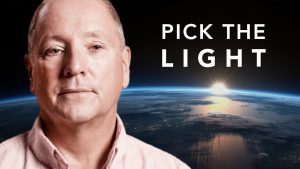
In that moment, swept across heaven, taking on substance, carried by Divine self and angelic light being. Became denser. In front: million entry doors to this body, but all lives to choose. Divine voice: “Choose,” shows possibilities. Says: “Pick me; pick the light.” I think: “Pick some of me; want autonomy, creativity, freedom.” I pick outside full light; that’s my door.
Instantly, speed down tunnel. In rematerialization, smaller, more compact, crushed, tinier, uncomfortably compacted inside Divine being. Like ice screw, stabs me into body, screws me in. Like genie in bottle: immense power, teeny space. Forced inside; do not want it. Entering was entering suffering. No pain in heaven: only healing, wholeness, Oneness, beauty, bliss. Pain did not exist in united state.
Now trapped in container, awake: “What is this? Where was I? What’s going on?” Brain comes online; begin to think, hear. Hear screaming. Open eyes: Tim bending down, crying. “You were dead; you were dead. If you died, I was going to die.” Pulls me up, crying, shouting, upset, distraught.
This decoupled from me: witnessing. Saw myself in place with sky, somehow above, looking down through body into world. Two places at once: in physical form, also outside view.
He says, “Pull the rope.” I pull; it comes free. We descend, treat hypothermia. Tent has chimney and stove vent; fire stove inside. Climb in sleeping bags; heat water slowly: drink warm water, warmer, warm food, warmer, hot food, hot water. Bring temperatures up. Around dawn, into car, turn heater. Sit for time.
Immediate Aftermath
I could not tell him what happened; afraid he would not believe. No words; did not understand. Said nothing. Began long silence. From then, different person.
That morning, drive south: beautiful sunrise, silos, fields, colors, clouds, gorgeous Canadian countryside. To me: ugliness, darkness. Saw light behind, but trapped. Like two-dimensional space, black and white, early 20s cartoon flickering, space between frames, sounds terrible. All not pure light due to materiality compared to no-thing beauty, purity, love of ultimate infinity.
Comparison: “What did I do? Why here? Stuck inside this.” Saw self relative to universe size: know insignificance. “Why be here?”
Life Changes and Reflections
Could not live same life after seeing, experiencing. Left with longing: light inside says, “This is me; seek me.” Small compared to what I had. Decided to pursue it. To do: change life course. Learn to dive inside; learn ancient wisdom to understand path. In my world: Emerson, Thoreau, Blake, Coleridge, Wordsworth, some Upanishads, earlier Eastern writings. Chose life of pursuit simultaneous with silence.
Practiced interior: meditation, Kriya yoga. More I got out of way, greater light inside; easier to live through light in world to light. But prayed daily: “Today is good day to die; take me home. Don’t want here; not needed.”
Then understood: living in world has impact. Journey to seek lost creates radiance inside; lets see light in world clearer. More see light in world, more in humans. Know they like me. Hallmark of mystical experience: course changes toward love.
Know how hard life: everyone loses, suffers. Benefit of interior life, especially at despair edge wanting home: place of strength—continual original self.
Greatest strength: knowing I die; who I am, where from, where going. Gives superpower to stay: know story ending. Ends for everyone with goodness.
To experience Divine: clear table—meditative life. Many kinds: flow (tai chi, yoga); sitting (zazen, centering prayer); Shams painted; meditation. Rumi wrote poetry, danced. All: mental focus, breath, end of self.
Meditation: stopping thought process; lie of who you are.
Always go home; nobody out without dying. That eventuality.
In meantime, knowing that, find way out: in.
Comments are closed.