
Table of Contents
What is the Divine Council?
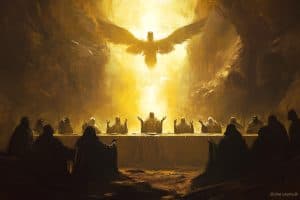
The “divine council” is a concept found in the Hebrew Bible, particularly in passages like Psalm 82:1, where Yahweh is depicted as presiding over a group of spiritual beings referred to as “gods” (Elohim).
It reflects a worldview where Yahweh is not alone in the spiritual realm but is supreme over a host of divine or semi-divine beings.
The Book of the Laws of YHWH included undisguised narratives of elohim, Elyon the Captain, Shaddai the Destroyer, CH-CH the Dragon, Asherah, Baal, Dagon, the moloch child-sacrifices, and the whole kaleidoscopic memory of the seba hassamayim. Far from Judaic monotheism it was the memory of the whole array of sky armies, otherwise known as elohim, who governed humanity in the deep past.
The Eden Conspiracy
The Elohim in Psalm 82
In this verse, Elohim appears twice:
The first refers to God (Yahweh) in the singular.
The second refers to other “gods” (Elohim), interpreted as lesser divine beings or heavenly hosts.
These “gods” could represent angels, spirits, or spiritual rulers over nations, depending on the interpretation.
Judgment in the Divine Council
The Psalm portrays Yahweh calling these other Elohim to account for their failure to rule justly. In subsequent verses, they are accused of neglecting justice, failing to defend the weak and oppressed, and fostering corruption:
“How long will you judge unjustly and show partiality to the wicked?” (Psalm 82:2).
Yahweh declares their fate: “You are gods [Elohim], sons of the Most High, all of you; nevertheless, like men you shall die, and fall like any prince” (Psalm 82:6–7).
Christian Interpretation
Early Christian writers sometimes associated Psalm 82:6 with Jesus’ divinity. In John 10:34–36, Jesus quotes this verse: “Is it not written in your Law, ‘I said, you are gods’?”
Jesus uses it to argue that if humans or beings could be called “gods,” His claim to be the Son of God is even more valid.


Comments are closed.