
Table of Contents
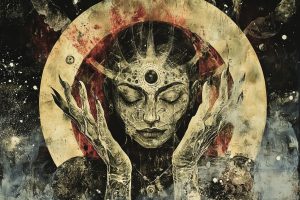
Babalon, often referred to as the Scarlet Woman, the Great Mother, or the Mother of Abominations, is a divine feminine archetype rooted in the esoteric and mystical traditions of Thelema, a spiritual philosophy developed by Aleister Crowley. She embodies profound aspects of femininity, sexuality, power, and transformation.
Characteristics of Babalon
- Divine Feminine Power
Babalon represents an unrestrained, sacred feminine energy that is both nurturing and destructive. She symbolizes the dynamic and creative power of the feminine in its fullest form. - Sexual Liberation
As the archetype of sacred sexuality, Babalon is often associated with the reclamation of sexual power and the unification of spiritual and physical desires. She challenges the taboos surrounding sexuality, portraying it as a divine force. - Cosmic Mother
In her role as the Great Mother, Babalon is seen as a source of life and a vessel for transformation. She is deeply connected to the cycles of creation and destruction. - Mystical Wisdom
She is linked with the pursuit of hidden knowledge and mystical truths. Babalon calls those who seek her to embrace inner authenticity and transcend societal norms. - Chalice of the Abyss
In Thelemic cosmology, Babalon holds the “Cup of Fornication,” which represents the universal womb and the receptacle of all experiences. Those who drink from her cup surrender their ego and merge with the infinite.
Symbolism
- The Scarlet Color
Scarlet is a recurring symbol of Babalon, representing passion, vitality, and divine power. It also alludes to her associations with sacrifice and transformation. - The Beast
Babalon often appears riding the Beast, a symbol of primal energy and untamed force. Together, they represent the unity of spirit and matter, or divine will and earthly manifestation. - Liberation Through Transgression
Babalon’s path often involves challenging societal and moral conventions, urging individuals to confront their shadows and embrace their fullest potential.
Key Texts and Associations
- The Book of the Law
Babalon is indirectly referenced in Crowley’s Liber AL vel Legis, where she embodies the principles of love, strength, and freedom. - The Vision and the Voice
Crowley’s work describes visions of Babalon and her dwelling in the City of the Pyramids, where she offers the ultimate transcendence to initiates. - Archetypal Parallels
Babalon has parallels with other divine feminine figures like Inanna, Ishtar, Kali, and Sophia, each embodying aspects of destruction, creation, wisdom, and empowerment.
Babalon invites individuals to explore the mysteries of existence through self-liberation, the merging of opposites, and the pursuit of spiritual unity. She stands as a potent symbol of transformation and the divine feminine’s boundless power.
It is also true that, we, as Magdalene priestesses, have been called harlots throughout time – as has the Great Mother been called the Great Whore. Such is the way of ignorance and distrust of the Divine Feminine and her union with the Divine Masculine – for true alchemical union of the Divine Feminine and the Divine Masculine would mean the cessation of the ‘dramatic play’ of duality and separation.
Anna, the voice of the Magdalenes

Connection between Babalon and Babylon
There is a connection between the concept of Babalon and the biblical Babylon, but it is more symbolic and esoteric than literal. The relationship lies in the reinterpretation and recontextualization of Babylon’s imagery in mysticism, particularly in Thelema and Western esotericism.
Babylon in the Bible
- Historical Babylon
Babylon was a real city in ancient Mesopotamia, often associated with wealth, decadence, and power. It became a symbol of worldly corruption and human hubris in the Bible. - Babylon in Revelation
In the Book of Revelation (17:3–5), Babylon is described as the “Great Whore,” who rides a beast and is adorned in scarlet and purple. She is a figure of judgment and represents spiritual infidelity, moral decay, and opposition to God. - Symbolism of Babylon
- Babylon represents the material world, indulgence, and the rejection of divine will.
- It is often seen as the antithesis of spiritual purity and righteousness.
Babalon in Esotericism
- Reclaiming Babylon’s Imagery
Thelema, as formulated by Aleister Crowley, reinterprets the biblical Babylon through a mystical lens, transforming it into Babalon, the Scarlet Woman. Rather than a symbol of sin or corruption, Babalon becomes an archetype of sacred femininity, empowerment, and liberation. - Contrast to Biblical View
- While biblical Babylon is condemned as immoral, Babalon celebrates the same qualities (passion, sensuality, power) as aspects of divine creation.
- Babalon embraces the union of spiritual and physical experiences, rejecting the dualism often present in biblical morality.
- The Beast and Babalon
- The biblical “Beast” is often seen as a symbol of evil and chaos. In Thelema, the Beast represents primal energy and divine will.
- Babalon riding the Beast symbolizes the union of spirit and matter, an essential concept in esoteric traditions.
Shared Symbolism and Divergence
- Scarlet and Opulence
Both biblical Babylon and Babalon are associated with scarlet, wealth, and sensuality. However, Thelema views these attributes as gateways to transcendence rather than moral failings. - Challenging Authority
The biblical Babylon opposes divine authority. Similarly, Babalon challenges conventional morality and societal norms but does so as a liberating force rather than a destructive one. - Mystical Feminine Power
Babalon reclaims and elevates the feminine archetype demonized in the biblical narrative, positioning it as central to spiritual growth and cosmic unity.


Comments are closed.