
Table of Contents
- Introduction
- Ancient Egypt
- Giza Plateau
- Construction Mysteries
- Grand Canyon: Theories of Ancient Civilizations
- Hopi Legends and Egyptian Connections
- Geographic Correlations
- India: Ellora Cave System
- Kalish Temple and Other Caves
- Peru: Ancient Engineering
- Ruins and Agriculture
- Refrigeration Structures
- Conclusion
Introduction
The video discusses ancient ruins and artifacts, particularly focusing on controversial claims about their origins, advanced construction methods, and potential misinterpretations by modern academia. The video explores examples from Egypt, the Grand Canyon, India, and Peru to highlight the mysteries surrounding these ancient sites.
Ancient Egypt
Giza Plateau
- The video emphasizes the enigmatic construction of the Great Pyramid, particularly the older sandstone casing stones beneath the more modern outer layers.
- Evidence of erosion suggests the possibility of an older structure concealed beneath the current pyramid.
- The oldest obelisk at Heliopolis, standing 20 meters (65.62 feet) tall and weighing 121 metric tons, reflects lost construction knowledge.
- Examples of massive monoliths include:
- Quartzite stones above Amenhotep III’s tomb, each weighing 110 metric tons.
- The Colossi of Memnon, each estimated to weigh between 600 and 1,000 metric tons.
- Blocks in the Temple of Khafre, some weighing over 400 metric tons.
Construction Mysteries
- Claims are made about the impossibility of ancient civilizations moving and shaping such massive stones with the technology of their time.
- The Mortuary Temple of Menkaure contains blocks estimated to weigh up to 220 metric tons, raising questions about ancient engineering capabilities.
Grand Canyon: Theories of Ancient Civilizations
Hopi Legends and Egyptian Connections
- A Hopi legend recounts an ancient civilization living in the Grand Canyon, escaping from an underworld, and settling near Colorado’s Pases Red River.
- An article from the Arizona Gazette (1909) described alleged Egyptian artifacts and rock-cut vaults discovered in the Grand Canyon, reportedly excavated by the Smithsonian Institution.
- The Smithsonian denies any involvement or discovery of Egyptian artifacts in the Americas.
Geographic Correlations
- Maps of the Grand Canyon feature Egyptian-inspired names like the Tower of Set, Isis Temple, and Osiris Temple, fueling speculation about connections to ancient Egypt.
India: Ellora Cave System
Kalish Temple and Other Caves
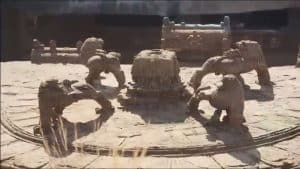
- The Ellora Caves, particularly the Kalish Temple, are highlighted for their advanced construction methods, cut directly from bedrock.
- Construction phases span the 6th to 12th centuries CE, with influences from Buddhism, Brahmanism, and Jainism.
- Some features suggest the possibility of tools and techniques from a lost, technologically advanced civilization.
Peru: Ancient Engineering
Ruins and Agriculture
- Examples include Moray and Ollantaytambo, where step-like structures were used to acclimatize crops to higher altitudes.
- Ancient water channel systems connected settlements and provided irrigation, showcasing advanced engineering.
Refrigeration Structures
- Yakhchals, ancient cooling and refrigeration structures, were designed to store ice and keep food preserved using ingenious airflow systems.
- These structures demonstrate a profound understanding of thermodynamics and material science.
Conclusion
The video concludes by questioning mainstream academic interpretations of ancient sites and civilizations. It suggests that many of these feats point to lost knowledge and advanced technologies that are yet to be fully understood.
Comments are closed.