
Table of Contents
- Introduction
- The Historical Discovery of Mesopotamian Texts
- Biblical Stories and Mesopotamian Narratives
- Themes in Mesopotamian and Biblical Texts
- Creation Narratives
- Flood Narratives
- Influence on Modern Theology
- Key Scholars and Historical Figures
- Controversy and Suppression
- Reading the Bible in Context
- Reframing God Stories
- Conclusion
Introduction
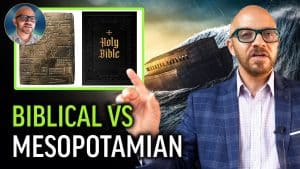
Paul Wallis examines whether the Bible borrows from earlier Mesopotamian texts such as those from Sumeria, Babylonia, Akkadia, and Assyria. He traces the historical and theological implications of this dependence, discusses the views of scholars, and explores the narratives of the Elohim in biblical and Mesopotamian traditions.
Paul Wallis recommends the New Jerusalem Bible (Expanded Study Edition) for its transparency in translating the original names of “Lord God” such as Elohim, El Elyon, El Shaddai, Yahweh, and Adonai. He praises this Bible for clearly identifying the specific names used in the original texts, allowing readers to understand the distinctions between these terms.
The Historical Discovery of Mesopotamian Texts
- In the 1800s, the translation of Mesopotamian cuneiform texts, led by Henry Rawlinson and George Smith, revealed narratives with similarities to biblical stories.
- George Smith, an Assyriologist, published The Chaldean Account of Genesis in 1876, highlighting parallels between biblical creation and Mesopotamian stories.
Biblical Stories and Mesopotamian Narratives
- The Bible contains unique stories, but many are influenced by earlier Mesopotamian narratives.
- Key biblical figures and events, including Elohim (the powerful ones), their conflicts, and their governance of human societies, bear resemblances to the Mesopotamian Anuna and Anunnaki.
- Notable parallels include creation myths, the flood narrative, and stories of divine beings.
Themes in Mesopotamian and Biblical Texts
Creation Narratives
- Both the Bible and Mesopotamian texts describe creation beginning with the separation of waters.
- In Genesis, Earth is depicted as a chaotic and ruined planet needing rehabilitation.
Flood Narratives
- Flood stories, including those of Atrahasis, Utnapishtim, and Noah, share similar themes, with a human warned to build a vessel to survive.
- The detailed dimensions of Noah’s ark align closely with those in Mesopotamian texts.
Influence on Modern Theology
- Modern academic theology acknowledges the Bible’s dependence on Mesopotamian sources.
- Pastors and theological scholars learn about these parallels but often avoid discussing them in church settings due to potential controversy.
Key Scholars and Historical Figures
- Henry Rawlinson: Deciphered Mesopotamian texts and established their connection to biblical narratives.
- George Smith: Documented these connections in his publications.
- Nathaniel Schmidt: Explored similar themes but faced professional backlash for his views.
Controversy and Suppression
- From the 8th to 6th centuries BCE, there was an effort within Judaism to transition from polytheism to monotheism.
- Historical reforms, such as those by King Josiah, aimed to erase other deities and consolidate worship under Yahweh.
Reading the Bible in Context
- To understand the Bible’s origins, it is important to study it alongside related texts from Mesopotamian cultures and other global mythologies.
- Resources like interlinear Bibles and lexicons can help uncover original meanings and connections.
Reframing God Stories
- Wallis argues that understanding the Bible as influenced by Mesopotamian narratives can lead to a more accurate view of God.
- Attributing violent and oppressive behaviors to ancient colonizers rather than God reshapes the perception of divine nature.
Conclusion
Paul Wallis encourages readers to explore the Bible in the context of its historical and cultural influences, advocating for a reframing of traditional narratives. He emphasizes the need for transparency in understanding the origins of biblical texts and their broader implications for faith and theology.
Comments are closed.