
Table of Contents
- The VA 243 Tablet: A Sumerian Artifact
- Sumerian Civilization and Technological Advancements
- The Solar System Map
- Discovery of Additional Celestial Objects
- The Asteroid Belt and Missing Planets
- Broader Astronomical Knowledge in Sumerian Texts
- Advanced Mathematical Models
- Observatories and Observation Technology
- Inheritance of Knowledge
- Conclusion
The VA 243 Tablet: A Sumerian Artifact
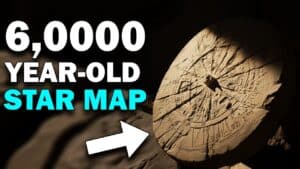
The VA 243 is a 6,000-year-old Sumerian clay tablet housed in the British Museum. The tablet features a depiction that has sparked decades of debate among historians and astronomers. Central to the controversy is the detailed solar system map that appears between the figures etched onto the tablet.
Sumerian Civilization and Technological Advancements
The Sumerians are acknowledged as one of the earliest advanced civilizations. They invented writing, the wheel, and the modern calendar. However, mainstream historians remain divided on the full extent of their technological capabilities. The VA 243 tablet challenges conventional narratives by depicting celestial knowledge that seems to predate the invention of the telescope by thousands of years.
The Solar System Map
The central illustration on the VA 243 tablet shows a prominent sun surrounded by 11 distinct celestial bodies. Modern scientific understanding suggests that five of these objects are not visible without telescopic technology, raising questions about how the Sumerians could have known of their existence.
Celestial Proportions
The proportions of the spheres on the tablet correspond with known planetary sizes in the solar system. For example:
- Small bodies near the center align with Mercury and Venus.
- A larger body in the expected position of Jupiter.
- Another large body slightly smaller, corresponding to Saturn.
Discovery of Additional Celestial Objects
The depiction includes planets that could not have been known in ancient times. Modern astronomers have recently identified gravitational anomalies suggesting the existence of a ninth planet, which appears to be represented on the VA 243 tablet.
The Asteroid Belt and Missing Planets
Interestingly, the asteroid belt between Mars and Jupiter is not depicted on the tablet. Instead, two unknown planets occupy this region. Some scientists speculate that the asteroid belt could have formed from the collision of these planets. If this hypothesis is correct, the Sumerians may have observed these planets before their destruction.
Broader Astronomical Knowledge in Sumerian Texts
Sumerian artifacts include over 500 tablets documenting astronomical phenomena. Among these, the Venus Tablet stands out, containing 21 years of detailed observations of Venus’s movements. Additionally, the Mul.Apin tablets feature comprehensive star catalogs and constellations, divided into three celestial paths.
Advanced Mathematical Models
Sumerian texts reveal complex mathematical models for predicting:
- Planetary positions.
- Eclipse cycles.
- Stellar movements.
These calculations align with modern astronomical data, despite being developed millennia before the advent of telescopes or computers.
Observatories and Observation Technology
The Sumerians may have used advanced observational methods, potentially including lenses or reflective devices. Their ziggurats, stepped pyramids rising above ground-level obstructions, might have functioned as observatories.
Inheritance of Knowledge
Some theories suggest the Sumerians inherited their astronomical knowledge from a prior advanced civilization. Sumerian texts reference the Anunnaki, described as beings who imparted knowledge of the cosmos. This could alternatively point to an earlier terrestrial civilization.
Conclusion
The VA 243 tablet, alongside other Sumerian artifacts, challenges modern assumptions about ancient technological capabilities. The precise astronomical knowledge depicted suggests that the Sumerians possessed tools or inherited knowledge that remains unexplained by conventional archaeology.
This raises broader questions about the origins of ancient civilizations and the possibility of lost technologies.
Comments are closed.