
Table of Contents
Book contents. Previous: Diodorus, Book XII. Next: Diodorus, Book XIII, part 2.
THE Historical Library OF Diodorus the Sicilian. BOOK XIII.
The PREFACE.
IF we should imitate others in the compiling of their Histories, we should (P. 331.) first in the Preface of every Book, observe some things pertinent to the Occasion and Subject in Hand, and then descend to the continuation of our Discourse, upon the Actions and Affairs that follow next in order: For by some small intermission from writing, we gain a breathing fit; the fruit and advantage by Prefaces. But in as much as we have promis'd to endeavour in a few Books, not only to relate things that have been done, but likewise to comprehend in that Relation, the time of above Eleven Hundred Years, it's necessary to avoid Prefaces, and come presently to the matters in Hand. Only promising this to inform the Reader, that in the Six former Books, are contain'd the things done in all Parts of the World, from the Trojan War, to the time the Athenians decreed the War against the Syracusians, to which from the Destruction of Troy, is Seven Hundred and Threescore Years: And that we shall begin this Book with that Expedition against the Syracusians, and end it at the beginning of the Second Carthaginian War against Dionysius the Tyrant of Syracuse.
CHAP. I.
The Athenian Fleet rigg'd out for Sicily. Alcibiades accus'd; Flies; Is Condemned; Goes to Sparta out of Italy. The Syracusians send for Aid to Lacedemon. Gylippus is sent to them. The Battel at Syracuse.
WHen Cabrias bore the Office of Archon at Athens, and the Romans invested (Olymp. 91. 2. An. Mu. 3531. Ant. Chr. 412.) Lucius Sergius, Marcus Servilius, and Marcus Papyrius, Three Military Tribunes, with Consular dignity, the Athenians having decreed War against the Syracusians, rigg'd out a Fleet, rais'd Money, and prepar'd with great diligence all other things necessary for the Expedition. To this end they commission'd Three Generals, Alcibiades, Nicias, and Lamachus, to whom they committed the management of the whole War. The richer sort to ingratiate themselves with the People, some of them supply'd the Fleet with Arms, others promis'd to advance Money towards the Victualling the Navy, and providing Pay for the Souldiers. Many likewise of the People, both Citizens and Strangers, freely offer'd (Preparations against Sicily.) themselves to the Generals, to be listed and inroll'd: And all were so confident, that they were ready to divide the Country of Sicily amongst themselves by Lot.
And now the Navy was ready to set sail; when on the sudden in one Night, (All the Images in Athens had their Heads struck off in one Night. Ant. Chr. 412.) all the Statues of the Goddess Minerva through the City (which were very many) had their Heads struck off. The Populacy conceiv'd this not to be done by any of the meaner sort, but by some in authority, with a design to destory the Democracy, and therefore they were highly incens'd at the wickedness of the fact, and promis'd great Rewards to find out the Authors. In the mean time, one of the Citizens came to the Senate, and told them, that in the new Moon about Midnight, he saw several Persons go into the House of a Foreigner, amongst whom Alcibiades was one. And when the Senate askt him how he could know him at such a time of the Night? He answered, he discerned him by the light of the Moon: By which Contradiction he detected his own Falshood, and never after could the least Discovery be made of that Fact by any Person whatsoever.
However notwithstanding this Accident, an Hundred and Forty Gallies were rigg'd out, besides Ships of Burden and other Ships, for transporting of Horses, (P. 332.) Provisions and other Necessaries, whereof there was a very great number. In this Expedition there went forth with them above Seven Thousand Men at Arms, and Slingers, and Horsemen sent from their Confederates, besides those belonging to their Fleet.
During this time, the Officers had a private Consult with the Senate, concerning the Administration of Affairs in Sicily, in case they should conquer the (Ant. Chr. 412.) Island. Where at length it was determined, that they of Selinuntium and Syracuse should be carry'd away as Captives and Slaves, and that the rest should have only a Yearly Tribute impos'd upon them. The next day the Officers with the Army, march'd down into the* Piraeum, and were follow'd with a great Multitude, both of Citizens and Strangers throughout the whole City; every one making it his business to take leave of his Friend or Relation. The Ships lay on every side of the Harbour with their Fore-decks adorn'd with Flags and Streamers erect, and shining with the splendor of the Arms. The Shoar round the Harbour was fill'd with† Altars of Incense, and Silver Bowls, out of which were poured out into Golden Cups, Drink-Offerings to the Gods, by them who worshipped the Deity, and earnestly pray'd for the happy Success of the Expedition.
The Port of Athens, (8.05 kilometers) from Athens, join'd to it with a long Wall. Plin. Nat. Hist. lib. 2. c. 85.
〈Greek〉
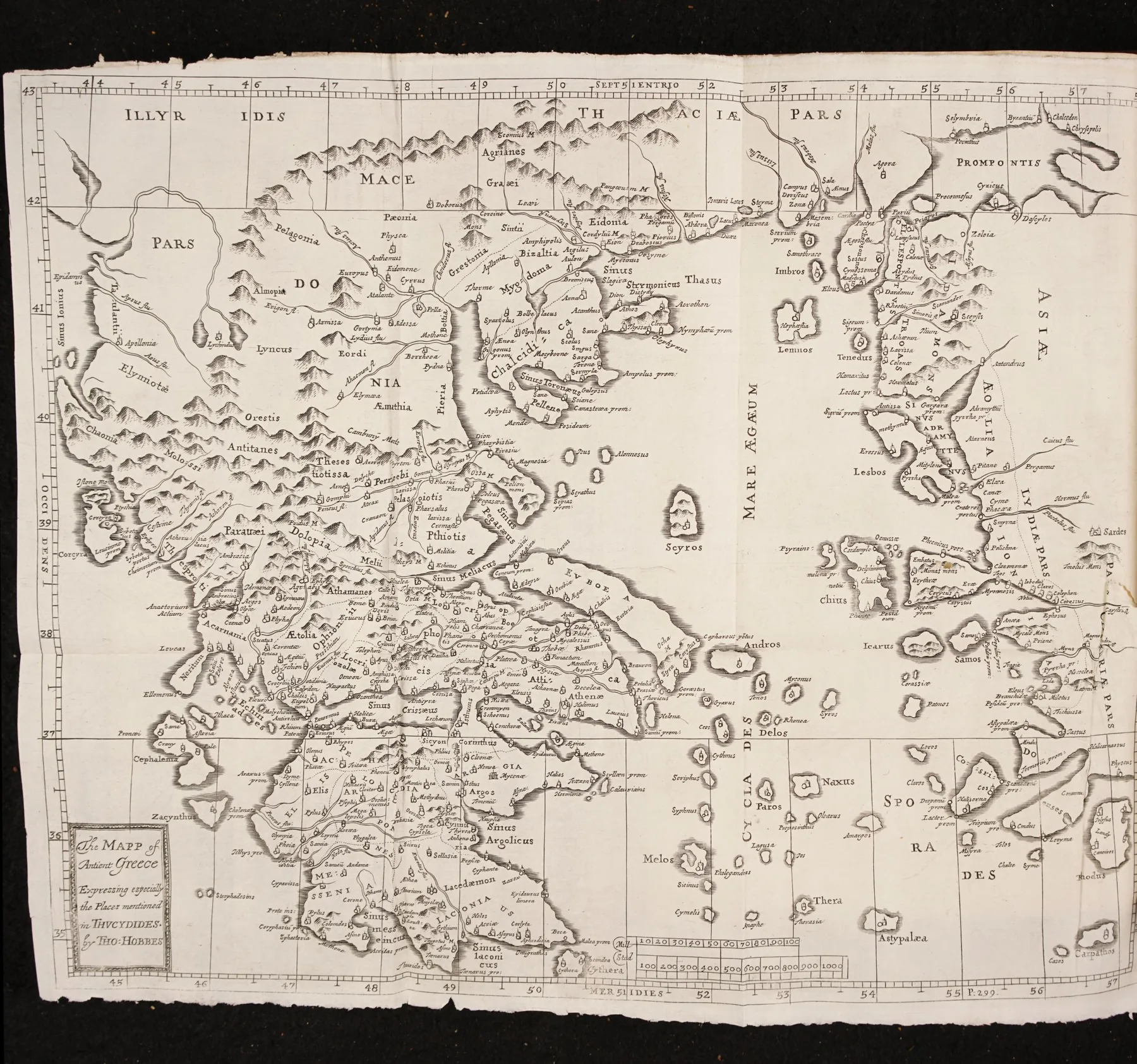
At length they set sail from the Pyraeum, and sailing round the Coasts of Peloponesus, arriv'd at† Corcyra: For here they were commanded to stay, till they were join'd by some others of their Neighbour Confederates. Being all come up to them, passing through the Ionian Sea, they came to the Promontory* of Japygia; hence sailing along the Coasts of Italy, they were refused by the Tarrentines; and passing by the likewise of Metapontum and Heraclea, they came to the Thurians, by whom they were courteously received: Loosing from thence, they made for Crotona, and there bought some Provisions: And sailing by the Temple of Juno Lacinia, pass'd under the Promontory call'd Dioscurias. After this, leaving Tesasletius (as it is call'd) and Locris behind them, they anchor'd near Rhegium and invited the Rhegians to join with them; who answered, that they must first advise with the other Italians.
Now Corfu.
A Promontory of Italy.
As soon as the Syracusians heard that the Athenians were within their* Seas, they made Three Generals, invested with Absoute Power, Hermocrates, Sicanus and Heraclides, who rais'd Souldiers and sent Messengers through all the Cities of Sicily, to press them with all earnestness to join with them in Arms for the common safety of their Country; For that the Athenians (under Colour of a War against the Syracusians) had no other Design but to subdue the whole Island. To which the Acragentines and Naxians, answered, that they were resolv'd to abide firm in their League with the Athenians. The Camarians and Messenians, declared they were for Peace, and refused to return any Answer to what was propos'd. The Himereans and Seluntians, with them of Gela and Catanea, promis'd their Assistance. The Cities of the† Siculi (though they favoured the Syracusians) yet desired to be at ease, and not knowing what to resolve, judg'd it most advisable to consider a while of the business, that they might be better able to discern what was like to be the issue of so great a War.
〈Greek〉. In the Streights.
The Siculi are they that came out of Italy, and call'd it Sicily, which was before Sicania. Sicilians is a general Name for all the Inhabitants.
The Aegistines plainly declaring they could not contribute to the Athenians (Ant. Ch. 412.) above Thirty Talents, the Athenian Generals accused them of Treachery; and setting Sail from Rhegium with their whole Fleet, arriv'd at Naxus in Sicily, where they were friendly and courteously received by the Citizens; and from thence they made to Catana. But they of Catana refus'd entrance to the Souldiers, yet admitted the Generals, and call'd a common Assembly; where the Athenian Generals treated with them concerning the entring into a mutual League offensive and defensive; but whilst Alcibiades was making an Harangue to court (〈Greek〉.) the People, the Souldiers broke through a little Gate into the City, by which means the Cataneans were forc'd to join with the Athenians in the War against the Syracusians.
Whilst these things were acting Abroad, they who were Enemies to Alcibiades, (Alcibiades accused at Athens.) (through private Peaks and Grudges) at Athens took Occasion, from the maiming and spoiling of the Images, and accused him in the Common Assemblies of a Conspiracy against the Democracy; which Accusation was much supported and further'd by what had then lately happen'd at Argos: For some of the chief of the City, conspiring with others of their Dependents, to overturn the Democracy in Argos, were all destroy'd by the Citizens. This Attempt of innovation there, (P. 333.) caus'd the Accusation at Athens to be more readily believed, and therefore the People being with all earnestness stir'd up by the Orators, sent a Ship from Salamis to Sicily, to recall Alcibiades, in order to abide his Trial.
As soon as it arriv'd at Catana, Alcibiades was made acquainted by the Messengers, (Ant. Ch. 412) what Order they had from the People; upon which, he (with those who were accused with him) went on Ship-board into his own Gally, and together with that from Salamis set Sail from Catana. As soon as he arriv'd at Thurium, either through Consciousness of the Guilt of his Impiety, or through the fear of the greatness of the Danger, he and all those accused with him made their Escape. (Alcibiades withdraws himself.) Those who were on Board the Salamian Vessel, made great inquiry after Alcibiades; but when he could not be found, they Sail'd back to Athens, and there gave an Account what had happen'd.
Upon which, the Athenians gave Judgment of Death upon Alcibiades, and all (Alcibiades Condemn'd.) his Fellow Fugitives, (their Names being only put up to the Court) without being further heard.
But Alcibiades fled out of Italy to Sparta, and there perswaded the Lacedemonians to invade the Athenians: But the Generals that remain'd in Sicily, sail'd with their Forces to Aegista, and took Hyccara, a small Town of the Siculi; out of whose Spoils they rais'd an Hundred Talents. And having receiv'd Thirty Talents more from the Aegistines, they sail'd back to Catana; where having consulted how to posses themselves of a Place near to the chief Port of Syracuse, with-little or no hazard, they sent thither a Trusty Fellow of Catana, not suspected by the Syracusian Officers, with Orders to acquaint them that some of the Cataneans had plotted upon a sudden to set upon the Athenian Souldiers in the Night, when they had laid aside their Arms, and to burn all their Shipping in their Harbour: And that this might be the better effected, they desir'd the Commanders to appear with their Army, that the Design might not be defeated. As soon as the Catanean came to Syracuse, he delivered his Message. The Generals believing what he said, appointed a Night when they would march out with their Forces, and sent back the Man to Catana. At the Night appointed, the Syracusians led forth their Men towards Catana; and the Athenians (with great Silence) made out with their Fleet to the great Port of Syracuse; and seizing upon Olympius; and all the Places bordering round about, they there fortify'd their Camp. But the Syracusians understanding the Treachery, return'd with a swift March, and set upon their Enemies Camp. They on the other side issued forth, and Battel was join'd, in which the Athenians kill'd Four Hundred of their Enemies, and put the rest to flight: But the Athenian Generals discerning that the Enemy exceeded them in the number of their Horse (that they might be the better provided for the Siege,) sail'd back to Catana.
Messengers likewise were sent to Athens, with Letters to the Democracy to (Ant. Chr. 412.) desire more Horse and Moneys, because the Siege they were about to begin, would be long and tedious. Upon which, it was decreed, that Three Hundred Talents and some Troops of Horse should be sent into Sicily.
During these things, Diagoras surnamed the* Atheist, accused for his Impiety, for fear of the People, fled out of Attica; and a Talent of Silver was promis'd as a Reward by the Voice of the common Cryer, to any that should kill him. In Italy the Romans had War with the Aequi, and took Lavinium by Assault: And these were the Actions produc'd this Year.
〈Greek〉. This Diagoras was a Milean; he questioned in his Writings, whether there were any Gods; for which he was prosecuted. Vid. Lact. lib. 1. p. 7.
Pisander now executed the Office of Archon at Athens, and the Romans created (P. 334. Olymp. 91. 3. Ant. Ch. 411. The Syracusians crave aid of the Lacedemonians.) Four Military Tribunes as Consuls, Publius Lucretius, Caius Servilius, Agrippa Memenius, and Spurius Veturius. At this time the Syracusians sent Embassadors to Corinth and Lacedemon, to desire Aid, and earnestly intreated that they would not suffer them to be reduc'd to the utmost extremity. The Lacedemonians stirr'd up by Alcibiades, determin'd to assist the Syracusians, and made Gylippus General. The Corinthians sent only Two Gallies under Pythes to go along with Gylippus into Sicily for the present, while they were preparing a greater Fleet to be sent after them. Nicias and Lamachus the Athenian Generals at Catana, (Ant. Chr. 411.) having receiv'd Three Hundred Talents, and re-inforc'd with Two Hundred and Fifty Horse from Athens, set Sail for Syracuse, and arriving there in the Night unsuspected by them of Syracuse, possess themselves of† Epipole; which they of Syracuse perceiving, made a Sally with all speed to drive them thence, but were forc'd back within their Walls, with the loss of Three Hundred Men.
An high piece of Land near the City over-topping it.
After this, there came to the Athenians Three Hundred Horse from Aegina, and Two Hundred and Fifty from the Sicilians, which made up a Body of above Eight Hundred Horse: Being inforc'd, they drew a Trench round Labdalus, and blockt up the City Syracuse on every side with a Wall. At which the Syracusians were greatly terrify'd, and to prevent the building of the Wall, they sally'd out; but after a Skirmish with Horse on both sides, the Syracusians were beaten back with great loss. Then the Athenians with a part of their Army possess'd themselves of a Place call'd Polichna, commanding the Port, and drew a Wall about it, wherein they included the Temple of Jupiter: So that now Syracuse was Besieg'd on both sides. With these many Misfortunes, the Syracusians were greatly discouraged; but when they heard that Gylippus was arriv'd at Himera, and raising Men, they began to take Heart. For Gylippus as (Gylippus arrives at Himera.) soon as he came to Himera, with Four Gallies only, after he had secur'd his Ships, brought in them of Himera to join with the Syracusians; and from them and the Geleans, Selinuntians and Sicanians, he rais'd and listed Men, who when they were all mustered, made up a Body of Three Thousand Foot, and Two Hundred Horse; with which he march'd through the midst of the Country, and entred into Syracuse: And after a few Days, led forth his Forces, with those of the Syracusians, against the Enemy. Whereupon a sharp Battel was fought, (A Baatel fought near Syracuse.) wherein Lamachus the Athenian General was kill'd. But at length (after many kill'd on both sides) the Athenians got the Day.
After this Fight, came in Thirteen Gallies from Corinth, whereupon Gylippus having drawn the Souldiers out of these Ships, with them, and the Syracusians set upon the Enemies Camp, and assaulted the Epipole: And though the Athenians made a Sally, yet after a sharp Dispute, and many of them kill'd, they were routed by the Syracusians; who presently demolish'd the Walls and Fortifications through all the Epipole. The Athenians having lost this Place, led away their Army to another Post.
These things thus perform'd, the Syracusians sent Embassadors a Second time to Corinth and Lacedemon for further Supplies. To whom were sent a Thousand Men from Corinth, Beotia and Sicyon; and from Sparta Six Hundred. In the mean time, Gylippus traversing the Country about from Town to Town in several Parts of Sicily, brought in many to join with him in the War; and being reinforc'd with Three Thousand Men from the Himereans and Sicanians, (Ant. Chr. 411. P. 335.) he march'd his Army through the Heart of the Country: But the Athenians having intelligence of their coming, cut off one half of them by an Ambush; the rest came safe to Syracuse.
And now they of Syracuse being incouraged with fresh Supplies, determin'd to try their Fortune in a Sea-Fight: What Shipping they had left, they set forth, and built others, which they made use and† trial of in the little Harbour.
〈Greek〉, 〈◊〉 〈Greek〉
Nicias the Athenian General, acquainted the People of Athens by Letters, that the Syracusians were much inforc'd, and that they were putting forth a great Fleet, with an intent to come to a Sea-Fight; and therefore desir'd more Shipping and Moneys to be sent him, and a Collegue to bear part of the Burden and Care of the War. For Alcibiades being fled, and Lamachus kill'd, he only remain'd, and that very infirm and unhealthful. Upon this the Athenians sent into Sicily about the Summer Solstice, Ten Gallies, under the Command of Eurymedon, with an Hundred and Forty Talents of Silver: But withal preparing and designing to send a greater Fleet at the Spring. And to that end, (Ant. Chr. 410.) they rais'd Men and Money in every Place from among their Confederates. In Peloponesus the Lacedemonians by the instigation of Alcibiades, broke the League they had made with the Athenians, and the heat of this War continu'd for the space of Twelve Years.
CHAP. II.
The Lacedemonians invade Attica. The Fight at Sea between the Syracusians and Athenians. Eurymedon and Demosthenes arrive in Sicily. A Plague in the Athenian Camp. Another Fight between the Syracusians and Athenians. The latter routed at Sea. The Athenians ruin'd in Sicily. Nicholaus's long Oration. Gylippus his Answer.
THis Year ended, Cleocritus governed in chief at Athens, and at Rome Four (Olymp. 91. 4. An. M. 3559. Ant. Ch. 410.) Military Tribunes executed the Authority of Consuls; that is to say, Aulus Sempronius, Marcus Papyrius, Quintus Fabius, and Spurius Nautius. At this time the Lacedemonians invaded Attica under Agis their General, and Alcibiades the Athenian. They seize upon Decelia, a Place very strong and fit for a Garrison, and there they built a Fort; from whence this War was call'd the Decelian War. On the other side, the Athenians sent Charides with Thirty Sail into Laconia, and decreed Fourscore Gallies, and Five Thousand Souldiers to be sent into Sicily.
In the mean time the Syracusians in order to a Sea-Fight before determin'd, made out with a Fleet of Fourscore Sail well Mann'd, against the Enemy; whom the Athenians met with a Fleet of Sixty Sail, whereupon began a fierce Fight: (A Sea-Fight between the Athenians and Syracusians.) And now the Athenians came running to the Sea-side from every Quarter, from their Posts and Forts, some out of Curiosity to see the Engagement, others to be assistant to their Countrymen in their Flight, in case they should be worsted. The Syracusian Officers foreseeing the Athenians were likely to do, as now they did, had before given secret Orders to those that were left as a Guard for the City, to Assault the Forts of the Athenians which were full of Money, Naval Preparations, and other Provisions. The Syracusians therefore easily possess'd themselves of the Forts, which were slightly guarded, and made a great Slaughter of them that came from the Sea-shoar in aid of their Fellows. (Ant. Ch. 410.) Hereupon a great Noise and Clamour being made about the Forts, and in the Camp, the Athenians Souldiers now engag'd at Sea, were struck with great Terrour, and gave back, and at length betook themselves to the defence of the Forts and Fortresses that were left; whom the Syracusians pursu'd, without observing any order. Whereupon the Athenians discerning there was no hope nor way left of escaping at Land, (for that the Syracusians had possess'd themselves of Two of their Forts) tackt about, and were forc'd to renew the Fight: Upon which, with their whole Fleet, in a Line of Battel, they fell upon the Syracusians (who were separated one from another, and had their Line broken and disordered by the Pursuit) and sunk Eleven of their Ships, pursuing the rest to the Island. After the Fight, both sides set up a Trophy, the Athenians for their Victory at Sea, and the Syracusians for their Success at Land. The Fight at Sea having this Issue, and the Victory so hardly obtain'd, the Athenians (understanding that Demosthenes within a few Days would be with them with a Fleet, were resolved not to attempt any thing further, till those Forces arriv'd. The Syracusians on the contrary resolv'd to lay all at stake, and try the utmost by force of Arms, before the Army of Demosthenes came up. And to that end, they fac'd the (P. 336. Ant. Chr. 410.) Athenian Fleet, and did all they could every Day to provoke them to a Battel.
About that time Aristo a Corinthian Commander of a Vessel, advis'd the Syracusians to make the Fore-Castles of their Ships shorter and lower, which was of great advantage to them in Fights at Sea afterwards: For the Fore-Castles of the Athenian Gallies were both very slender and high built, by reason whereof their Beaks made no impression, but where they met with those equal in height; and therefore the Enemy receiv'd no great Prejudice by them. But the Vessels of the Syracusians (having their Fore-Decks low and strong built,) often at the first Stroke sunk the Athenian Gallies.
The Syracusians (as is before related) many Days dar'd the Athenians to Fight both by Sea and Land, but all to no purpose; for they kept close, and would not be drawn forth by any means. But afterwards (some of the Officers of the Fleet not being able longer to indure the Insolencies of the Syracusians) part of the Navy set upon them in the great Haven, which at length engag'd the whole Fleet. The Athenians indeed excell'd the other in (Another Sea Fight.) the swiftness of their Gallies, and in the expertness and diligence of the Sea-men: But because the fight was in a strait and narrow Place, this advantage was of no use to them.
The Syracusians therefore being confusedly mixt with their Enemies, and giving them no respite or time to withdraw, they drove them from off their Decks and their Fore-Castles, with Stones and Spears. And when they had (Ant. Chr. 410.) with the Beaks of their Ships pierc'd through many of the Enemy's Gallies, they boarded them, and the Fight seem'd within the Ships, just like a Battel at Land. All things thus going to rack on the Athenians side, they fled outright with great precipitation; whom the Syracusians pursu'd close, and sunk Seven of their Gallies, and disabled many more.
The Syracusians being now grown confident, by their late Victories both at Sea and Land, presently arrives Eurimedon and Demosthenes, with a (Demosthenes and Eurimedon arrive at Sicily.) great Army from Athens, and with many Auxiliaries from Thurium and* Messapia which join'd them in their Passage. These Generals brought with them more than Three Hundred and Ten Gallies, and Five Thousand Men, besides Seamen: But Arms, Moneys, Engines for a Siege and other Provisions were on board other Transport Ships. Upon this the Syracusians were again discourag'd, judging they were never able for the future to cope with so potent an Enemy.
Messapia an Island neer Sicily call'd Calabria. Ant. Chr. 410.
Demosthenes having now persuaded his Collegues to seise upon the Epipole, (for• otherwise he could never straiten the City on every side) set upon the Syracusians in the night with Ten Thousand heavy Arm'd Men, and as many light Arm'd; (Ant. Chr. 410) and the Assault being unexpected they took some Forts, and entring within the Fortifications, demolish'd part of the Wall. But the Syracusians running together from all parts to the Place assaulted, and Hermocrates with a choice Band of lusty Young Men hasting in with aid and assistance; the Athenians were driven out, and through the darkness of the Night and ignorance of the Passages were dispers'd and scatter'd far from one another, so that the Syracusians with their Auxiliaries with a close persuit kill'd Two Thousand Five Hundred of (Ant. Chr. 410. The Athenians worsted.) them, and wounded many that got off, and possess'd themselves of a great Number of Arms.
After this encounter, the Syracusians sent Sicanus one of the Officers with twelve Gallies to the rest of the Cities both to inform them of the Victory and likewise to desire further Aid.
The Athenians (their affairs now declining so much to the worse, and the (P. 337. A Plague in the Athenian Comp.) Plague breaking forth in the Army by reason of a stinking marsh Ground near adjoyning) consulted what was sit to be done in the present exigency. Demosthenes was of Opinion without delay to return to Athens, saying it was far more commendable to venture their Lives for their Country against the Lacedemonians than to lie still in Sicily doing nothing. But Nicias said it was base and dishonourable (Ant. Chr. 410.) to leave the Siege when they were so plentifully supply'd, both with Shipping Men and Money. And moreover, that they should be involv'd in great Danger by those whose common practice it was, to asperse the Generals, if they should make Peace with the Syracusians, and return to their Country without the order and command of the People. Among those that were then present at the Consult some approv'd of the Advice of Demosthenes for returning; others agreed with Nicias. But nothing being determin'd, they lay idle without any Action.
In the mean time, great Aids and Supplies came to them of Syracuse from the Siculi, Selenuntians, Geleans, Himereans and Camarineans, which encourag'd them as much as it discourag'd the Athenians. And besides the Plague so rag'd and increas'd that a great part of the Army Perish'd, which caus'd them all now to repent that they had not return'd before. The Athenian Army therefore being in a tumult, and hasting to their Shipping, Nicias himself was forc'd to a Compliance. And now both the Generals agreeing in Opinion, the Souldiers Shipt their Baggage and Lumber, and having all Aboard their Ships, hoist up Sail. And the Generals caus'd it to be Proclaim'd that upon a Sign given all should be ready, and if any loytred they should be left behind. But the Night before they intended to set Sail, the Moon was Ecclips'd, which occasion'd Nicias (who was (Ant. Ch. 410.) naturally Superstitious, and then in great uneasiness by reason of the Plague) to advise with the Sooth-sayers. By whom Answer was given, that they must not by any means Sail of three Days: Into which Opinion Demosthenes and those of his party likewise were led through their Superstition. The Syracusians understanding (Another Sea Fight.) by Deserters the cause of the stay, Man'd all their Gallies, to the Number of Seventy Four. And drawing out their Land-Forces, set upon the Athenians both by Sea and Land. On the other side the Athenians Man'd Fourscore and Six Gallies and gave the Command of the Right Wing to Eurymedon, against whom was oppos'd Agatharcus the Syracusian General. In the left Wing they plac'd Euthydemus, in opposition to Sicanus, who Commanded for the Syracusians. Menander Commanded the middle Battle on the Athenians side, and Pithes the Corinthian for the Syracusians. And altho' the Athenians Line of Battel stretch'd out further in length than the Syracusians because their Ships were more; yet that which seem'd to be their advantage prov'd to be their ruin in the Issue.
For Eurymedon striving to surround the Wing opposite to him (by that means being sever'd from the rest of the Fleet) was driven by the Syracusians (who bore down upon him) into the Creek Dascones, before possess'd by other Syracusians; where being hemm'd in within the Straits, and forc'd upon the Shoar, (upon a mortal Wound given) he fell down Dead, and there seven of his Ships were destroy'd. In the heat of the Fight, the report spread abroad that the General was kill'd, and many of his Ships lost; upon which the chiefest of the Gallies (Ant. Ch. 410.) which were next in place and order to the Vessels lost, began to give back, and thereupon the Syracusians press'd forward and (heated by their late success) fell (P. 338.) with great fury upon the Athenians and forc'd them to an absolute Flight, and driving them into the Shallows of the Haven, many of the Vessels were stranded among the Shelvs and Sands. Upon which Sicanus the Syracusian Admiral fill'd* a Ship with Fagots, Fire-brands and Pitch, and set it on Fire among the Ships floating upon the Shallows. On the other hand the Athenians with all expedition extinguish'd the Flames, and when they saw there was no other way left to escape, they valiantly grappled with their Enemies, and threw them overboard. In the mean time the Land-forces of the Athenians were ready upon the Shoar to Aid them that fled that way, and bestirring themselves with extraordinary Valour and contempt of all Dangers routed the Syracusians at Land. But they being Victors at Sea return'd into the City, having not lost many Men in the Sea-Fight. But the Athenians lost no less than Two Thousand Men and Eighty Gallies.
A Fire-Ship.
The Syracusians now conceiving that their City was safe, and that their business remaining was to break into the Enemies Camp and ruin their Army, block'd up the Mouth of their Haven with Ships join'd, and fastned together, to hinder the (Ant. Ch. 410.) Flight of the Athenians by Sea. To which end they made a Bridge with Boats, Gallies, and other Sihps fixt with Anchors, compacted and fastned together with Iron Chains. The Athenians perceiving that they were penn'd up on every side, and no way of escape remaining, consulted and resolv'd to sill what Ships they had remaing with the best of their Souldiers, that with the multitude of their Shipping, and resoulteness of their Souldiers (now ready to Fight as Men in a desperate condition) they might strike a Terror into the Syracusians. Hereupon the chiefest of the Officers and best and most expert Souldiers Imbark'd and Man'd an Hundred and Fifteen Gallies. The rest of the Army they plac'd in order upon the Shoar. On the other side the Syracusians (being furnish'd with Land-Souldiers for the Defence of their Walls) fitted out Seventy Four Gallies, attended by many of the young Boys of the City, (not yet of full Age) in other Ships as Auxiliaries to be ready to aid and assist their Parents. The Walls of the Harbour and every high Place within the City were fill'd with Multitudes of Spectators. For both Women and Children and all others unfit to bear Arms (with great concern and trembling of Heart) stood to view the Fight in (〈Greek〉.) in order to judge how things were like to go with them. At the same time Nicias, the Athenian General, viewing the Fleet, and seriously considering the greatness of the danger, left his Post upon the Shoar, and went on board a Vessel, and sail'd round the Athenian Fleet, and call'd to the Commanders (A great Sea-Fight in the Harbor at Syracuse.) and Captains of every Gally, earnestly intreating them with his Hands lift up to Heaven, that every one would strive to out-do another, and improve to the utmost the present opportunity, being the last ground of hope they were ever like to injoy, for in their valour in the Sea-Fight now approaching, lay the safety and preservation both of them and of their (Ante Chr. 410. Nicias stirs up the Souldiers to Fight like Men of Valour.) Country. Those that were Fathers he put in mind of their Children: Those that were nobly born he earnestly press'd and exhorted that they would be careful to avoid what ever would stain the Honor and Glory of their Families: Those that had been advanc'd by the People for their former good Services, he advis'd now to approve themselves worthy of those marks of Honor they then bore. Lastly, he put them in mind of the Trophies at Salamis, earnestly adjuring them that they would not prostitute the Glory of their Country, and become Slaves to the Syracusians. After this Speech, Nicias return'd to the Army at Land. When they in the Fleet had Sung the† Paean, they made out with a Design to break the Blockade at the Mouth of the Harbour. But the Syracusians sail'd up in order of Battle against them, with that speed that they drove them off the Bomb and forc'd them to Fight. In this confusion some Sail'd towards the Shoar, others made into the middle of the Harbour, and others towards the Fortifications; and thus their Lines being broke, the Fleet was presently separated and dispers'd, by which means the Athenians, in this manner disappointed, were forc'd to Fight here and there, up and down in the Harbour it little (Ant. Chr. 41〈…〉) Squadrons and small Parties: However the Fight was obstinate on both sides. The Athenians exceeding in Number of Ships, seeing no other hopes of safety, undauntedly despis'd all Dangers, and resolv'd to die Valiantly. On the other hand, the Syracusians knowing their Parents and Children were observing them, put themselves forth to the utmost, every one striving to improve his Valour, to gain the Victory for his Country. Many there were, that when their Ships were pierced through by the violent Assault of the Enemy, leapt into the Ships that pierc'd them, and fought bravely upon their Fore-castles in the midst of their Enemies. Others with grappling Irons, so join'd the Ships together, that they forc'd their Enemy to fight on Board, as if they had been at Land. And there were not a few that when their own Ships were disabled, boarded their Adversaries, and kill'd and threw them overboard, and so possess'd themselves of their Vessels. And now the crashing of Ships one against another, and the Cries and Shouts of the Combatants and Dying Men, was heard in every Place throughout the whole Harbour: For sometimes one single Vessel was surrounded, and struck through with the Beaks of many, and so the Water forcing in at the Breaches, the Ship with all the Men in it, sunk together. And many (after their Ships were sunk) endeavour'd to save themselves by Swimming, but were struck through with Darts, and wounded with Spears, and so miserably perish'd. In the mean time, the Masters of the Ships were amazed, (Ant. Ch. 410.) to see the Confusion and Disorder of the Fight, seeing nothing but tumult and horror about them, one Ship often set upon by many, and what was commanded, not regarded, and the Advice to one, disagreeable to the Circumstances of another; and after all, none attending to what was said. For what by Storms of Darts, crashing of Ships, brushing off of Oars, increase of Noise and Clamour of them that were engag'd, and loud Shouts of the Army upon the Shoar, incouraging them upon the Sea, none heard what Orders were given: For the Shoar was full of Souldiers, the Syracusians in one part, and the Athenians in another. By which means, they that were driven in the Fight near to the Land, were sometimes succour'd by them upon the Shoar. The Spectators upon the Walls, gave great Shouts when they discerned any advantage gain'd by their Friends; but when they were in danger to be overcome, they fill'd the Air with doleful Groans and Lamentations, calling upon their Gods for deliverance. Sometimes some of the Gallies of the Syracusians were destroy'd under the very Walls, and their Kindred and Relations Butcher'd before their Faces; so that Parents were the Eye-Witnesses of the Death of their Children, Wives of the miserable end of their Husbands, and Brothers of their Brothers.
A Song before Battle. P. 339.
And after the Fight had lasted long (with much Slaughter on both sides) yet the Battel was still carry'd on, for none (never so greatly press'd) durst fly to Land. For the Athenians ask'd them which made towards the Shoar, whether they intended to Sail to Athens by Land? So the Syracusians on the Shoar, demanded of them that fled towards them, Why they were now ready (Ant. Chr. 410.) to betray their Country, who would not suffer them that staid on Shoar to imbarque with them? Did they shut up the Mouth of the Harbour, as if they (P. 340.) would prevent the Escape of the Enemy, to the end that they themselves might have the better Excuse to fly to the Shoar? And being that every Man must of necessity die, what more honourable Death could they desire, than that for their Country, which is now a witness of the Engagement, and whom they basely and sordidly desert? With these and the like Reproaches did they who fled to Land, meet with from the Souldiers plac'd on the Shoar: Whereupon they return'd to the Battel, though greatly disabled in their Shipping, and their Bodies so wounded, that they were scarce able to defend themselves. At length the Athenians nearest to the City were forc'd to fly. Presently after, they that (The Athenians routed in the Sea-Fight.) were next gave back, till at length the whole Fleet made away. Whereupon the Syracusians pursu'd with a great Shout. Those of the Athenians that escap'd (being driven upon the Shelves and Sands) leap'd out of their broken and shatter'd Vessels, and fled to the Land Army. The Harbour was now full of Arms and Wrecks of Ships every where. Threescore of the Athenian Ships were absolutely destroy'd, of the Syracusians Eight were lost, and Eleven disabled.
The Syracusians tow'd as many of their Gallies to the Shoar as they could, and took out the Dead Bodies of their Citizens and Confederates, and gave them an Honourable Burial. The Athenians throng'd together to the Generals Tents, desiring them not so much to regard the Ships, as the preservation both of (Ant. Chr. 410.) themselves and the Souldiers. Thereupon Demostbenes declar'd that more Ships were forthwith to be man'd, in order to force the Blockade, which if done presently, they might all easily escape.
Nicias was of a contrary Opinion, and advis'd the leaving the Ships, and to march up into the heart of the Country to the Cities of their Confederates; whose Opinion all embrac'd: And having burnt some of their Ships, they forthwith made it their business to march away. Their Design of Decamping in the Night being known to the Enemy, Hermocrates advis'd the Syracusians to draw out all their Forces in the Night, and stop all the Passes on the High-Ways. But the Officers not approving of this, because many of the Souldiers were wounded, and all wearied and tir'd out by the late Engagement, sent some Horsemen to the Athenians Camp, to inform them that the Syracusians had laid all the Ways with Souldiers to intrap them in their March. The Horse coming in late in the Night, (the Athenians believing they were sent out of kindness to them from the Leontines) were in a great perplexity, and thereupon stay'd at present where they were; though they might have pass'd with great safety, if they had not been thus deluded. The Syracusians therefore as soon as it was light, sent out Souldiers, and secur'd all the narrow Passes on the Road. The Athenians divided the Army into Two Parts, their Sick Men and* Carriages they plac'd in the middle; those that were strong and able to fight, were in the Front and Rear: Demosthenes led these, and Nicias the other, and so they march'd towards Catana. In the mean time, the Syracusians drew Fifty Gallies left behind, with Ropes into the City, and ordered all their Sea-men and Souldiers out of the Gallies, and arm'd them, and so pursu'd after the Athenians (Ant. Chr. 410.) with all their Forces, and continually vexed, galled, and even tir'd out the (The miserable Condition of the Athenians in Sicily.) Rear. Pressing thus upon their Backs for Three Days together, and possessing all the Passes before them, the Way to Catana was quite blockt up. At length being chas'd through the Helorine Way, to the River Assinarus, where there was no going forward, they were absolutely coup'd up, and there the Syracusians kill'd Eighteen Thousand of them, and took Seven Thousand Prisoners, among whom were Demosthenes and Nicias the Generals. The rest were given as a Prey to the Souldiers; for the Athenians (no Way being left to escape) were (P. 341.) forc'd to deliver up, not only their Arms but themselves, as Captives to their Enemy's Mercy.
〈Greek〉
Upon this happy Success, the Syracusians erected Two Trophies, and fixt to them the Arms of the Generals, and then return'd to the City. Hereupon the whole City gave publick Thanks unto the Gods. The next Day an Assembly was call'd, to consider what was to be done with the Prisoners. There Diocles, one of the highest Esteem among the People, deliver'd his Opinion, That the Athenian Generals should be first Scourg'd, and then put Death, and that the rest of the Prisoners should be sent to the Quarries. And that they that had any ways assisted the Athenians, should be sold under the Spear; and that no more than Two‖ Cotyles of Corn a Day, should be allow'd to every Prisoner. When the Decree was read, Hermocrates then in the Assembly began to speak, and say, That it was more commendable to use a Victory with Moderation and Humanity, than to overcome.
About half a Pint.
The People murmuring and grumbling at this, as not pleasing to them, one Nicholaus, who had lost Two Sons in this War, ascends the Desk, supported by his Servants, by reason of his Age. At which the People ceas'd their Murmuing, supposing he would be sharp against the Prisoners. Silence being made, the Old Man began thus, Ye Inhabitants of Syracuse, I my self have born no small (Nicholaus's Speech.) part of the Calamities of this War; for being the Father of Two Sons, I readily sent them forth to venture their Lives for the defence of their Country; and for them were sent a Messenger, who inform'd 〈…〉e of the Death of them both; and though I am every Day desiring they were alive, yet considering the manner of their Deaths, I cannot but judge them happy, and bewail my own Life, and count my self most miserable: For they by losing of their Lives, (which as a Debt to Nature, they must of necessity some time or other have parted with) for the safety of their Country, have left an immortal Honour behind them. But I now in the end of my Days, being depriv'd of the helps of my old Age, am doubly afflicted, whilst I have both lost my Children, and likewise all hopes of Posterity. For the more glorious their ends (Ant. Chr. 410.) were, the more grateful and desirable is their Memory; therefore the very Name of the Athenians is most deservedly hateful to me, whom you see led and supported by the Hands of my Servants, and not of my Children. Ye Syracusians, if I had discerned that this present Assembly had been appointed to consult and advise something in favour of the Athenians, I should (as Justly I might) for the many Slaughters and Calamities brought by them upon the Country, and for my own particular Miseries, most bitterly inveigh against them. But seeing we are here debating about shewing Compassion to the Afflicted, and how to spread Abroad through all the World, the Honour and Glory of the People of Syracuse, I now desire with all† Lenity and Gentleness, to propose what I conceive may be every way for the advantage of the Commonweath. The Athenians indeed have justly deserved to undergo all manner of Punishments for their Madness and Folly: In the first place for their Impiety towards the Gods, and next for their great injury done to us. God is certainly good in this, in bringing those into Misery and Distress, who not contented with their own abundance, fall by an unjust War upon others. Who would ever have thought that the Athenians, who had brought over Ten Thousand Talents from Delos, and invaded Sicily with a Fleet of Two Hundred Sail, and with an Army of Forty Thousand Men, should have (Ant. Chr. 410.) been brought so low, into such Calamities as now they are? For after so so great a Preparation, neither Ship nor Man return'd to bring the News of their destruction. And now, O ye Syracusians, since ye see by experience, that the Proud and Ambitious are hateful both to God and Man, (adoring the Deity) take heed of doing any thing cruel and inhumane. For what Honour is it, to destroy him that lies prostrate at our Feet? What glory to be sierce and cruel in taking Revenge? For he that is Implacable towards Men (P. 342.) in Distress, is injurious to the common frailty and weakness of Mankind. No Man is so subtil as to be able to baffle Fate; who as it were sporting her self in Mens Miseries, oftentimes on a sudden draws a black Cloud over their Prosperity. And here perhaps some may say, The Athenians have most unjustly committed many Slaughters among us, and now we have power to take full revenge. Have not the Athenians suffered already above the degree and measure of their Offence? Have ye not sufficiently punished the Prisoners? Consider when they deliver'd up themselves with their Arms into your Hands, they did it relying upon the mercy of the Conquerors. Therefore it would be a base thing, to deceive them in the good Opinion and Hope they had of your Humanity. Certainly they that are implacable and obstinate in their Hatred, will sight it out to the last; but these instead of Enemies, gave up themselves to you as Suppliants. For they that render their Bodies to the Enemy (Ant. Chr. 410.) in time of the Battel, undoubtedly do it in hopes of Preservation; but if they are hurried to Execution (though they were perswaded to the contrary) they indeed fall into an unexpected Calamity; but they who act so Cruelly, may justly be termed* raging Fools: But it becomes those who would rule others, to recommend themselves rather by Mercy and Clemency, than to seek to establish their Grandeur by Force and Power. For they who are driven to Obedience through Fear, are ready to execute their Hatred, when they see their opportunity to Rebel. But they love those that rule them with gentleness and moderation, and do all they can to advance and strengthen their interest. What overthrew the Empire of the Medes, but then cruelty to their Subjects? For as soon as the Persians made a defection, most of the Nations together with them rebell'd. How did Cyrus who was but a Private Man, gain the Sovereignty of all Asia, but by his Courtesie and Kindness to those he had subdu'd? He did not only forbear to execute cruelty upon King Cresus, but heap'd many Favours upon him. And such was his Practice towards other Kings and People: His Mercy and Lenity being thereupon published in every Place, all the Inhabitants of Asia flock'd together to him, and strove to be his Confederates. But why do I speak of Times and Places so far remote, when in this very City of ours, Gelon from an ordinary Man, became Prince of all Sicily; all the Cities giving up themselves freely to his Government? The Courtesie and winning Behaviour of the Man, gain'd upon (Ant. Chr. 410.) every Person, especially his tenderness towards them that were in Distress. Therefore guided by this Example (at a time when this our City rul'd over all Sicily) let us not slight that which was so commendable in our Ancestors, nor behave our selves like Beasts, fierce and inexorable towards Men in Misery. It will ill become us to give occasion to those that envy us, to say† that we us'd our Success and Prosperity unworthily. How desirable a thing is it when we are in Affliction, to have some to sympathize with us, and when we are in Prosperity, to have others to rejoyce with us! Victory is many times gain'd by Fortune and Chance, but Humanity and Mercy in a time of Success, are clear instances of the Virtue of the Conqueror.
〈Greek〉 Sine Cornu, without a Horn.
〈Greek〉
〈Greek〉
Wherefore envy not your Country this Honour, whereby they will be Famous all the World over, when it shall be said that it did not only overcome the Athenians by Arms, but by Mercy and Humanity. And hence it will appear that they who ingross to themselves all the praise and commendation due to Mercy and Generosity, are far out-done by your Lenity and Compassion. And that they who first dedicated an Altar to Mercy, may find the very same in the City of Syracuse. And it will be a convincing Argument to all Mankind, that they were most justly cut off, and we most deservedly crown'd with Success; because they so unjustly fell upon those who afterwards shew'd Mercy to such implacable Enemies; (Ant. Chr. 410.) and that we overcame such a sort of Men as most unjustly made War upon them who learnt to shew Mercy even by the Cruelty and Injustice of their Enemies. And hence will follow that the Athenians shall not only undergo the Censures of others, but will likewise condemn themselves, that they should endeavour by an unjust War to destroy such Men. It is certainly a most comenable thing, to lay the first Foundation of Friendship, and extinguish Dissentions, (P. 343.) by shewing of Mercy. A good understanding amongst Friends, is to be everlasting, but Enmity with Adversaries ought to be but temporary. By this means the number of Friends would increase, and Enemies would be the fewer. But to continue Hatred and Discord for ever, and intail them to Posterity, is neither just nor safe. For sometimes it falls out that they who now seem to be more potent than the other, in a moment are brought lower than those they formerly overcame; which is clearly evinced to us by the event of the present War. They who even now besieg'd our City, and to that purpose hemm'd us in with a Wall, by a turn of Fortune are now become our Prisoners, as you all see: It's therefore our great Prudence in the Miseries of others, to shew Compassion, if we (Ant. Ch. 410.) expect to find the same our selves in their Condition. This present Life is full of Paradoxes and Mutations, as Seditions, Robberies, Wars, among which Humane Nature can scarce avoid loss and prejudice: Therefore if we shut up all Bowels of Mercy towards the Distressed and Vanquished, we establish a bloody Law for ever against our selves. For it's impossible that they who are cruel towards others, should find Mercy afterwards themselves; and that they that act barbarously should be gently used; or that those who destroy so many Men against the common custom of the Greeks, when a change of Fortune comes, should obtain the common Rights and Privileges of all other Men. For which of the Grecians ever put to Death those that submitted and delivered up themselves upon hopes and belief of Mercy from the Conquerors? Or who ever prefer'd Cruelty before Mercy? or Precipitation and Rashness before Prudence? All Mankind indeed agree in this, to destroy an Enemy in Fight by all ways imaginable; but yet to spare those who submit and yield up themselves. For in the one case Obstinacy is corrected, and in the other Mercy is exercised. For our Rage is naturally cool'd, when we see him that was an Enemy, upon change of his Fortune, now lye at our Foot, submitting himself to the will and pleasure of the Conqueror: Especially Men of mild and good Tempers are toucht with a Sense of Compassion, through Affection to the same Common Nature with themselves. Even the Athenians in the Peloponesian War, when they took many of the Lacedemonians in the Illand Sphacteria, yet restor'd them to the Spartans upon Ransom. The Lacedemonians likewise when many of the Athenians and their Confederates fell into their Hands, used the like Clemency; and it was Honourably done of them both: For Grecians should lay aside their Enmity after Conquest, and forbear Punishment after the Enemy is subdu'd. He that revenges himself upon the Conquered, after he hath submitted to Mercy, punishes not an Enemy, but rather wickedly insults over the weakness of Mankind. Concerning this severity one made use of these Savings of the ancient Philosophers, O man! be not overwise. Know thy self. Consider Fortune commands all things. What I beseech you was the Reason that all the Grecians in former Ages, after their Victories, did not make their Trophies of Stone, but of ordinary Wood? Was it not that as they continu'd but a short time, so the Memory of former Feuds and Differences should in a little time vanish? If you are resolv'd to perpetuate your Hatred and Animosities, then learn first to slight the inconstancy of Humane Affairs. Many times a small occasion, and a little turn of Fortune, has given a check to the Insolencies of the Proudest of Men. And if you purpose at any time to put an end to the War (which is probable) how can you have a better opportunity than this, in which by your Mercy and Clemency towards the Conquered, you lay the Foundations of Peace and (Ant. Chr. 410.) Amity? Do you think the Athenians by this loss in Sicily, have no more Forces left, who are Lords almost of all the Islands of Greece, and of the Sea-Coasts of Europe and Asia? For not long ago, though they lost Three Hundred Gallies in Egypt, yet they compell'd the King (who seem'd to be the Conqueror) to make Peace with them upon Terms on his Part dishonourable. And heretofore (P. 344.) though Xerxes had destroy'd their City, yet not long after they overcame him, and became Masters of all Greece. This noble City thrives in the midst of the greatest Calamities, and nothing small and mean is the subject of any of its Consultations. And therefore it is both honourable and profitable, that we should rather (by sparing the Captives) enter into a League of Friendship with them, than to widen the breach by destroying of them. For if we put them to Death, we only gratify our Rage with a little unprofitable Pleasure for the present; but if we preserve them, they (whom we use so well) will be for (Ant. Chr. 410.) ever grateful, and from all Mankind, we shall reap eternal Praise and Honour*. Yea, but may some say, some of the Grecians have kill'd their Prisoners. What then? if they have been prais'd and honour'd for this Cruelty, let us then imitate them who have been so careful to preserve their Honour; but if the best and chiefest among us justly condemn them, let not us do the same things with them, who did apparently so wickedly. As long as these Men who have yielded up themselves to our Mercy, suffer nothing sad and doleful from us, all the Nations will blame the Athenians: But when they hear that you have destroy'd the Prisoners against the Law of Nations, all the Shame and Disgrace will fall upon your selves. And if there be any regard to desert, we may consider that the glory of the City of Athens is such, that all acknowledge themselves bound to be grateful for the Benesits and Advantages reapt from thence. These are they who first enobled Greece with† civil Education; for when by the special bounty of the Gods, it was only among them, they freely imparted it to all others. These fram'd Laws, by means whereof, Men that before lived like Beasts, were brought into orderly Society to live together according to the Rules of Justice: These were they who first of all protected those in Distress that fled to them, and caused the Laws for the receiving and defending of Suppliants in such case, to be inviolably observ'd amongst all other Nations; and it were a most unworthy thing now to deny the benefit of those Laws to them who were the Authors of them. And thus (Ant. Chr. 410.) much in general to all. And now I shall hint something particularly to some of you, concerning the Duties incumbent upon such as should have regard to the welfare and happiness of Mankind. You that are the Orators and Men of Learning of this City, You I say have Compassion on them, whose Country is the Nursery of all Learning, and honourable Education. All you who are initiated into the Holy Mysteries, spare and save those by whom ye were instructed. You who have reaped any advantage by ingenious Education, now be grateful for that advantage. You who hereafter hope for improvement thence, debar not your selves by your Cruelty now. For where shall Strangers be instructed in the liberal Arts, if Athens be destroy'd? Some short Resentment indeed they do deserve for the present Offence, but their many good Acts may justly challenge Returns of kindess and good-will. Besides this merit of the City, if any do but consider the private Circumstances of the Prisoners, there will be just cause and ground found to shew them Mercy. For the Confederates being under the command of their Superiors, are forc'd to be ingag'd in the same War with them. Wherefore though it may be thought just to execute Revenge upon them that were the chief Authors of the Injuries, yet certainly it's very fit and commendable to pardon such as are Offenders (Ant. Chr. 410.) against their Wills. What shall I say of Nicias? who from the beginning (favouring the Syracusians) dissuaded the Athenians from this Expedition against Sicily; and was always kind and courteous to all the Syracusians that ever came thither. How base and unworthy then would it be to put Nicias to Death, who was our Advocate in the Senate at Athens, and that he (finding no mercy for all his kindnesses) should undergo a rigorous and implacable Revenge for his Obedience to his Governors? So that though Alcibiades (who was the great promoter of this War) avoided by his flight, Revenge both from us and the Athenians, yet he who was the most courteous of all the Athenians, cannot be thought worthy of common favour. Considering therefore the Catastrophies of this present Life, I cannot but compassionate so, unfortunate a condition. For not long ago, he was esteem'd one of the bravest Men of Greece, and most applauded for the integrity of his Life and Conversation; and the Eyes and well-Wishes of all the City every where follow'd him: But now with his Arms Pinion'd in Chains of Captivity, of a (P. 345.) deform'd Countenance, suffering under the miserable condition of a Slave, as if Fortune in this Man's Life, glory'd to shew the greatness of her power, under whose bountiful indulgence towards us, we ought to carry it (as becomes the state and condition of Men) with Humanity and Moderation, and not to insult with barbarous Cruelty, over them who are of the same Stock and Original with our selves. Nicholaus having thus spoken to the Syracusians, ended his Oration, and much affected his Auditors with Pity and Compassion.
〈Greek〉
〈Greek〉
But Gylippus the Laconian burning with implacable Hatred against the Athenians, (The Speech of Gylippus.) ascends the Tribunal, and speaks thus; I am in great admiration, O ye Syracusians, to see you led aside by inticing Words, even while you are under the smart of your miserable Butcheries you really groan under. If in the very height of Danger you are so cool in your Revenge towards them who came hither on purpose to ruin your Country, why do we contend when we are not at all injur'd? I intreat you by the Gods, O ye Syracusians, to give me leave, while I freely declare to you my Opinion: For being a Spartan, I must be forc'd to speak after the manner of the Spartans: And in the first place, some may inquire, how comes it to pass, that Nicholaus professes himself to bear so much Compassion towards the Athenians, who have made his Old Age the more miserable by the Loss of his Sons? And now appears in the Assembly in a mournful Habit, and with the shedding of many Tears, pleads for mercy for them who have murthered his own Children? Certainly he is no good Man, that so far forgets the Death of his nearest Relations, as to, judge (Ant. Chr. 410.) it fit and just to spare them who were their most bitter and implacable Enemies. How many are here present now in this great Assembly, who are lamenting for the death of their Children? At which Words, when many of the Assembly sent forth loud Groans, he added, I discern (says he) that those Sighs are the Witnesses of the Miseries suffered. How many Brothers, Kindred and Friends lost in this War, do ye now in vain desire? At which, when many more manifested their Sorrow; Seest thou not, (says Gylippus) O Nicholaus! how many the Athenians have made Miserable? All these without any cause, have they depriv'd of their dearest and nearest Relations, who ought so much the more to hate the name of the Athenians, by how much they bore the greater love to their Relations, Kindred and Friends. How absurd and unjust a thing is it, O ye Syracusians, for Men voluntarily to sacrifice their Lives for you, and you not to revenge their Bloods upon their inveterate Enemies? Nay, being so far from praising those who have lost their lives in defence of the common liberty, as to prefer the Safety of the Enemies, before the Honour of those that have deserved so well. You have made a Law, that the Sepulchers of your Countrymen shall be adorned and beautify'd: What greater Ornament can ye invent, than to destroy their Murderers? Unless it be (if the Gods permit) that by making these Enemies Free-men of the City, you determine to set them up as living Trophies for the remembrance of your Dead Friends. But now the Denomination of Enemies is changed into that of Suppliants. From whence arises this Tenderness? For they who first compiled Laws concerning these matters, decreed Mercy to the Distressed, but Punishment to them that acted Wickedly. And now under which of these Denominations shall we account the Prisoners? As Distressed (Ant. Ch. 41•.) and Afflicted? But what evil Spirit was it that compell'd them to make War against the Syracusians without any Provocation? and breaking all the Bonds of Peace (which is so desirable amongst all) to plot and contrive the destruction of your City? Therefore as they began an unjust War, let them with Courage or without, suffer and undergo the events of War: For if they had been Conquerors, we should have felt their inexorable Cruelty; but now being subdu'd, they seek to avoid the Punishment in the most low and humble posture of Distressed Suppliants. What if they should be answered, that their Covetousness and wicked Ambition has hurl'd them into these Calamities? Let them not therefore accuse Fortune, nor challenge to themselves the name of Suppliants; for this is only due to them who are fallen into Misfortunes, and yet have preserv'd their Innocency and Integrity: But they who make it the (P. 346.) business of their Lives to act all manner of Injustice, shut up all the Doors and Passages of Mercy against themselves. What is it that is most base which they will not devise? What Wickedness will they not commit? It's the special property of Covetousness, not to be content with its present Condition, but violently to lust after things remote, and what is not our own; which is most notoriously done by these Men: For though they were the most happy and prosperous of all the Grecians, yet not being able to bear the weight of (Ant. Chr. 410.) their own greatness, they thirsted after Sicily (though separated from them by so large a Sea) to divide it by Lot amongst themselves. A most horrid and wicked thing it is to make War upon them, who never gave any occasion or provocation: And this these Men have done. These are they who not long agoe entred into a League with us of Peace and Friendship, and then on a sudden begirt our City with their Forces. Certainly it's a great piece of Pride and Presumption, to forejudge the Events of a War, and to order and determine the Punishment of an Enemy, before the Conquest: And this they did not omit; for before they came into Sicily, it was enacted in their common Assemblies, That the Syracusians and Selinuntians should be made Slaves, and all the rest brought under Tribute. And now when so many complicated Vices center in these Men, as insatiable Covetousness, Fraud and Treachery, insufferable Pride and Insolency, what Man in his Wits can shew them Mercy? especially when it is so well known how they dealt with them of Mitylene: For after they had subdu'd them, although they had committed no Offence, but only desir'd to preserve their Liberty, yet they commanded them all to be put to the Sword; a most cruel and barbarous Act, and this against Grecians, against Confederates, and against those that had merited better things at their Hands. And therefore let them not think it grievous to suffer that themselves, which they have executed upon others: For it's but (Ante Chr. 410.) just that he who makes a Law to bind others, should be subject to the same himself. But why do I speak of this? when they took* Melus, they most miserably destroy'd all the Youth of the City. And the Scioneans of the Colony of the Meleans underwent the same Fate. So that these Two sorts of People, when they fell into the cruel Hands of the Athenians, were so totally destroy'd, that there was none left to bury the Dead. They who acted these things, are not Scythians; but a People who boast of Humanity and Mercy above all other. These are they that by Publick Edict, utterly destroy'd these Cities. Now can ye imagin how they would have dealth with the City of Syracuse, if they had taken it? Certainly, they who are so cruel towards their own Confederates, would have invented something more vile and horrid to have executed upon Strangers. By all the Rules of Law and Justice therefore, there's no Mercy remains for these Men, who have debarr'd themselves of all Pity and Compassion in their present Calamities. For whether can they fly? To the Gods? whose Worship according to the Laws of the Country, they endeavoured to root up? To Men? whom with all their might they were studying and contriving to make Slaves? Will they make their Addresses to Ceres and Proserpina, when they came hither to spoil and lay waste the Island dedicated to them? So it is. But say some, the People of Athens are in no (Ant. Chr. 410.) fault, but Alcibiades who advis'd, and persuaded to this War. What then? We know that they who advise, for the most part frame their Speeches that way which they conceive is most agreeable to the Humour of their Auditors: And he that is to give his Vote, often trusts to the Orator what he would have to be urged. For the Orator commands not the People, but the People order the Orator to propose what is advisable, and then determine what they think fit. Besides, if we pardon the Malefactors upon their casting the fault upon their Advisers, we furnish every wicked Fellow with a ready Excuse for the clearing of himself. To speak plainly, it would be the unjustest thing in the World, to give thanks to the People for all the good and advantage we at any time reap, and execute Revenge upon the Orators for all the Injuries we suffer. It's to be admir'd to see some so far besotted, as to judge it fit that Alcibiades now out of our reach should be punish'd, and yet the Prisoners now justly brought to judgment should be discharged; that thereby it might be evident to all, that the Syracusians are so sottish, as not to have any sense of that which is ill: but admit the truth be so, that the Advisers were the Cause of the War, then let the People accuse them because they have led them into such a Disaster. In the mean time do you (as in Justice (P. 347.) you ought) revenge your selves upon the Multitude, by whom you have most injuriously suffered. The Sum of all is this, If knowingly and advisedly they have thus wronged you, they deserve to suffer upon that account; if they came upon you rashly and inconsiderately, they are not to be spar'd for that Reason, lest they make it a Practice to injure others others, under pretence of unadvisedness and inconsideration. For it's not just the Syracusians (Ant. Chr. 410.) should be ruin'd by the rashness and ignorance of the Athenians, nor where the Damage is irrepairable, to admit of an excuse for the Offenders. Yea, by Jupiter! But Niceas (say some) pleaded the Cause of the Syracusians, and was the only Person dissuaded the People from the War. What he said there, indeed we heard, and what he has acted here, we have now seen. For he who there argu'd against the Expedition, was there General of an Army against us; and he who was then the Syracusian Advocate, but even now besieg'd and wall'd in their City. He who was then so well affected towards you, lately commanded the continuance both of the War and the Siege, when Demosthenes and all the rest would have drawn off and return'd. I judge therefore you will not have more regard to Words than things, to Promises than Experiences, to things dark and uncertain, than to those that are seen and apparent. Yet by Jupiter, I confess, it's a very wicked thing to perpetuate Enmities and differences. But is not the due punishment of those that violate the peace, the most natural way to put an end to Hostilities? It's certainly most unjust, when it's apparent if they had been Conquerors, they would have made the conquered all Slaves, to spare them now they are conquered, as if they had done nothing amiss: For thus getting their Necks out of the Halter, they'll speak you fair for a time, and perhaps remember the kindness so long as it is for their advantage, but no longer. One thing more I have to say, If you follow this Advice, besides many other Mischiefs, you disoblige the Lacedemonians, who readily undertook this War for your sakes, and sent hither Aids and Supplies as your Confederates, when they might have been (Ante Chr. 410.) quiet, and suffered Sicily to have been wasted and destroyed. And therefore if you release the Prisoners, and enter into a new League with the Athenians, it will evidently appear that you betray your Confederates; and whereas it's now in your power to ruin and destroy the common Enemies, by discharging of those who are the best of their Souldiers, you put them in a better condition for a Second Encounter. I can never be persuaded that the Athenians who bear such an inveterate Hatred, will ever continue long to be your Friends. Whilst they cannot hurt you, so long they'l make a shew of Kindness, but when they think they have Power enough, then they'l execute what before they long designed. To conclude, I earnestly beseech thee, O Jupiter! and all the Gods, that the Enemies be not spar'd, that the Confederacy be not deserted, and that another danger of Ruin be not brought upon the Country. And to you, O ye Syracusians, I say if any Mischief happen to you by releasing the Enemy, you leave no colour of Excuse for your selves.
A Town in Thessaly.
Thus spoke the Laconian; upon which the People chang'd their Minds, and confirm'd the Advice of Diocles, and without delay the Generals with all their (The Athenian Generals put to Death.) Confederates were put to Death. But the Citizens of Athens were adjudg'd, and thrust down into the Quarries. But some of them that had been well bred and instructed in several useful Arts, were by the young Men loos'd from their Fetters and discharg'd. All the rest almost dy'd miserably through ill usage (Ant. Chr. 410.) in their Imprisonment.
CHAP. III.
Diocles instituted Laws for Sicily; suffer'd by one of his own Laws. Three Hundred appointed to govern in Athens. The Athenians beaten at Sea by the Lacedemonians at Oropus. Alcibiades recall'd from Banishment.
THE War now ended, Diocles prescrib'd Laws for the Syracusians. But (Vid. Book 12. The same Story of Charonidis.) one thing very remarkable happened concerning this Man: For being of an inexorable Nature, and rigid and severe against the Offenders, amongst other Laws which he made, one was this; That if any Man came arm'd into the Court, he should be put to Death, without any exception of Ignorance, or of any other Circumstance of the Fact whatsoever. It happened that some Enemies made a sudden Incursion into the Borders of the Syracusians, and he was to go forth against them. In the mean time, a Seditious Tumult arose near the Court; (P. 348. Diocles kills himself to confirm his own Law.) upon which he hasten'd thither with his Sword by his Side; which being taken notice of by a Private Man, who cry'd out, that he violated the Laws he himself had made. No by Jove (says he) I'll confirm them: And so drawing his Sword, ran himself through. These were the Actions of this Year.
After this, when Callias govern'd in chief at Athens, the Romans chose Four (Olymp. 92. 1. Ant. Chr. 409.) Military Tribunes to execute the Office of Consuls†, Publius Cornelius, Caius Valerius, Cneius Fabius Vibulanus, and Quintius Cincinnatus. At the same time the Ninety Second Olympiad was celebrated at Elis, where Exaenetus of Agrigentum was Victor. At this time the Athenians began to be in contempt by reason of their Misfortunes in Sicily. For soon after the Chians, Samians, Byzantines and a great part of their Confederates, fell off to the Lacedemonians. The People of Athens being upon this Account in great perplexity, laid aside the Democratical Government, and chose Four Hundred to manage the Affairs of the (Four Hundred chosen to rule in Athens.) Commonwealth. The Sovereign Power being now devolv'd upon a few, they built more Gallies, and rigg'd out a Fleet of Forty Sail. After some Disagreement amongst the Officers, they sail'd to Oropus, where the Enemies Gallies lay at Anchor: Hereupon a Battel was fought, and the Lacedemonians prevail'd, and took Two and Twenty Sail.
The Greek has not these Names as they are here.
As for the Syracusians, when the War was ended with the Athenians, they rewarded the Lacedemonians their Confederates (of whom Gylippus was General) with the Spoils taken in the War, and sent with them Five and Thirty Gallies to assist them against the Athenians, of which Hermocrates, a great Man among the Citizens, was Admiral. Then all the Booty and Prey was brought together, and out of the Spoils they adorn'd the Temples, and rewarded every Souldier according to his Demerit.
After these things, Diocles a Man of great Authority amongst the People, prevail'd to have the Administration of the Government altered, by chusing the Magistrates by Lot, and ordered that there should be Law-makers appointed both to settle the Commonwealth, and to make new Laws for the future Government. The Syracusians therefore chose such from among the Citizens as (Ant. Chr. 409.) they judg'd most prudent, of whom the chiefest was Diocles: He was a Man of such excellent Parts, and of so great Reputation, that the Laws (though (Dioclean Laws in Sicily.) made with the joint help of others) were call'd from him the Dioclean Laws. And he was not only admir'd by the Syracusians whilst he liv'd, but when he was dead, they honour'd him as an* Hero, and built a Temple to his Memory, which Dionysius afterwards pull'd down when he built the new Wall. All the rest likewise of the Siculi highly valu'd this Man: And upon that account many of the Cities through Sicily used the same Laws that he had instituted, till such time as the Romans brought all Sicily under the power of Rome. And though in times long after Diocles, Cephalus in the time of the Government of Timoleon and Polydorus, when Hiero reign'd, instituted Laws for the Syracusians, yet neither of them were ever call'd Lawmakers, but Interpreters of the Law-maker; because the former Laws being written in old and obsolete Language, were scarce to be understood. And whereas there are many things in these Laws very remarkable, yet the great Hatred against Knavery and Dishonesty appears chiefly from this, That the bitterest and severest Punishments are levell'd against all those that violate Justice. His great dexterity in Civil Affairs is evident hence, That he appointed a certain Mulct or Fine almost for every Offence or Cause Private or Publick, proportionable to the nature of the thing. He's very concise in his Expressions, leaving much to the disquisition of (Ant. Chr. 409.) the Learned Reader. The sad manner of his Death is a sufficient Testimony of the Virtuous Resolution of his Mind. I am the rather desirous to speak more (P. 349.) than ordinary of these things, in regard most Authors heretofore mention very little concerning him.
Demy God.
But to return to the Athenians, when they heard of the ruin of their Army in Sicily, they took it most grievously, yet slackt nothing in their Contests with the Lacedemonians about the Sovereignty, but prepar'd a greater Fleet, and let their Money fly Abroad amongst all their Confederates that were resolved to stick by them to the utmost extremity, to gain and keep the Sovereign Power. And to that end they gave full Authority to Four Hundred Persons chosen out of the Citizens to rule and govern the Commonwealth: For in their present (Four Hundred chosen to govern in Athens.) circumstances, they preferr'd an Oligarchy before their former Democracy. But the thing did not in the least answer their Expectations; for they were much more unsuccessful afterwards, for they sent forth Two Generals that were at Dissention between themselves, with a Fleet of Forty Sail against the Enemy. And although the present distressed Condition, and bad state of Affairs with the Athenians call'd aloud for Peace and Concord amongst themselves, yet the Generals did all they could to widen the breach, and cherish the Enmities and Animosities they bore one against another. At length sailing to Oropus, unawares and unprepared, they fought with the Peloponesians, where through their carelesness (The Athenians routed at Sea by the Peloponesians.) at the beginning, and their sloath and inadvertency in the heat of the Fight, they lost Two and Twenty Ships, and brought the rest with great difficulty into Eretria.
Upon this the Confederates of the Athenians (considering the Overthrow in (Ant. Chr. 409.) Sicily, and the late ill Management of the Two Commanders) join'd with the Lacedemonians. Darius likewise the King of Persia, sought earnestly to enter into (Darius seeks to make a League with the Lacedemonians.) a League with the Lacedemonians: And to that end, Pharnabazus his Lieutenant upon the Sea-Coasts supply'd the Lacedemonians with Money, and sent for Three Hundred Ships from Phenicia, which he had before ordered to be sent to them to Beotia. And now when the Athenians were involv'd in so many Mischiefs at one time, all Men thought the War at an end. For none had the least hopes that the Athenians could make any further opposition, not for the least moment of time. But the thing had a far different issue from that which was commonly suppos'd; for such was the brave Spirit of the Athenians, that the event was quite contrary, which happened upon this occasion. Alcibiades being Banished from Athens, aided the Lacedemonians for some time in the War, and was very useful to them, being an eloquent Orator, daring and bold, of the most noble Family, and the greatest Estate of any of the Citizens, and therefore esteemed the chief Man of Athens. This Man having a great desire to be re-call'd from his Banishment, did all he could to ingratiate himself into the People of Athens, by doing them some remarkable Service, at such a time as when they seem'd to be in the lowest ebb of Fortune. And therefore having a great interest in Pharnabazus, Darius's Lieutenant, and understanding that he design'd to send Three Hundred Ships to aid the Lacedemonians, prevail'd with (Ant. Chr. 409. Alcibiades prevents Aid from the Persians to the Lacedemonians.) him to alter his Resolution. For he suggested to him that it was not safe for the King to make the Lacedemonians too strong, nor for the advantage of the Persians: And that it was much more their interest to keep the Ballance equal, that so the Two Commonwealths might be in continual War one with another.
Pharnabazus conceiving Alcibiades had given him sound and wholsome Advice, sends back the Fleet to Phenicia: And thus the Aid intended for the Lacedemonians, was prevented by Alcibiades. A little time after, he was recall'd, (Alcibiades recall'd to Athens.) and made General of the Army, and overcame the Lacedemonians in several Battels, and rais'd up his Country from their low Estate, to their former height of glory. But of these matters we shall speak more fully hereafter, lest we should transgress the due order of an History by too much Anticipation.
CHAP. IV.
The Government by Four Hundred abrogated in Athens. The Victory by the Athenians over the Lacedemonians at Sea, between Sestus and Abydus. The Persian Garrison driven out of Antandris by the help of the Lacedemonians. Twenty Two Years of the Peloponesian War ended. Here Thucydides ends his History.
AFter this Year was ended, Theopompus govern'd Athens, and the Romans invested (P. 350. Olymp. 92. 2. Ant. Ch. 408.) Four Military Tribunes with Consular Dignity, Tiberius Posthumius, Caius Cornelius, Caius Valerius, and Caeso Fabius. At this time the Athenians abrogated the authority of the Four Hundred, and restor'd the Democracy. Theramenes (Democracy stor'd in Athens.) was the Author of this Change (a sober and prudent Man) who was the only Person that advis'd the recalling of Alcibiades (by whom they recover'd their Strength) and by many other good Offices perform'd by Theramenes, to the advantage of the Publick, he gain'd great Authority and Favour with the People. But not long after, the following things happened.
At this time, in order to carry on the War, Two Generals were chosen by the Athenians, Thrasyllus and Thrasybulus, who randevouz'd a Fleet at Samos, and there train'd and exercis'd the Souldiers every Day to inure them to Fighting at Sea. Mindarus the Lacedemonian Admiral, in the mean while lay for some time at Miletus, expecting the Aids from Pharnabazus, and hearing that Three Hundred Gallies were arriv'd from Phenicia, was confident now he should be able with so great Supplies, utterly to ruin the Athenian State. But presently after having intelligence that the Fleet was return'd to Phenicia, through the persuasions of Alcibiades (being now out of all hopes of any assistance from him) he furnish'd some Ships he had with him, from Peloponesus, and from other Foreign Confederates, and sends Dorieus with Thirteen Sail, (which some of the Grecians had lately sent him out of Italy) to Rhodes: For he had heard that some innovations were contriving there; with the rest of the Fleet (to the number of Eighty Three) he made to the Hellespont, because he heard that the Athenian Navy lay at Samos. When the Athenian Commanders saw them pass by, they hasted after them with Threescore Sail. But the Lacedemonians arriving at Chios, the Athenians determined to sail to Lesbos, to be supplied with more Ships from their Confederates, lest they should be overpower'd by Number. (Ant. Chr. 408.)
While the Athenians were thus busied, Mindarus with the Lacedemonian Fleet in the Night, with all speed makes for the Hellespont, and the next Day arriv'd at Sigeum. The Athenians hearing that they were sail'd off from Chios, having receiv'd from their Confederates at the present only Three Gallies, made after the Lacedemonians; but when they came to Sigeum, they found the Lacedemonians were sail'd from thence, save only Three Gallies, which fell forthwith into their Hands. Loosing from thence, they came to* Eleuntis, where they prepar'd themselves for a Sea-Fight. On the other side the Lacedemonians when they saw their Enemies were fitting themselves for a Conflict, they likewise for Five Days together imploy'd themselves in exercising and trying their Rowers, and then order'd their Fleet, which consisted of Eighty Eight Sail, into a Line of Battel, and stood towards the Asian Shoar. The Athenians on the other side, drew out theirs all along the Tract lying upon the Borders of Europe; they were indeed fewer in number, but far more skilful in Sea-Affairs. The Lacedemonians plac'd the Syracusians in the Right Wing, commanded by Hermocrates; the Peloponesians in the Left, under the Command of Mindarus. (Ant. Ch. 408.) On the part of the Athenians, Thrasyllus commanded the Right, and Thrasybulus the Left Wing. At the first the great Contest was for the Tide, each striving to gain that. For a long time therefore they sail'd round one another; at length being in a narrow Sea, they fought for a commodious Station. For the Battel being between Sestus and Abydus, the Tide in those Streights (P. 351.) was a great disadvantage to that side it forc'd upon. But the Athenian Pilots far excelling the other, by that means did notable Service, in many respects for the obtaining of the Victory.
A Town in Thrace.
For although the Peloponesians exceeded the other in Number of their Ships, and Valour of the Assailants, yet the Skill and Diligence of the Athenian Pilots over-ballanc'd all this, and made it of no effect; for when the Peloponesians with all their Force strove to pierce them, the Athenian Ships were plac'd in such excellent order, that no part of their Ships could be toucht, save only the very end of their Beaks. Upon which, Mindarus considering that they assaulted them in vain, commanded that a few Ships, singly by themselves should cope with the Enemy: But neither in this case was the diligence of the Pilots wanting; for with a little motion they easily declin'd the strokes of the Beaks of their Enemies Ships, and so pierced them in their broad-sides, that they disabled many. At length the Dispute waxing very hot, they not only pierc'd (Ant. Ch. 408.) one another's Ships with their Beaks, but the Souldiers on the Decks Fought Hand to Hand: But neither side as yet could prevail. And now in the very heat of the Battel, there appear'd beyond a Promontory Five and Twenty Sail sent from Athens. Upon which the Peloponesians being in a Consternation at (A Battel at Sea near to Abydus, between the Athenians and Lacedemonians. The Athenians Victors.) this suddain reinforcement, tackt about for Abydus, and were closely and eagerly pursu'd by the Athenians. And thus ended the Battel, in which all the Ships of the Syracusians, Palleneans and Leucadians, Eight of the Chians, Five of the Corinthians, and Eleven of the Ambraciats were taken by the Athenians, who on the other side lost Five, which were sunk. After this, the Army under Thrasybulus, erected a Trophy in the Promontory, where stands the Monument of Hecuba; and Messengers were sent to Athens, to give intelligence of the Victory; and he himself sail'd with the whole Fleet to Cyzion: For this City a little before the Battel, had revolted to Pharnabazus, Governour under Darius, and to Clearchus the Lacedemonian General. This Place not being fortify'd, was presently surrender'd, and after the Tribute agreed upon, was paid by them of Cyzium, the Fleet return'd to Sestus.
In the mean time, Mindarus the Laoedemonian Admiral, who fled to Abydus, resits the Shipping, and orders Epicles the Spartan to Eubea, to bring to him Gallies from thence; who hastens thither, and gets together Fifty Sail, and (Ant. Ch. 408. Mindarus Shipwrackt at Mount Atbos.) fothwith made to Sea; but in passing under Mount Athos, was overtaken with such a violent Tempest, that all the Fleet was lost, and not a Man escap'd, save only Twelve. In memory of this, there is an Inscription on a Monument at† Coronea, as Ephorus observes in these Words.
A City in Peloponesus.
Out of the Fifty Gallies of Three Oars,
But poor Twelve Men on Rocks were thrown,
Of Athos Mount and sav'd. With Wind Sea roars,
Rest of the Men or Ships spares none.
About the same time Alcibiades with Thirteen Gallies, sail'd to them that lay at Anchor at Samos. The Athenians had before been inform'd, that (through (Alcibiades arrives at Samos, pleads his innocency.) the Persuasions of Alcibiades) Pharnabazus would not send the Three Hundred Ships (as he intended) in aid of the Lacedemonians. Being therefore courteously receiv'd by them that lay at Samos, he made some Proposals for his Return, and made many Promises to serve his Country to the utmost of his power, absolutely denying the Crimes laid to his Charge, and complain'd of his hard Fortune that he was compell'd (through the crafty Designs of the Enemies) to make use of his Arms against his Country. His Speech was highly applauded (P. 352.) by the common Souldiers, and by Messengers reported at Athens; upon which he was absolv'd and created one of their Generals; for considering his Valour and great Interest every where amongst the Grecians, they hop'd it would be much for their advantage if they again receiv'd him into his favour. And besides, Theramenes one of the greatest authority in the Commonwealth, a Man eminent for Wisdom and Prudence as ever any before him, advis'd the recalling (Ant. Chr. 408.) of Alcibiades. When the Messengers return'd to Samos with this account, Alcibiades joining Nine Ships more to these Thirteen he brought with him, sail'd to Halicarnassus, and there forc'd the City to pay him a great Sum of Money. And then making great devastations in* Meropides, he returns with much Spoil to Samos; and there divides the Spoil as a common Booty, not only amongst his own Souldiers, but amongst them in Samos, and by that means gains them all over to his interest.
An Island in the Archipelago, call'd otherwise Co•.
About this time, Antandros with the assistance of the Lacedemonians, drove the Garrison out of their City, and so restor'd their Country to their Liberty: For the Spartans being angry at Pharnabazus, for sending the Three Hundred Ships into Phenicia, entred into League with the Antandrians.
Here Thucydides breaks off his History, containing in Eight Books (which (Thucydides ends his History. Xenophon continues Thucydides. Ant. Chr. 408.) some divide into Nine) the Affairs of Two and Twenty Years. Xenophon and Theopompus begin theirs, where Thucydides ends. Xenophon continues his History for the term of Forty Eight Years; but Theopompus goes on with the Affairs of Greece Seventeen Years, and ends his History at the Sea-Fight at Cnidus, compriz'd in Twelve Books. Thus stood the state of Affairs in Greece and Asia at this time. In the mean time the Romans were in War with the Aequi, and entred their Country with a great Army, and besieg'd their City call'd† Bolasus, and took it.
Volas.
CHAP. V.
Commotions in Sicily. The Carthaginians invited thither by the Aegistines. A Sea-Fight at Darclanum between the Athenians and Lacedemonians. A Sedition in Corcyra. The Sea-Fight at Cyzicum; and at Cleros by Land, wherein the Athenians were Victors.
THE former Year ended, Glaucippus was created Archon at Athens, and at (Olymp. 92. 3. An. M. 3561. Ant. Ch. 407.) Rome, Marcus Cornelius, and Lucius Furius were again chosen Consuls. About this time the Aegistines (who had confederated with the Athenians) after the War was ended in Sicily against the Syracusians) were in great fear (as they had just cause) lest the Siculi should revenge themselves upon them for the many acts of Hostility they committed against them. And therefore when the Selinuntines made War upon them concerning some Boundaries that were in Dispute, they submitted, lest the Syracusians should take that occasion to join with the Selinuntines, and so hazard the loss of their Country. But when they encroached farther upon their Territories than was agreed upon, the Aegistines desir'd aid of the Carthaginians, and freely offer'd their City to their Protection. When the Embassadors came to Carthage, and had deliver'd their Message to the Senate, the Carthaginians were much perplexed what to resolve: The desire of so convenient a City strongly inclin'd them upon one hand, and the fear of (The Carthaginians side with the Aegistines. Ant. Ch. 407.) the Syracusians who had lately destroy'd so powerful an Army of the Athenians, discourag'd them on the other. But at length their Ambition to gain the City previal'd. The Answer therefore to the Embassadors was, that they would send them aid. For the management of this Affair (in case it should break out into a War) they made Hannibal General, who was then according to their Law chief Magistrate of Carthage. He was the Grandchild of Amilcar (who was kill'd at Himera at the Battel fought with Gelon) and Son of Ges•on, who for killing of his Father, was Banish'd, and liv'd at Selinunta. Hannibal therefore in regard he bore a natural Hatred against the Grecians, and desired by his own Valour to wipe off the stain of his Family, was very earnest to make himself (P. 353.) remarkable by some eminent Service for the advantage of his Country. Therefore when he understood that the Selinuntines were not satisfy'd with that part of Land which was yielded to them, he together with the Aegistines sends Embassadors to the Syracusians, referring the Controversie to their Determination; in Words seeming to propose all things fair and just; but in Truth with hopes that if the Selinuntines should decline the Arbitration, the Syracusians would cast off their Confederacy and League with them. But when the Selinuntines (who sent likewise their Embassadors) refused to stand to their Decision, and strongly opposed both the Carthaginean and Aegistean Embassadors, the Syracusians were at length resolved both to be at peace with the Carthaginians, and likewise to stand to their League with the Selinuntines. Upon which, when the Embassadors were return'd, the Carthaginians sent to the Aegistines Five Thousand Men from Africa, and Eight Hundred from Campania. These were formerly (Ant. Chr. 407.) hired by the Calcideans for the assistance of the Athenians against the Syracusians, but after their overthrow sailing back, they knew not under whom to serve. The Carthaginians therefore bought them all Horses, and giving them large Pay, plac'd them in a Garrison at Aegista. But the Selinuntines who were then both Rich and Populous, valu'd not the Aegistines one jot.
At the first with a well form'd Army, they spoil'd the Country next adjoining to them; at length in regard they far exceeded the Aegistines in number, they despis'd them, and dispers'd themselves, ravaging all over the Country. The Aegistean Commanders watching their opportunity, with the help of the Carthagineans and Campanians, set upon them unawares: And the Assault being sudden and unexpected, they easily routed and put them to flight. They kill'd a Thousand, and took all their Baggage. After this Fight, both sides sent forth their Embassadors, the Selinuntines to the Syracusians, and the Aegistines to the Carthaginians for Aid; which being readily promis'd on both sides, (The Carthaginian War in Sicily.) this was the beginning of the Carthaginian War. The Carthaginians foreseeing the greatness of the War, committed the whole management thereof to Hannibal, giving him power to raise what Forces he thought sit, they themselves (Ant. Chr. 407.) in the mean time providing all things necessary. Hannibal all that Summer, and the next Winter, raises many Mercenary Souldiers in Spain, and lists a great number of his own Citizens; and besides these, raises Men in every City throughout all Africa, and equips out a Fleet, intending the next Spring to pass over all his Forces into Sicily. In this Condition were the Affairs of Sicily at that time.
In the mean time* Dorieus the Rhodean Admiral of the Italian Gallies, as soon as he had quieted the Tumult in Rhodes, passed over to the Hellespont, with a purpose to join Mindarus, who then lay at Abydus, getting together from all Parts, what Vessels he could from the Peloponesian Confederates. When Dorieus was come as far as Sigeum of Troas, the Athenians (who then lay at Anchor at Sestos) having intelligence of his Course, made out against him with their whole Fleet of Seventy Four Sail. Dorieus altogether ignorant of the Preparations (The Fight at Dardanum.) against him, sails on securely: But when he understood what a powerful Navy was making towards him, he was in great Consternation, and seeing no other means left to escape, fled to Dardanum, where he landed his Men; and placing a Garrison in the City, he forthwith furnish'd the Place with abundance of Arms, and plac'd his Souldiers, some upon the Foredecks of his Vessels, and others all along upon the Shoar. But the Athenians making up suddenly (Ant. Ch. 407. P. 354.) upon them; endeavour'd to hale off the Ships from the Shoar; and by pressing upon the Enemy in so many Places at once, they almost wearied them out. Mindarus the Peloponesian Admiral, hearing the Distress Dorieus was in, forthwith set Sail from Abidos with his whole Fleet, and made for the Promontory of •Dardanum, with Fourscore and Four Sail to assist him. The Land Forces likewise of Pharnabazus were near at Hand, to support the Lacedemonian Fleet. When the Navies came near one to another, both sides prepar'd to Fight. Mindarus commanding a Fleet of Ninety Seven Sail, plac'd the Syracusians in the Left Wing, and he himself commanded the Right. On the Athenians, Thrasybulus led the Right, and Thrasyllus the Left Wing. The Lines of Battel being thus disposed on both sides, and the Sign given by the Admirals, the Trumpets all at once sounded a Charge. And now the Rowers neglecting nothing on their part, and the Pilots every where minding with all diligence their several Helms, a Bloody Fight began. For as often as the Ships forc'd forwards to pierce one another, so often did the Pilots at the same instant of time carefully move and turn the Ship, that the Stroaks only fell upon the Beaks of the Vessels. The Souldiers upon the Decks when at first they saw their Broad-sides lye open to the Assaults of the Enemy, began to be discourag'd, but then again presently when they discern'd that the Charge made by the Enemy upon them was eluded by the Art of the Pilot, their Spirits and Courage (Ant. Chr. 407.) reviv'd. Neither were they less active, who fought upon the Decks, for they who were at a distance, ply'd the Enemy continually with Darts, so that the Place where they fell, seem'd to be covered over. They who fought at Hand, threw their Launces one at another, sometimes piercing through the Bodies of their Opposers, and sometimes the Bodies of the Pilots themselves. If the Ships fell fowl upon one another, then they disputed it with their Spears: And many times when they came close, they would board one another, and fight it out with their Swords. What with the doleful Complaints of them that were hastening in to the Succour of those that were worsted, and the triumphing Shouts of them that were Conquerors, every Place was full of Noise and Confusion. The Fight continu'd a long time with great obstinacy on both sides, till on a sudden Alcibiades (who was meerly by chance sailing from Samos to the Hellespont with Twenty Ships) came in view. Before he came near, both sides hop'd to have Succour from them. And both being confident, they fought with more Resolution on both sides. When he drew near (the Lacedemonians being still in the dark) he presently set up a Purple Flag from his own Ship as a Sign to the Athenians, as it was before order'd and agreed. Upon which, the Lacedemonians in a great Fright forthwith fled. But the Athenians incouraged with this happy success, pursu'd them with all their might, and presently (Ant. Chr. 407.) took Ten of their Ships; but afterwards a great Storm arose, which much obstructed them in the Pursuit: For the Sea was so raging, that the Pilots were not able to manage the Helm, nor could they make any impression with the Beaks of their Ships upon the Enemy, because the Ships aim'd at, were born back by the violence of the Waves.
See p. 61. c. 4.
At length the Lacedemonians came safe to Shoar, and March'd to the Land-Army of Pharnabazus: The Athenians in the mean time endeavour'd to gain the Empty Ships, and press'd on with great Valour and Confidence through many hazards (P. 355.) and difficulties; but being kept off by the Persian Army, they were forc'd to return to Sestus. Pharnabazus was the more earnest in opposing the Athenians, to the end he might convince the Lacedemonians that he had no ill Design against them, when he sent back the Three Hundred Gallies to Phenicia: For he told them he did it, because at that time the King of Egypt and Arabia had some Designs upon Phenicia. After this issue of the Fight at Sea, the Athenian Fleet arriv'd at Sestus in the Night: And as soon as it was Day, and all their Fleet was got up together, they set up another Trophy near to the former. Mindarus arriv'd at Abydus about the First watch of the Night, and falls a repairing his shatter'd and disabled Ships, and sends to the Lacedemonians for Supplies both of Land and Sea-Forces. For whilst his Fleet was repairing, he determin'd with his Land Souldiers to join with Pharnabazus, and to besiege the Confederate (Ant. Chr. 407.) Cities of the Athenians in Asia: The* Calcideans, and almost all the Eubeans had deserted the Athenians, and therefore were now in great fear (in regard they inhabited an Island) lest the Athenians being Masters at Sea, would invade them; they solicited therefore the Beotians to assist them to stop up Euripus, (Euripus a strait of the Sea between Beotia and Eubea.) by which Eubea might be annexed to the Continent of Beotia. To which the Beotians agreed, beause by this means Eubea would be but as the Continent to them, and an Island to others. Hereupon all the Cities set upon the Work, and every one strove with all diligence to perfect it. And Orders were sent forth not only to the Citizens, but all Foreigners and Strangers, to attend upon the Business; and all Hands were to be at Work, that it might be with all speed effected. The Mould began at Calcis in Eubea on the one side, and at Aulis in Beotia on the other: For here it was the narrowest. In these straits the Sea was very boisterous and rugged, but after this Work much more unquiet and raging, the Passage being made so very strait and narrow: For there was left only room for one Ship to pass. There were Forts built on both sides upon the extremities of the Mould, and Wooden Bridges made over the Current (Ant. Chr. 407.) for Communication.
Of Calcis in Eubea, now Negropont.
Theramenes, indeed at the first being sent thither with Thirty Sail, endeavour'd to hinder the Project, but being over-power'd with the Number of those that defended them that were imploy'd, he gave over his Design, and made away towards the Islands. And purposing to relieve the Confederate Cities who were under the burden of Contributions, he wasted and spoiled the Enemies Country, and return'd loaden with much Spoil and Plunder. He went likewise to some of the Confederate Cities, and impos'd upon them great Mulcts and Fines, because he understood that they were secretly contriving some Changes and Innovations. Thence he sail'd to† Paros, and freeing the People from the Oligarchy there, he restor'd the Democracy, and exacted a great Sum of Money from them who set up the Oligarchy.
An Island in the Aegean Sea.
About the same time, a cruel and bloody Sedition arose in Corcyra, which is (A Sedition in Corcyra.) said to be occasion'd through private Grudges and Animosities, as much as any other Cause. In no City of that time, were ever such horrid Murthers of the Citizens committed, nor ever was more Rage to the destruction of Mankind heard of: For once before this, in their quarrelling one with another, there (Ant. Ch. 407.) were Fifteen Hundred Slaughter'd, and all of them the chiefest of the Citizens. But these Murders following were much more miserable, the Sparks of old Discords being blown up into a devouring Flame: For they in authority at Corcyra, aspiring to an Oligarchy, sided with the Lacedemonians, but the People favour'd (P. 356.) the Athenians.
These Two People contending for the Sovereignty, took different measures: The Lacedemonians set up an Oligarchy in the Cities of their Confederates; but the Athenians establish'd every where in theirs, a Democracy.
The Corcyrians therefore discerning that the great Men of their City intended to betray them into the Hands of the Lacedemonians, sent to Athens for a Garrison, for the defence of their City; upon which, Conon the Athenian Admiral, sails to Corcyra, and leaves there Six Hundred Messenians drawn out from Naupactus; and passing from thence with the Fleet, anchor'd at Juno's Temple.
In the mean time, Six Hundred of them that were for the Democracy, rush'd into the Forum, and forthwith set upon them that sided with the Lacedemonians, casting some into Prisons, killing others, and driving above a Thousand out of the City. And because they feared the number and strength of the Exiles, they manumitted all the Slaves, and infranchiz'd all the Strangers. The Exiles presently fly into the Continent to Epirus, lying over against them. A few Days after, some of the People who favour'd them that were ejected, enter'd the (Ant. Chr. 407.) Forum in Arms, and sending for the Exiles into the City, laid all at stake, and fought it out. When Night parted them, Proposals were made for a Pacification, which taking effect, they all continu'd in their Country with equal Priviledges. And this was the issue of the flight of the Exiles from Corcyra.
At the same time Archelaus King of Macedonia march'd against the Pydneans, who had revolted, and besieg'd their City with a great Army; to whose assistance Theramenes came with some Ships; but the Siege continuing longer than he expected, he return'd‖ to Thrace to Thrasybulus the Admiral of the whole Fleet. But Archelaus at length takes Pydnea after a strait Siege, and removes the Inhabitants Twenty Furlongs further from the Sea.
A City in Macedonia. Pydnea taken.
The Winter now near an end, Mindarus randezouzes his Shipping from all Quarters; for many came both from Peloponesus, and other Confederates. The Athenian Generals who lay at Sestus, hearing of the great Preparations of their Enemies, were in no small fear lest if they should be set upon with their whole Fleet at once, they should lose all their Navy; and therefore hailing down those Ships they had laid up at Sestus, they sail'd round Chersonesus, and Anchor'd at Cardia, and thence sent to Thrace to Thrasibulus and Theramenes to come to them with the whole Fleet with all speed: Alcibiades likewise they re-call'd from Lesbos. So that now the Fleet was brought together with that Expedition, that the Admirals long'd to fight, and put all to the hazard of a Battel.
In the mean time Mindarus the Lacedemonian Admiral sails in a direct Course for Cyzicum, and there lands all his Forces, and besieges the City. Pharnabazus joins him with a great Army, and by his Assistance takes the Place by Storm. Upon which the Athenian Admirals were resolv'd to make for Cyzicum; and to that end they advanced with their whole Fleet, and sailing round Chersonesus, arriv'd at Eleuntis. Then they contriv'd all they could to pass by Abydus in the Night, lest the Enemy should have intelligence of the number of their Ships: Sailing thence to* Preconnesus, they there lay at Anchor all Night. The next day they landed their Men in the Territories at Cyzicum, with a command to Chareas (who led the Army) to march strait to Cyzicum. The Fleet was divided (The Fight at Cyzicum. P. 357.) into Three Squadrons, one under the Command of Alcibiades, another under Theramenes, and the Third commanded by Thrasybulus. Alcibiades made out with his Squadron far from the rest, and dar'd the Lacedemonians to Fight. Theramenes and Thrasybulus us'd their utmost endeavour to close in the Enemy, so as to prevent their Sailing back to the City. When Mindarus saw only that part of the Fleet which was with Alcibiades, (having no intelligence of the rest) he despised them, and with Fourscore Sail (in great Confidence) attacks them. When he came near to Alcibiades, the Athenians (as they were commanded) counterfeited a Flight: Whereupon the Peloponesians with great joy hotly pursu'd them as Conquerors: But when Alcibiades saw that he had decoy'd and drawn them far off from the City, he lifts up his Sign from his Ship. At which, all his Squadron at one instant tackt about full in front upon the Enemy: (Ant. Chr. 407.) Theramenes and Thrasybuls in the mean time making to the City, left them no way to return. Upon this, they that were with Mindarus, considering the strength of their Enemies, and perceiving how they were outwitted, were in a great Consternation. At length the Athenians appearing on every side, and the return of the Peloponesians to the City intercepted, Mindarus was forc'd to fly to a Place upon that Coast call'd Cleros, where Pharnabazus was encamp'd with his Army. But Alcibiades making a hot Pursuit after them, sunk and took many of their Ships, and forcing the rest upon the Shoar, endeavour'd to hale them thence with grapling Irons. Upon this, there was a greater Slaughter among the Athenians, in regard the Army upon the Shoar assisted the Peloponesians. And indeed the Athenians (lifted up with their Victory) evidenc'd more Valour than Prudence; for the Peloponesians far exceeded them in number; and the Army of Pharnabazus assisted the Lacedemonians with great resolution, and fighting from Land, had the advantage of a certain and fixt station. But when Thrasybulus saw the aid that was given to the Enemy from the Land, he landed the rest of his Men with all speed, in order to succour Alcibiades; and commanded Theramenes, that with all expedition he should join the Foot under the Command of Chares, and fight the Enemy at Land. Whilst these Orders were (Ant. Chr. 407.) in executing, Mindarus the Lacedemonian General, bore all the brunt in preserving of the Ships Alcibiades had laid hold on. Clearchus the Spartan, with the Peloponesians and Mercenary Persians fought with Thrasybulus, who for some considerable time, with his Seamen and Archers bore up with great Valour against the Enemy, killing many of them, but not without great loss of his own: And just when the Athenians were inclos'd round with the Souldiers of Pharnabazus, on a sudden falls in Theramenes with his own and Chares his Foot. Upon this, those with Thrasybulus, who were before almost spent, and quite out of Heart, gather'd Courage; so the Fight was renew'd, and continu'd very hot and sharp a long time after; till the first that gave ground were the Persians, and by little and little their whole Body began to break in pieces. At length the Peloponesians with Clearchus being forsaken of their Fellows (after many Wounds given and receiv'd, and Slaughters on both sides) were forc'd likewise to give Ground. These being thus broken and dispers'd, Theramenes hasted to assist Alcibiades, who was sorely press'd in another part. And though now all the (P. 358.) Athenian Forces were join'd together, yet Mindarus was not at all startled at the approach of Theramenes, but divides the Peloponesians into Two Bodies, and commands the one to ingage the fresh Supply, and keeping the other with himself, earnestly adjures them that they would not stain the honour of the Spartan Name; especially when the business was now to be disputed with Alcibiades by (Ant. Chr. 407.) a Fight at Land. And now the Battel for the safety of the Ships was renew'd with great Gallantry; and Mindarus in the Head of his Men, exposing himself to all manner of Dangers, beats down many of his Enemies; but at length was kill'd by the Souldiers of Alcibiades, though he fought with that Valour as was agreeable to the fame and glory of his Country. Upon his Death the Peloponesians and their consederates all as one Man fled with great consternation. The Athenians pursu'd them for a while, but understanding that Pharnabazus was hastning after them with a great Party of Horse, they return'd to their Ships; and having regain'd the * City, they set up Two Trophies, one for their Victory († Cyzicum.) at Sea near the Island Polydorus, as it is call'd, the other for that at Land, where the Enemy first began to fly. The Peloponesians who were left to guard the City, with those that escap'd out of the Battel, march'd away to Pharnabazus his Camp. The Athenians being now possess'd of all the Ships, and of a great number of Prisoners, were loaden with abundance of Spoil, the Fruits of the Conquest of Two Potent Armies.
An Island in the Propontis.
When the News of this Victory was brought to Athens, the Success was so unexpected after all their former Losses, that the People were surpriz'd with Joy at such a happy turn of Fortune, and offered Sacrifices to the Gods, and instituted Festivals: And upon this was rais'd a Thousand-Foot, and a Hundred Horse of the most Valiant of the Citizens for the carrying on of the War. The City likewise sent to Alcibiades a Supply of Thirty Sail, to incourage him with greater Confidence (especially now when they were Masters at Sea) to set upon the Cities who sided with the Lacedemonians. (Ant. Chr. 407.)
CHAP. VI.
The Spartans seek for Peace. The Speech of Endius. The Athenians refuse.
THe Lacedemonians receiving certain intelligence of their rout at Cyzicum, sent Embassadors to Athens to treat of Peace, the chief of whom was Endius. When he was admitted Audience, he came in, and spoke in the Laconick manner, in a short and pithy Stile; whose Oration I judge not fitting to omit.
WE have determin'd to make Proposals of Peace to you, O ye Athenians, upon these Conditions, That the Cities gain'd on either side be retain'd: That the Garrisons every where be dismiss'd: That all Prisoners be releas'd, one Athenian for one Laconian: For we are not ignorant that the War is very mischievous to us both, but much more to you, which I shall make apparent from the things themselves, if you hearken a while to what I say. For our use all Peloponesus is improv'd and sow'd, but of Attica which is not so large, you have but a part in Tillage. This War has brought over many Confederates to the Laconians; on the contrary, the Athenians have lost as many as we have gain'd. The richest King of the World maintains our Armies, but you force the charge of the War from the poorest of the Nations. Our Souldiers therefore being so well paid, fight chearfully, but yours (being (Ant. Chr. 407.) forc'd every one to bear their own Charges) seek to avoid both the Toyl and the Expence. Moreover, when our Fleet is out at Sea, we are more in want of Ships than Men; but the greatest part of your Men are in your Ships. And that which is most considerable, although we are inferior to you at Sea, yet by the Agreement of all we are your Superiors at Land; for the Spartan knows not how to fly in a Battel at Land. On the other hand you fight at Sea, not with any hopes to gain the Sovereignty at Land, but to preserve your selves from utter Destruction. Now it remains that I give you satisfaction, why when we thus far excel you in feats of Arms, we should seek to you for Peace. In truth, though I cannot say, that Sparta has gain'd any (P. 359.) thing by this War, yet I dare affirm their Damage has not been so great as that of the Athenians. But it's the height of folly, to take pleasure in common Calamities, because our Enemies are Fellow Sufferers; whereas it had been much better neither of us had had the Experience. Neither does the content and satisfaction by the destruction of thine Enemy, ballance the sorrow that is conceiv'd at the loss of thy Friend. But it is not for these Reasons only that we desire to put an end to the War, but we are prompted hereunto by the Custom of our Country; for when we saw by these Wars so many horrid Murthers, and so much Blood lamentably shed, we conceiv'd it our duty to make it manifest both to the Gods and Men, that we are the least concern'd in the causing of it.
When the Laconian had spoke this and some other things to the like effect, the more moderate of the Athenians were inclin'd to Peace; but those who were accustom'd to sow the Seeds of Dissention, and to make a private gain of the publick Disorders, were for War. Of this Opinion was Cleopho, a Man of great interest among the People, who coming into the Assembly after he had (Ant. Chr. 407.) said many things pertinent to the business in hand, he chiefly incourag'd the People, by magnifying the greatness of their late Successes, and urging all in such a manner as if Fortune (contrary to her usual Custom) had now forgot to* dispose and order the Successes of War, by turns and mutual Changes to each side. But the Athenians at length ru'd this mischievous Advice which was so little to their advantage; for being thus deceiv'd with flattering Discourses fram'd only to please, they were brought so low, that they could never after recover their former Strength and Grandeur; but these things shall be hereafter related in their due Place. The Athenians therefore (being thus puff'd up with their Victories, and being very confident because Alcibiades was their General) concluded they should recover their former Esteem and Reputation in a short time.
〈Greek〉.
CHAP. VII.
Hannibal the Carthaginian invades Sicily. The miserable destruction of Selinunte. The ruin likewise of Himera. The Acts of Hermocrates in Sicily.
THE Affairs of this Year thus ended, Diocles was chosen Magistrate of Athens, (Olymp. 92. 4. An. Mu. 3563. Ant. Chr. 406.) and at Rome, Quintus Fabius and Caius Furius were Consuls. At that time Hannibal the Carthaginian General musters an Army out of Spain and Africa, and puts them on Borad Threescore long Gallies, and provides Fifteen Hundred Transport Ships, to convey Provision, Engines, Weapons, and all other things necessary for a Siege. Passing over the African Sea with his Navy, he arriv'd at Lilibeum, a Promontory in Sicily over against Africa. About the same time, some Selinuntine Horsemen being in those Parts, when they saw so great a Fleet make towards them, speeded away in all haste, to give intelligence to their Countrymen of the Approach of the Enemy. Upon which, the Selinuntines dispatch'd Messengers to Syracuse, to desire Aid. In the mean time Hannibal landed his Army, and markt out his Camp, beginning at a Pond call'd at that time Lilibeum; but many Years after, it gave name to a Town built in that Place.
Hannibal's whole Army (as Ephorus relates) consisted of Two Hundred Thousand Foot, and Four Thousand Horse. Timeus says, they were not much above an Hundred Thousand. He drew up all his Ships into the Creek near Motys, intending the Syracusians should hereby be assur'd, that he invaded not Sicily with a design to make War upon them either by Sea or Land. Then being join'd by the Aegestines and other Confederates, he rais'd his Camp from Lilibeum, and march'd towards Selinunte. When he came to the River Mazarus, he takes Emporium at the first Assault. Approaching afterwards nearer to the City, he divides his Army into Two Parts, and encamping round the City, raises his Engines and Batteries, and begins to assault the Town with great Vigour: For he built Six high Towers, and brought as many Battering Rams (P. 360.) to the Walls, and with the multitude of his Darters and Slingers forc'd the Citizens from the Forts and Bulwarks. The Selinuntines had been now a long time disus'd from Sieges; and in regard they were the only People of Sicily (Ant. Chr. 406.) that sided with the Carthaginians against Gelon, they little expected they should have been brought into such Dangers by them whom they had so far engag'd; and therefore were in great Consternation and Amazement, seeing the abundance of Engines, the greatness of the Army and imminent Danger wherewith they were inviron'd. Yet they were not altogether without hope; but expecting speedy Aid from Syracuse and other Confederate Cities, all the People as one Man join'd together, and drove the Enemy from the Walls. The Young Men couragiously slighted all Hazards: The Old Men ran from Place to Place upon the Walls to furnish the other from time to time with all things necessary for the defence, beseeching them not to suffer the Enemy to enter. The Women and Children brought Meat and Weapons to them who were fightfor their Country, not regarding that Modesty and Sobriety which in times of Peace they were commendable for: The Fear was so great, that even Women were regardless of the Dangers.
Hannibal promis'd the Plunder of the Town to his Souldiers, applies his Engines to the Walls, and with the best of his Souldiers (whom he reliev'd from time to time with fresh Supplies) begins the Assault. At the first Word of Command, at one instant the Trumpets sounded to Battel, and the whole Army with a great Shout ran up to their several Posts; the Walls were batter'd by the Rams, and the Souldiers from the High Towers, gall'd the Selinuntines with (Ante Chr. 406.) their Darts: For the Selinuntines injoying a long Peace, their Hands were not inur'd to Action, and therefore were easily driven from thence, the Wooden Towers being far higher than they. In the mean time, part of the Wall being batter'd down, the Campanians willing to make themselves remarkable, on a sudden, rush'd into the City, and at the first greatly terrify'd those that were in that part of it; but presently many coming in to assist them, the Enemy was repuls'd with great Loss: For the Rubbish lying in the way where they enter'd, when they were driven back to the Breach, they were so cumber'd, that many were cut off. Night approaching, the Carthaginians drew off.
In the mean time the Selinuntines sent forth some Horsemen in the Night to Agrigentum, Gela and Syracuse, to desire aid with all speed; for that they were not able any longer to stand it out against so great an Army. The Geleans and Agrigentines thought it best to wait for the Aids from Syracuse, that with conjoin'd Forces they might set upon the Carthaginians. But the Syracusians having certain intelligence that Selinunte was Besieg'd, without delay struck a Peace with the Chalcideans (with whom they were then in War) and gather'd all their Forces together from every Place. But because they suppos'd that the City was only Besieg'd, and not in any danger to be suddenly taken, they protracted the time to make the greater Preparation. In the mean time, Hannibal as soon as it was light, renew'd the Assault on every side of the Town, and presently possess'd himself of that part of the Wall where the Breach was made, (Ant. Ch. 406.) and of another Breach made in another part near adjoining; and when he had remov'd the Rubbish, with the choicest of his fresh Men he sets upon the Selinuntines, and forces them by degrees to give Ground, but was not able quite to break them, who now had all at stake. Many fell on both sides. The Carthaginians (P. 361.) were still supply'd with fresh Men, but the Selinuntines had none to reinforce them. And thus the Assault was renew'd every Day, for the space of Nine Days, with great Resolution and Courage, and much loss on both sides. At length when the† Iberians began to enter at the Breaches, the Women from the tops of the Houses, fill'd all Places with Cries and Lamentations. And the Selinuntines now judging the Town to be lost, endeavour'd to block up all the nar̄row Passages and Streets, and by that means the Contest continu'd a long time. But while the Carthaginians were making their way by force, the Women and Children from the Tops of the Houses mawl'd them with Tiles and Stones; so that the Carthaginians for a long time were sorely gall'd, not being able to come up together in those narrow Passages, the Walls on both sides being strongly man'd; and besides being so vex'd with those that cast down Stones upon the Tops of the Houses. This throwing down of Darts and other things from the Roofs of the Houses, continu'd till Evening: But the Carthaginians still renewing the Fight, by pouring fresh Men into the City, the other were tir'd out, their number decreasing, and their Enemies still increasing, so that the Selinuntines were at last forc'd to desert the Straits.
Spaniards.
The City thus taken, nothing was to be seen but weeping and wailing among (Selinunte taken and raz'd.) the Grecians; and on the other side among the Barbarians, exultation and* shouts of Victory: Those were terrify'd with the greatness of their Misery every where before their Eyes; These now Victorious, commanded to kill and destroy where and whom they pleas'd: At length the Selinuntines got in a Body together in the Market-Place, and there fought it out to the last Man. The Barbarians raging in all Parts of the City, rifled all the Houses: The Persons (The cruelty of the Carthaginians in Selinunte.) they found there, they either burnt them and their Houses together, or dragging them into the Streets, without any respect to Age or Sex, whether they were Women or Children, Young or old, without the least pity or commiseration, they put them all to the Sword, and after the barbarous manner of their Country, they mangled their Carcases; some carry'd about multitudes of Hands tied round their Bodies; others in Ostentation, bore about the Heads of the Slain upon the Points of their Swords and Spears. They only spar'd Wives who fled with their Children to the Temples; and to these only was Favour shew'd, not out of any Compassion to the Miserable, but out of a fear they had lest the Women being desperate, without any hopes of Mercy, should burn the Temples, and by that means they should lose the Riches and Treasures that were laid up in those Places. For these Barbarians so far exceed all other Men in Impiety, that whereas others (lest they should offend the Deity) always spare them who fly to their Temples, the Carthaginians on the contrary moderate their Cruelty towards their Enemies, for that very end and purpose that they may have a better opportunity sacrilegiously to rob the Temples. The razing and ruining of the City continu'd till late in the Night; all the Houses were burnt or pull'd down; every Place was full of Blood and dead Bodies, Sixteen Thousand being there put to the Sword, and more than Five (Ant. Chr. 406.) Thousand carry'd away Captives. The Grecians who sided with the Carthaginians, seeing the inconstancy of the things of this Life, greatly commiserated the condition of these miserable People; for the Matrons in want of Food and Sustenance amongst the Flouts and Jeers of an insulting Enemy, pass'd all that Night in sorrow and sadness. Some of them were forc'd to be Eye-Witnesses of the sufferings of their Daughters in such a kind as is shameful to relate; for the cruel Lust of the Barbarians sparing neither Girls nor Virgins grown up, afflicted these poor People with unspeakable Misery. The Mothers (P. 362.) while they considered the Slavery they were to undergo in Lybia, and how they and their Children were subjected in great Contempt and Disgrace to the brutish Lusts of domineering Masters (whose Language they understood not, and whose Actions were altogether Beastly) were in Grief and Sorrow even to see their Children alive; for every Injury and Disgrace offer'd to them, affected them, as if a Dagger had pierc'd their own Hearts, when they were not able to yield them any other Relief but Groans and Lamentations; in so much as they accounted their Parents and Kindred that had lost their Lives in the defence of their Country, to be happy, whose Eyes saw not those Brutish and Beastly acts of Barbarous Cruelty. There were notwithstanding, Two Thousand Six Hundred that escap'd and fled to Agrigentum, where they were received with all manner of Humanity and Tenderness; for the Agrigentines distributed to every Family, Corn out of the Publick Stores, and desir'd every private Person (who yet were very ready on their own accord) liberally to (Ant. Chr. 406.) supply them with all necessaries for their Sustenance.
〈Greek〉. Ant. Chr. 406.
While these things were doing, Three Thousand of the best Souldiers sent from Syracuse to assist the Selinuntines, came to Agrigentum. But when they heard that the City was taken, they sent Embassadors to Hannibal, to demand the Redemption of the Prisoners, and that he would forbear robbing of the Temples of the Gods. They return'd with this Answer from Hannibal, that in regard the Selinuntines were not able to preserve their own Liberty, they were now justly brought into the condition of Slaves. That the Gods were angry at the Inhabitants, and therefore had forsaken Selinunte. But when they sent Empediones Embassador a Second time, Hannibal restor'd to him all his Estate, because he always favour'd the Carthaginians, and sometime before the City was taken, had advised the Citizens not to withstand: He pardon'd likewise all those Prisoners that were of his Kindred, and permitted those that fled to Agrigentum to repeople the City, and till the Lands, upon paying Tribute to the Carthaginians. Thus was this City taken, Two Hundred and Fifty Two Years after the Building of it.
After Hannibal had demolish'd it, he march'd away with all his Army toward Himera, with a longing desire to ruin this City. For this Town occasion'd the Banishment of his Father; and here it was that his Grandfather Amilcar (Himera Besieg'd.) was routed by Gelon, who kill'd an Hundred and Fifty Thousand of the Carthaginians, and took almost as many Prisoners. In revenge whereof, Hannibal speeds away with Forty Thousand Men, and incamps upon an Hill at some distance from the City, and with the rest of his Army (to whom join'd the Sicilians and Sicanians, to the number of Twenty Thousand Men) he Besieges (Ant. Chr. 406.) the Place, and Batters the Walls with his Engines in several Places at once; and with fresh Succours even wearies out the Besieg'd; to the effecting of which, the forwardness of his Men (through the late Successes) was of no small advantage. Whilst he was undermining the Walls, he supported them with great Pieces of Timber, and then setting them on Fire, a great part of the Walls on a sudden tumbled down; upon which there was a sharp Conflict: These striving to enter by force, the other in dread of undergoing the same fate and destruction with them of Selinunte; so that the Besieged endeavouring with all their might, to defend their Parents, Children and Country, beat the Barbarians off, and with all speed repair'd the Wall. For there had before come to their assistance Four Thousand Syracusians, and some other Confederates from Agrigentum, under the Command of Diocles the Syracusian. Then Night coming on, it gave a check to the Fury of the Besiegers, and so there was an intermission of the Assault.
But as soon as it was Day, the Besieged resolving not to be pen'd up as the (P. 363.) Selinuntines were (through Sloathfulness) plac'd the Guards upon the Walls, and with the rest of their own, and the Forces of their Confederates, to the number of Ten Thousand, made a Sally, and broke in on a suddain upon the Enemy. Whereupon the Barbarians were struck with Terror and Amazement, conceiving that all the Confederates of the Besieg'd were come to their Relief. (Ant. Chr. 406.) The Salliants therefore being far more daring and* skilful in their Weapons, and especially the last hope of their safety lying in the good Success of the present Engagement, they cut off all those that first opposed them. And though the whole force of the Barbarians in† great disorder and confusion fell upon them (for they never suspected that the Besiegd durst ever have attempted any such thing) yet they were under no small disadvantages; for Fourscore Thousand Men running in Confusion together, beat down one another, and more incommodated themselves than their Enemies. The Himereans in the mean time being in sight of their Parents, Children, and all their Friends and Relations upon the Walls, exposed themselves without fear, to all dangers for the common safety. The Barbarians therefore astonish'd with the Valour of (The Carthaginians routed by a Sally from Himerd.) the Enemy, and unexpectedness of the Onset, turn'd their Backs, and fled in great precipitation to their Fellows incampt upon the Hill, whom the Himereans pursu'd, calling one to another not to give any Quarter. In this Encounter there were kill'd of the Carthaginians above Six Thousand (as Timeus relates) but Ephorus says Twenty Thousand. Hannibal when he saw his Souldiers so distressed, drew out those that were encamped, and came to the Relief of his shattered Troops, setting upon the Himereans now in disorder by the Pursuit: Upon which, there began another sharp Dispute, in which, at (The Himerians repuls'd. Ant. Chr. 406.) length the Himereans were put to flight; but Three Thousand of them stood their Ground, and bore the brunt of the whole Carthaginian Army; and after they had signaliz'd their Valour, all died upon the Spot.
〈Greek〉.
〈Greek〉.
After this Fight, Five and Twenty Gallies which were sometime before sent to the aid of the Lacedemonians from the Siculi, now returning Home, arriv'd at Himera; but a Rumour spread through the City, that the Syracusians with all their Forces and Confederates were come to the Relief of the Himereans. Hannibal in the mean time imbarques many of his best Souldiers in his Gallies which lay at Motys, in order to Sail for Syracuse, to surprize the City now that it wanted sufficient •trength to defend it as he suppos'd. And therefore Diocles, Commander in chief of them who were sent in aid of the Himereans, advis'd the Captains of the Vessels to sail with all speed to Syracuse, lest when they had lost the best of their Souldiers, in the next Fight, their own City should be taken by force. To which end it was thought advisable to leave the City for a while, and to imbarque one half of Diocles's Forces to go along with the Fleet till they were past the Coasts of Himera, and to leave the other half for the defence of the City till the Gallies return'd. The Himereans took this grievously, but being it was not in their power to do otherwise, Gallies were fill'd in the Night, with Women and Children, and other things to be transported to Messena.
Then Diocles with those under his Command, prepar'd for his Journey back into his own Country, leaving the Bodies of them that were slain unbury'd. And so many of the Himereans with their Wives and Children went along with him, as could not be otherwise transported for want of Shipping. But they that were left for the defence of the City, watcht every Night in Arms upon the (Ant. Chr. 406.) Bulwarks. And although the Carthaginiaus constantly upon the approach of Day made frequent Assaults in every Place found the City, yet they upon the Walls indefatigably bore the brunt, believing the Ships would return speedily; to which very Day they held it out couragiously: But the next Day after that the (P. 364.) Fleet was in sight far off, at that instant the Wall was batter'd down by the Engines, and the Spanish Regiment in a full Body, rusht into the City, part of the Barbarians forcing the Guard from the Walls, and another part that possessing the Breaches, made way for the rest of the Army to enter. At length the City was (Himcra ruin'd.) enter'd, and the Barbarians with all Savage Cruelty, kill'd all in their way, till by the Command of Hannibal they forbore their Butcheries: In the mean time, the Souldiers plunder'd all the Houses of all things* valuable. Here Hannibal robb'd and spoil'd all the Temples, and after he had taken out those that fled thither for Refuge, he set them on Fire, and raz'd the City to the Ground, Two Hundred and Forty Years after the setling of the Inhabitants there. Among the Prisoners, the Women and Children he commanded to be kept safe; but the Men, to the number of Three Thousand, he caus'd to be brought to a rising Ground there near at Hand, where Amilcar his Grandfather perish'd by the Army of Gelon, and there with all sorts of Taunts, and marks of Disgrace, put them all to (Ant. Chr. 406.) the Sword. Afterwards he disbanded many of his Forces, among the rest, he sent the Sicilians, who sided with him, to their several Countries, and with them the Campanians, who made great complaint of the Injustice of the Carthaginians, for that they contributing so much to their Successes, had not rewarded them proportionably to the Services they had done them in the War.
〈Greek〉.
However Hannibal ship'd his Army, leaving a small Guard with his Confederates, and with his Transport Ships and Gallies loos'd from Sicily, and arriv'd at Carthage, loaden with abundance of Prey. The whole City came out to meet him, and receiv'd him with loud and joyful Acclamations, as a General that had performed greater things by far in so short a time than ever any before him.
At this time Hermocrates the Syracusian returned into Sicily. He was in great Esteem (Hermocrates returns into Sicily.) among the Syracusians, because in the War against the Athenians, he was remarkably serviceable to his Country. He was afterwards sent as Admiral with Thirty Five Sail to the aid of the Lacedemonians; but by a contrary Faction at Home, being condemn'd to Banishment, he deliver'd up the Command of the Fleet in Peloponesus, to those who were deputed by the Government. Afterwards (Hermocrates banish'd Syracuse.) having receiv'd a considerable Sum of Money from Pharnabazus, whose Favourite he was, he sail'd to Messina, and there built Five Gallies, and hir'd a Thousand Souldiers with his own Money; and taking likewise with him a Thousand of those that were forc'd from Himera, he attempted with the help of his Friends to return to Syracuse: But being prevented in this Design, he march'd up into the Country to Selinunte, and took in part of the City with a Wall, and (Ant. Chr. 406.) got together as many of the Selinuntines as surviv'd the late Destruction, and with them and many others which he receiv'd into the Place, he made up a Body of Six Thousand choice Men. From thence he made an Excursion, and spoil'd the Country of the Moty•ans, overcame them that issu'd out of the City against them, and kill'd many of them, driving the rest within their Walls. Presently after, he broke into the Borders of the† Panormitans, and carry'd away abundance of Plunder. He kill'd likewise Five Hundred of the Citizens that stood in Battalia before their City to oppose him, and shut up the rest within their Walls, and wasted and spoil'd likewise all the other Countries that were subject to the Carthaginians, for which he was in high Esteem among the Sicilians. Hereupon the Syracusians likewise presently began to repent, when they saw that they had Banisht one whose Valour merited so much to the contrary: So that when he was often nam'd and discours'd of in Publick Assemblies, the People gave many hints and signs of their desire to have him recall'd. Hermocrates therefore understanding that his Name was up among the Syracusians, us'd his utmost endeavour to return, knowing that his Enemies and Rivals would oppose it with all their (P. 365.) Might: And thus stood things in Sicily at this time.
Panorma, now Palermo.
Book contents. Previous: Diodorus, Book XII. Next: Diodorus, Book XIII, part 2.

