
Table of Contents
- The Image of God and Misunderstandings
- Limitations of Language in Understanding God
- Translation and Its Impact on Religious Understanding
- Satan and the Concept of the Ego
- Worship of Constructs Over Divine Essence
- Critique of Traditional Religious Debates
- Redefining God Through Experience
- Personal Experiences of the Divine
The Image of God and Misunderstandings
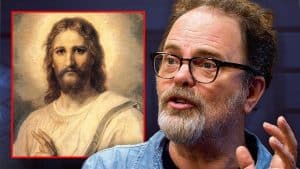
The discussion begins with an exploration of the concept of God and the misunderstandings surrounding it. Rainn Wilson references a Zen teaching, “The finger that points at the moon is not the moon,” emphasizing the distinction between representation and the essence. This is tied to how people often worship ideas of God rather than God itself. A poem by C.S. Lewis illustrates this idea, describing thoughts as inadequate representations of a divine reality.
Limitations of Language in Understanding God
The speakers discuss the limitations of language in capturing transcendental concepts. Examples include Goethe’s observation that knowing one language limits understanding and the influence of trade-based terminology in English on religious thought. They also discuss the historical translation of “sin” from an ancient Greek archery term meaning “missing the mark,” highlighting how shifts in language can alter theological perceptions.
Translation and Its Impact on Religious Understanding
The conversation examines translation errors, such as St. Jerome’s mistranslation of a Hebrew term in the Vulgate, leading to depictions of Moses with horns in art. This example underscores how theological concepts can be significantly affected by linguistic choices, shaping perceptions of divinity and morality.
Satan and the Concept of the Ego
A story from the Bahá’í faith introduces the idea of Satan as “the insistent self,” representing human ego and desires rather than an external force. This aligns with Buddhist teachings on the source of unhappiness as attachment and desire. The universality of this interpretation across spiritual traditions is noted.
Worship of Constructs Over Divine Essence
A quote from ‘Abdu’l-Bahá critiques the human tendency to create mental images of God and worship these constructs instead of the divine essence. This aligns with the idea from Thomas Aquinas that all religious language is analogical, as human concepts are inadequate to describe God.
Critique of Traditional Religious Debates
The ineffectiveness of debates about God’s existence, likened to trivial contests, is highlighted. The discussion critiques simplistic arguments that fail to address the profound complexities of divinity.
Redefining God Through Experience
Rainn Wilson introduces the concept of God as an experience rather than a being, drawing from David Bentley Hart’s writings. He challenges traditional anthropomorphic views of God, suggesting that God might be closer to phenomena like love, music, or physics than a superhuman entity.
Personal Experiences of the Divine
Wilson reflects on moments of spiritual connection, such as experiencing nature or attending a Radiohead concert. These instances brought feelings of unity and transcendence, which he describes as deeply religious.
Comments are closed.