
Table of Contents
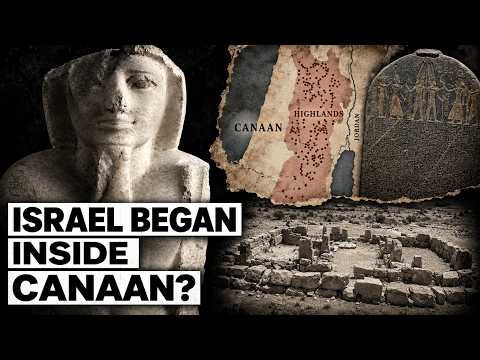
Markets of the Past argues that the familiar path from slavery in Egypt to a conquest of Canaan frays when soil, inscriptions, and genes are set beside it. In the Amarna letters he treats Habiru as outcasts and hired fighters, a social label rather than a nation that matches later Israel. He prefers an emergence account, linked to Finkelstein and Dever, over conquest, slow entry, or revolt. After the late Bronze Age collapse, new villages fill the central highlands. Their pots, speech, and houses look Canaanite, pork nearly vanishes, and collared storage jars pile up. The Merneptah stela is his oldest clear outside mention, and it marks Israel as a people, not a city. Ancient DNA, as he reports it, ties early Israelites to those highland Canaanites, with only thin outside input. A small group carrying Egyptian names may still have fed the escape story until it became a story for the whole people. Josiah’s court, he says, later shaped that past for a shaken Judah. The page is his historical case. It does not rank peoples.
Key points
- The narrator says Habiru were a social label, not a nation that can be equated with Israel.
- He sets aside a tidy conquest and favors highland villages forming from local Canaanites after the Bronze Age collapse.
- Scarce pork and crowds of collared jars are, for him, marks of a new identity made by habit.
- The Merneptah stela is his earliest agreed outside name for Israel, written as a people rather than a city.
- Ancient DNA, in his account, shows continuity with Bronze Age Canaanites rather than a freshly arrived nation.
- He allows a small group with Egyptian names, then says Josiah’s scribes turned scattered memories into a national story.
- He notes that modern claims on the land still use this debate, and the talk does not rank peoples.
Topics
Short quotes
Habaru may have included ancestors of the Israelites, but they were certainly not identical to them.
Markets of the Past, Markets of the Past on Israelite origins
He is separating the Amarna outcasts from the later people called Israel. Watch at 3:09
While collared rim jars are not exclusively Israelite, they are found in such concentrations at these sites that they have become a hallmark of early Israelite material culture. So what we see in the archaeological record is not a people arriving from elsewhere.
Markets of the Past, Markets of the Past on Israelite origins
The highland finds, he says, show a people forming on the spot rather than marching in. Watch at 12:10
First, it is entirely plausible that a small group of people with genuine Egyptian connections was part of the mix that formed early Israel.
Markets of the Past, Markets of the Past on Israelite origins
One option he leaves open is a small group that really had ties to Egypt. Watch at 18:01
King Josiah, who reigned from around 640 to 609 B.C.E., Judah underwent a dramatic religious reform.
Markets of the Past, Markets of the Past on Israelite origins
He places the familiar national story in Josiah’s reform, long after the highland villages. Watch at 24:07
Video by Markets of the Past. Watch on YouTube.