
Table of Contents
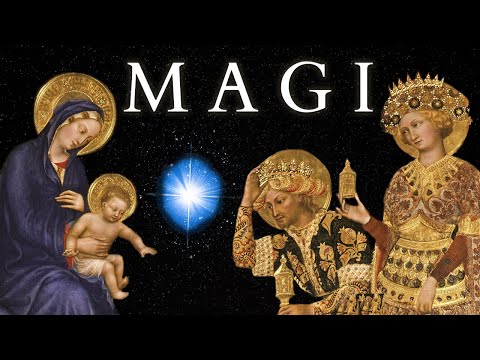
ESOTERICA uses this lecture to pull a short gospel scene apart from the Christmas legend that later swallowed it. Matthew, the host argues, is the only New Testament writing that brings these visitors on stage, and that chapter never calls them wise men or kings. Their pause in Jerusalem with Herod is the beat he cares about, because it sets a client ruler against a king drawn from Jewish prophecy. He shares the common doubt about both infancy narratives and thinks the birthplace is no longer recoverable as reportage. Roman-era readers treated stars as messages or as causes, so he sets Matthew’s star beside the comet after Caesar’s death and beside coinage from a later Jewish revolt. On the priesthood he surveys Persian advisers who read dreams, crowned rulers, and sacrificed, including a horse rite he compares with Indo-Iranian custom. By gospel times, Mediterranean writers pictured them as exotic astrologers. Later infancy books assign three kings to Persia, India, and Arabia, and church authors treat the visit as foreign learning that still needed instruction.
Key points
- Matthew alone stages the visitors, and the explainer insists the labels wise men and kings were added afterward.
- He reads the Herod interlude as a contrast between a Roman client and a ruler promised in Jewish scripture.
- He doubts both infancy accounts as records and treats the birthplace as something the authors arranged for theology.
- He explains the star through ancient habits of reading the sky, including the comet after Caesar was killed.
- Persian Magi, in the sources he surveys, advise courts and sacrifice, and later Greek writers tie them to astrology.
- Apocryphal infancy tales and church writers then make three kings and a lesson about Gentile wisdom.
Short quotes
Magi are never referred to here as wise men or Kings
ESOTERICA, Magi in history and later legend
He notes that Matthew’s chapter never gives these visitors either of those later titles. Watch at 6:57
Jesus is probably just lost to history
ESOTERICA, Magi in history and later legend
He treats the historical person as beyond recovery and leaves the birth stories as symbol. Watch at 9:52
Magi were the tutors of the Persian kings
ESOTERICA, Magi in history and later legend
Herodotus, as he reads him, puts these priests in the role of royal teachers. Watch at 20:32
Matthew would be by no means the last appearance of the Magi in Christian mythology or even in the New Testament
ESOTERICA, Magi in history and later legend
He says the visitors return after that short gospel scene, including inside the New Testament. Watch at 29:56
Christianity had come to educate so-called Pagan wisdom it was not really wise at all
ESOTERICA, Magi in history and later legend
Church writers in this stretch treat foreign learning as something their faith had to correct. Watch at 48:08
Video by ESOTERICA. Watch on YouTube.