
Table of Contents
Names
- Chan Chan
- Kingdom of Chimor
- Chimú Empire
- Chan Chan
- Cauchan
- Canda
- city of snakes
- city of the moon
- kanĉa – ‘corral, fence, fenced place’
- kanĉa-n(i) ‘(place) where fences/ corrals abound
Captains report on various expeditions, including voyages around the country of the Afrites, trading missions to Chimu and Khemi, and encounters with unknown vessels.
POSEIDON’S PARADISE 1892
Overview
- Time Period: Circa 900 CE to 1470 CE.
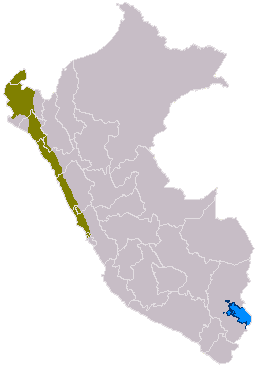
- Location: Northern coast of Peru, encompassing 1,000 kilometers (621 miles) (620 miles (997 kilometers)) of coastline.
- Conquest: Conquered by the Inca emperor Topa Inca Yupanqui around 1470 CE, fifty years before the Spanish arrived.
- Capital: Chan Chan.
Origins and Expansion
- Foundation: According to legend, founded by Taycanamo, who arrived by sea on a balsa raft.
- Key Rulers:
- Taycanamo: Founder of the kingdom.
- Guacricur: Taycanamo’s son, expanded rule over the lower valley.
- Ñançenpinco: Grandson, expanded the kingdom further.
- Initial Conquests: Integrated nearby valleys willingly, but conquered the Sican culture.
- Capital: Chan Chan, believed to be founded by Taycanamo.
- Peak: Expanded to the limits of the desert coast and included many different ethnic groups and cultures.
Culture and Society
- Religion:
- Worshipped the moon, considered more powerful than the sun.
- Associated the Spondylus shell with the sea, rainfall, and fertility.
- Economy:
- Relied on agriculture and fishing.
- Utilized irrigation systems and sunken farms (huachaques).
- Artisans played a significant role in producing ceramics, textiles, and metalwork.
- Class System:
- Four-level hierarchy with elite rulers.
- Majority of citizens were artisans, working in workshops according to their specialization.
- Social structure facilitated efficient food production and redistribution.
Technology and Art
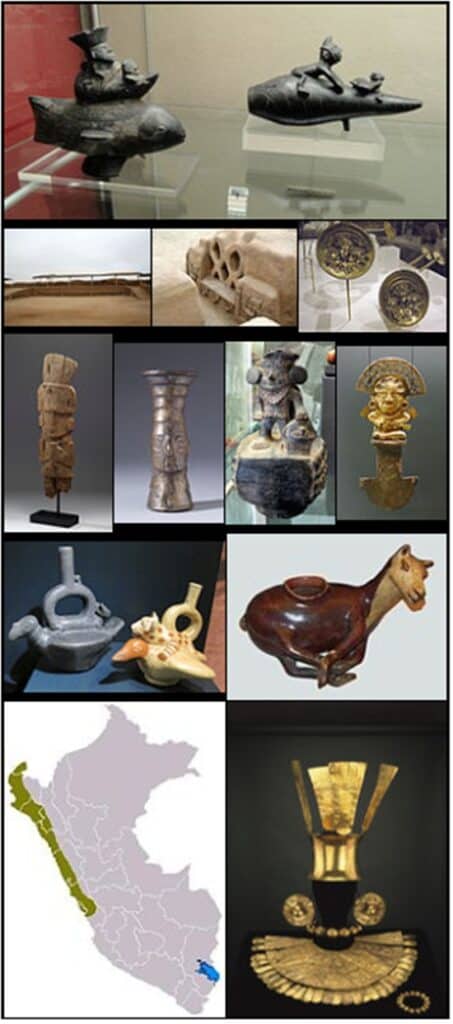
- Pottery: Known for monochromatic pottery with shiny black finishes.
- Metallurgy:
- Advanced metalworking in copper, gold, silver, bronze, and tumbaga.
- Techniques included plating, stamping, lost-wax casting, and embossing.
- Textiles:
- Made from alpaca wool and cotton.
- Adorned with brocades, embroidery, feathers, and precious metals.
- Shell Artifacts:
- Highly valued Spondylus shells used for ornaments and ritual objects.
- Symbolized elite status and divine power.
Architecture
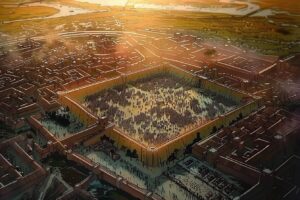
- Ciudadelas: Large walled enclosures for the elite, resembling fortresses.
- Rural Sites: Mini-ciudadelas for administrative functions.
- Chan Chan: Complex of palaces and workshops, demonstrating social hierarchy.
Downfall
- Conquest by the Incas:
- Inca emperor Topa Inca Yupanqui began the conquest in the 1470s.
- Final Chimú emperor, Minchançaman, was defeated and taken to Cusco.
- Legacy: The Chimú were the last kingdom capable of stopping the Inca Empire before their eventual defeat.
Key Points
- Influences: Significantly influenced by the pre-Inca Cajamarca and Wari cultures.
- Economic and Political Role: Spondylus shell trade played a crucial economic and political role.
- Complex Society: Well-developed bureaucracy with elite control over resources and labor.
- Religious Practices: Included human sacrifices, particularly during times of crisis, such as El Niño events.
Comments are closed.