
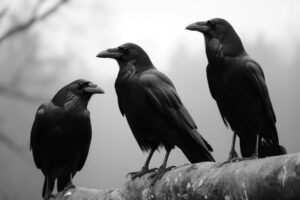
Ravens fly through a surprising number of the myths I research: they leave the ark, sit on Odin’s shoulders, warn of floods and even create the world. These are the pages where I wrote about them.
The raven from the ark
The oldest raven in my research is the bird sent out after the flood. In The Deluge of the Chaldeans, Ignatius Donnelly gives a translation of the Chaldean account in which the survivor looses a raven that sees the corpses on the waters, eats, and does not come back.
George Smith compares the tablet with Genesis in The Chaldean Account of the Deluge, and Jim Marrs, in Sumer: The First Known Civilization, reads the raven that did not return as a sign that dry land was near. Great Flood Stories World wide adds Yehl, the raven spirit who warns the Tlingit of a great flood.
Odin’s ravens
On Crows I explain that crows and ravens are often interchangeable in myth, and that Odin had two ravens, Huginn (thought) and Muninn (memory). Donnelly describes Odin with a spear, two dogs and two ravens in The God Odi, Woden, or Wotan. In Sinterklaas and Atlantis I follow Odin as leader of the Wild Hunt, always accompanied by his two black ravens.
Creator, helper and thief
In the Aleutian story on Aleutian Myth: Tulugaak created the world, the raven Tulugaak creates the world and forms the first humans from clay. In Popol Vuh – Creation Story the raven is one of the animals that reveal the maize from which people were made. In Elijah ravens sustain the prophet in the wilderness. The Oera Linda Book, in William R. Sandbach’s translation on The Oera Linda Book, is less kind: the raven cries “Spare, spare” but steals and wastes everything it gets.
Related pages
- The Deluge of the Chaldeans
- The Chaldean Account of the Deluge
- Sumer: The First Known Civilization
- Great Flood Stories World wide
- Crows
- The God Odi, Woden, or Wotan
- Sinterklaas and Atlantis
- Aleutian Myth: Tulugaak created the world
- Popol Vuh – Creation Story
For every page I tagged with Ravens, see the Ravens tag archive.

