
Table of Contents
Homer’s Iliad, the epic of the Trojan War, is the oldest Greek text I lean on, and I read it for what it says about the gods, their chariots and the sea more than for the war itself. These are the pages where I wrote about it.
The dream and the ships
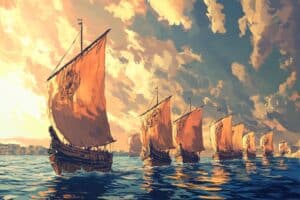
On The Catalogue of Ships I follow Book 2 of the Iliad, which opens with Zeus awake while the rest sleep:
Now the other gods and the armed warriors on the plain slept soundly, but Zeus was wakeful, for he was thinking how to do honor to Achilles and destroy many people at the ships of the Achaeans.
Homer, Iliad
Zeus sends a lying dream to Agamemnon in the likeness of Nestor. On Atlantis in the Old Testament I compare Agamemnon’s dream with Nebuchadnezzar’s dream in the Book of Daniel: both are divine messages received in sleep, but they serve very different narrative and theological purposes. On Astynome, daughter of a priest of Apollo, was captured during the Trojan War her capture is one of the incidents that leads to the conflict between Agamemnon and Achilles.
Gods of the sea and the deep
Ignatius Donnelly, on The Kings of Atlantis become the Gods of the Greeks, cites a description of Poseidon in the Iliad as ruler of the sea, living in a brilliant palace in its depths and driving a chariot over its surface. On Corroborating Circumstances he cites Book 18, where Tethys, the mother goddess, comes to Achilles from the deep abysses of the sea. Nereids are beings often depicted as half-human, half-fish creatures notes that the Nereids are named in the Iliad as well as in Hesiod’s Theogony.
Forges, ambrosia and the underworld
On Mines I cite Book 18 for the forge of Hephaestus beneath the earth, and Book 8 for Tartarus, as far beneath Hades as heaven is above the earth. On The forbidden fruit ambrosia is used in the Iliad to anoint the body of Patroclus and keep it from decay. Mount Ida (Troad) is a mountain frequently mentioned in the Iliad as the backdrop to the battles and the interventions of the gods.
Flying chariots
Mauro Biglino, on Angels & Flying Machines in The Bible & Ancient Text, reads the celestial chariots of the Iliad, drawn by horses that make noise as they fly and cover great distances in an instant, as a concept that parallels descriptions found in the Bible.
Related pages
- The Catalogue of Ships
- Atlantis in the Old Testament
- Astynome, daughter of a priest of Apollo, was captured during the Trojan War
- The Kings of Atlantis become the Gods of the Greeks
- Corroborating Circumstances
- Nereids are beings often depicted as half-human, half-fish creatures
- Mines
- Mount Ida (Troad)
- Angels & Flying Machines in The Bible & Ancient Text
For every page I tagged with Iliad, see the Iliad tag archive.

