
Table of Contents
The equinox, the day when light and dark stand equal, marks a turning point in many of the calendars, temples and rituals I have studied. These are the pages where I wrote about it.
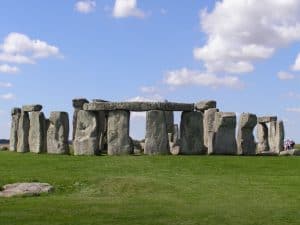
A ritual at Stonehenge
On Stone Henge: preserve and store the ancient knowledge and wisdom from Atlantis I quote Johannes, son of Yeshua, in Claire Heartsong’s Anna, the Voice of the Magdalenes, describing a ritual at the stones:
Now we are gathered in our white robes to initiate a spring equinox ritual. The mark of a spiral is drawn upon our foreheads.
Claire Heartsong, Anna, the Voice of the Magdalenes

Temples aligned with the sun
On The Story of Atlantis – focus on the occult investigation of Atlantis and its sub-races W. Scott-Elliot describes monoliths placed so that, to one standing at the high altar, the sun would rise at the winter solstice behind one and at the vernal equinox behind another, and a golden sun-disk placed to catch the first rays of the rising sun at the vernal equinox or the summer solstice. On Turanian, in Ancient Chaldaea., following Man: Whence, How and Whither, the sacred Moon-fire on the altar was allowed to go out only once a year, on the night before the spring equinox.
In their clairvoyant account of that Chaldean temple in Man: Whence, How and Whither (1913), Besant and Leadbeater write:
Upon this altar burnt always what was called the ‘sacred Moon-fire,’ and this was allowed to go out only once a year, on the night before the spring equinox.
Annie Besant and C. W. Leadbeater, Man: Whence, How and Whither (1913), p. 224

On OSIRIS & ORION: The Pyramids & Sphinx Represent A Very Mysterious Epoch, which starts from Robert Bauval’s Orion insight, the Sphinx faces due east and aligns with the constellation of Leo around 10,500 BCE at the vernal equinox.
Solstices in an earlier Peru
In the same book, in their clairvoyant account of an earlier Peruvian civilisation, they say that a temple apparatus used to mark noon was also used for the solstices:
The same primitive apparatus was employed to find the date of the summer and winter solstices, since in connection with these periods there were special religious services.
Annie Besant and C. W. Leadbeater, Man: Whence, How and Whither (1913), p. 173
Calendars that start at the equinox
On Babylonian Calendar the month Nisannu is aligned with the spring equinox. On The bull the position of the constellation Taurus marked the spring equinox, signifying renewal and agricultural fertility. On Trees have been central to many pagan and Celtic traditions. the apple belongs to the autumn equinox, Mabon, a tradition I trace back over 2,000 years.
A date written in the stars
On The Egyptian Colony Ignatius Donnelly cites an account of a scholar who found the signs of the zodiac and the planets drawn on a mummy-case in the British Museum, pointing to the autumnal equinox of the year 1722 BC, and of Professor Mitchell, who had his assistants work out the position of the planets on the equinox of that year.
The equinox in Yucatan
On Equinox Yucatan Matias de Stefano speaks at a gathering held during an equinox, a moment of perfect balance that, he says, allows easier access to information and energies.
Phelon on the Feast of the New Year
W. P. Phelon published Our Story of Atlantis in 1903. In the record he attributes to Tlana, the great feast of the New Year falls on the 21st of March, at the Sun’s re-birth when day and night are equal.
The 21st of March
Tlana says the feast lasts seven days, and that every family in the kingdom is expected to be present, in person or by a representative. In his account the going and coming of the year is planned with this in view.
The feast of the New Year, on the 21st of March, consummated and commemorated the Sun's re-birth, when, out of equal days and nights a new Spring and Summer began for the northern hemisphere, and the promise of seedtime and harvest was renewed. At this celebration it is expected that every family in the kingdom should be present, either personally or represented by some member of the family. All the going and coming of the year is planned with this in view. It is considered a privilege for all the outlying population to be made welcome in the capital at this time. The feast lasts seven days.
Tlana, quoted in W. P. Phelon, Our Story of Atlantis (1903), chapter X, pp. 128-129
Related pages
- Stone Henge: preserve and store the ancient knowledge and wisdom from Atlantis
- The Story of Atlantis – focus on the occult investigation of Atlantis and its sub-races
- Turanian, in Ancient Chaldaea.
- OSIRIS & ORION: The Pyramids & Sphinx Represent A Very Mysterious Epoch
- Babylonian Calendar
- The bull
- Trees have been central to many pagan and Celtic traditions.
- The Egyptian Colony
- Equinox Yucatan
For every page I tagged with Equinox, see the Equinox tag archive.

