Table of Contents
- The book on this site
- Suddi on the Book of Enoch
- The Watchers and Mount Hermon
- The Book of Giants
- Readings of the book
- 2 Enoch and later books
- Quotations that are not in the book
- Enoch the person
- Donnelly on the opening poem of Enoch
- Mountains melting
- Spence on Enoch
- Le Plongeon on the book of Henoch
- Related pages
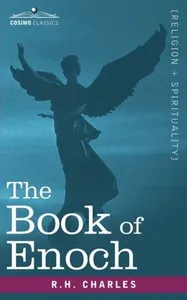
The Book of Enoch keeps turning up in my research, usually as a footnote: on a page about giants, on a page about Mount Hermon, in a video about the Elohim. It is not in most Bibles, yet the letter of Jude cites Enoch’s prophecy, and Aramaic copies of the book were found at Qumran. This page brings those threads together.
I keep two things apart here. This page is about the book, or rather the books, that carry Enoch’s name. Enoch the person, the man who “walked with God” in Genesis 5, has his own short section at the end. I also keep the readings open: for some writers the book is scripture, for others a record of contact with advanced visitors.
The book on this site
- Book of Enoch, the book card: my overview of where the book appears in my posts and videos.
- All posts in the category Book of Enoch and all posts tagged Book of Enoch.
Suddi on the Book of Enoch
In Dolores Cannon’s regression sessions, Suddi speaks about the Book of Enoch as something handed down from the Kaloo:
The Book of Enoch is something that has been passed down from the Kaloo. What do you mean, added later? To what? I'm not understanding.
I read The Secrets of Enoch which is found in the apocryphal Lost Books of the Bible. Whether this is the version Suddi referred to or not, this one was confusing enough to read. It deals a lot with astronomy and symbolism and apparently contains hidden meanings. There may be other books that refer to Enoch.
Jesus and the Essenes

See Kaloo
The Watchers and Mount Hermon
The best known part of the book is the story of the Watchers, angels who came down, took human wives and fathered giants.
- Mount Hermon: the Book of Enoch highlights Mount Hermon as the gathering site of the Watchers.
- The 200 Grigori: the Grigori, or Watchers, mated with women and gave rise to the Nephilim. The Book of Enoch says there were two hundred of them and names only their leaders.
- Who Were the Nephilim?: the giants of Genesis 6, read beside Enoch.
- Archangel Michael: according to the Book of Enoch, the flood was sent to rid the earth of the Nephilim.
- Archangel Uriel: Uriel as the guide who shows Enoch the laws of the heavenly lights, quoted from the astronomical section of the book.
The Book of Giants
The Qumran caves also held a companion work, where the giants speak for themselves.
- The Book of Giants: What the Fragments Say: my review, with the note that the Book of Enoch has seven Aramaic copies, all from one cave, and that in Enoch the giants are the problem the angels solve.
- The Book of Giants: The Fragments, One by One and the Book of Giants book card.
- Book of Giants: an earlier video on the same text.
Readings of the book
- Paul Wallis on Enoch and the Mesopotamian tablets: Wallis reads Enoch beside Mesopotamian tablets as memories of visitors, hybrids and a flood, partly told by analogy.
It's told very curtly in Genesis 6 as if the writer assumes we know the story from somewhere else.
Paul Wallis, Paul Wallis on Enoch and Mesopotamia, at 4:57

Clearly, Enoch is trying to describe by analogy what he is seeing.
Paul Wallis, Paul Wallis on Enoch and Mesopotamia, at 30:05
- Wars of the Gods: The Sky Council, Elohim, Anunnaki and the Book of Enoch: Wallis sets the Watchers of Enoch beside the Igigi of the Sumerian stories, as non-human beings who acted as catalysts for human civilization.
- Ken Johnson on Enoch and genetic tampering: Johnson reads Enoch and Dead Sea Scroll fragments as an account of angelic crossbreeding and giants.
- Defending the Book of Enoch: Rob Skiba on Mount Hermon as the place of the Genesis 6 event, and on the giants before and after the flood.
- When We Lived with the Elohim: Mauro Biglino on the patriarchs, the 200 Watchers and the knowledge they gave to Adamite women.
- Flying machines of the Gods: Biglino on flying chariots in Homer, the Bible and the apocryphal writings.
2 Enoch and later books
Not every Enoch book is the same book. The Book of Enoch with the Watchers is also called 1 Enoch. There is also a Slavonic 2 Enoch, and modern books borrow the name.
- Hopi vs 2 Enoch vs Atrahasis: I compare the Hopi emergence myth with 2 Enoch, chapters 28 to 34, a text preserved only in Old Church Slavonic.
- Methuselah: in 1 Enoch, Enoch entrusts his visions to his son Methuselah; in 2 Enoch, Methuselah asks for his blessing.
- Melchizedek: the sections of 2 Enoch about Melchizedek.
- The Keys of Enoch: a modern spiritual book by J.J. Hurtak from 1973, not an ancient text. See also Metatron, who teaches Enoch in that book.
Quotations that are not in the book
Baring-Gould pointed out a puzzle in Legends of Old Testament Characters (1871). The Testaments of the Twelve Patriarchs often quote the Book of Enoch, but many of those lines cannot be found in the Book of Enoch as it was known in his day.
Curiously enough, the Testament of the Patriarchs contains a large number of alleged quotations from the Book of Enoch, which are not, however, to be found in that book as we now have it.
Sabine Baring-Gould, Legends of Old Testament Characters (1871), chapter 29, p. 229
Enoch the person
The man behind the book appears in only a few verses of the Bible.
And Enoch walked with God: and he was not; for God took him.
Genesis 5:24 (KJV)
And Enoch also, the seventh from Adam, prophesied of these, saying, Behold, the Lord cometh with ten thousands of his saints,
Jude 1:14 (KJV)
- Genesis 5: Adam’s descendants: Enoch, son of Jared, lived 365 years and was taken by God.
- All posts tagged Enoch: the person, as opposed to the book.
Donnelly on the opening poem of Enoch
Ignatius Donnelly, the Minnesota politician who wrote Atlantis: The Antediluvian World, followed it in 1883 with Ragnarok: The Age of Fire and Gravel. He quoted the poem that opens the Ethiopian Book of Enoch.
Mountains melting
Donnelly places the poem among the prophecies of a final fire. He notes that the author of Nimrod thought it authentic.
The Ethiopian copy of the apocryphal book of Enoch contains a poem, which is prefixed to the body of that work, and which the learned author of "Nimrod" supposes to be authentic. It certainly dates from a vast antiquity. It is as follows:
"Enoch, a righteous man, who was with God, answered and spoke while his eyes were open, and while he saw a holy vision in the heavens. . . .
"Upon this account I spoke, and conversed with him who will go forth from his habitation, the holy and mighty One, the God of the world.
"Who will hereafter tread upon the mountain Sinai, and appear with his hosts, and be manifested in the strength of his power from heaven.
"All shall be afraid, and the watchers be terrified. Great fear and trembling shall seize even to the ends of the earth.
"The lofty mountains shall be troubled, and the exalted hills depressed, melting like honeycomb in the flame.
"The earth shall be immerged, and all things which are in it perish. . . .
"He shall preserve the elect, and toward them exercise clemency. . . . The whole earth is full of water."
This is either history or prophecy.
Ignatius Donnelly, Ragnarok: The Age of Fire and Gravel (1883), part IV, chapter VI, pp. 426-427

Spence on Enoch
In 1943 Lewis Spence published The Occult Sciences in Atlantis. In his account Enoch is, in tradition, the same figure as Atlas, and the author of books on the religion from before the Flood. The quotations are short excerpts for review and study.
Enoch, who, as we are told, was one and the same in the traditional sense with Atlas, is said to have been the author of certain books which contained the whole method and inspiration of the Antediluvian religion.
Lewis Spence, The Occult Sciences in Atlantis (1943), chapter II, p. 27
Le Plongeon on the book of Henoch
In 1886 Augustus Le Plongeon published Sacred Mysteries among the Mayas and the Quiches. He compares the visions in the book of Henoch with the trials of initiation at Eleusis, in Egypt, and at Xibalba.
Still, on reading the visions in the book of Henoch, and comparing them with what we know of the trials to which were subjected the applicants for initiation into the greater mysteries of Eleusis and Egypt, and those of Xibalba, one can scarcely refrain from believing that, under the title of Visions, the author relates his experience at the initiation, and what he learned in the mysteries before being converted to Christianity.
Augustus Le Plongeon, Sacred Mysteries among the Mayas and the Quiches (1886), p. 16