
Table of Contents
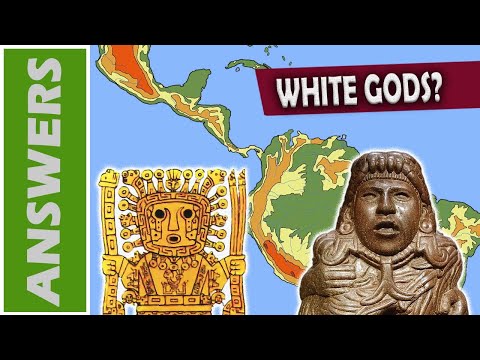
David Miano of World of Antiquity answers a caller who asked if bearded white teachers, Quetzalcoatl and Viracocha, explain monuments in Peru. He splits Quetzalcoatl in two. The feathered serpent is a Mesoamerican god, possibly Olmec, present at Teotihuacan, later called Kukulkan. Most other pages are colonial, and Spain burned many books, so survivors need a motive. A human Topiltzin, ruler of Tollan in the ninth or tenth century, banned human sacrifice and left east. Miano knows no early account of that man arriving from overseas. The god is older. The white bearded figure who promises to return is, he argues, a Spanish reshaping useful to Cortes, not a belief clear before the conquest. Where myth says white, he reads a direction or one hue among four Tezcatlipoca colors, not skin. Viracocha is harder because Andean records were quipu and art. Spanish writers, notably Betanzos and Sarmiento de Gamboa, supply the creator who walks on water, and Sarmiento even derived Peru from Atlantis to claim the land. Visitors from abroad are possible, Miano says, but these legends are weak evidence.
Key points
- Miano splits the feathered serpent god from the human Toltec ruler Topiltzin, and he says the god is older.
- Primary pictures and the Borgia Codex are separated from the much larger pile of colonial retellings.
- He knows no early account in which the human Quetzalcoatl came from across the sea.
- The white bearded returning Christ is treated as a Spanish elaboration useful to Cortes.
- Where myths say white, he reads a compass color or one of four Tezcatlipoca hues, not skin.
- Viracocha’s written portrait comes from Spanish authors with political motives, and the legends are weak evidence for foreign visitors.
Short quotes
The one most people have heard of is Quetzalcóatl the feathered serpent god.
David Miano, Miano on Quetzalcoatl and Viracocha
He begins with the deity viewers know before he introduces the human ruler. Watch at 1:25
I know of no early account of his originally being from somewhere across the sea.
David Miano, Miano on Quetzalcoatl and Viracocha
This is his rejection of an overseas origin for the human Topiltzin. Watch at 5:53
But note in these cases, white is a symbolic, rather than a literal, color.
David Miano, Miano on Quetzalcoatl and Viracocha
He treats white as a direction or ritual color, not as a description of a body. Watch at 11:53
Video by World of Antiquity. Watch on YouTube.