
Table of Contents
Introduction
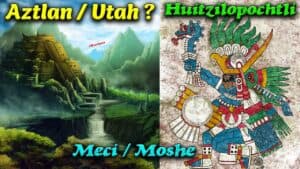
The video explores the legendary homeland of the Aztecs, Aztlan, and their migration to their promised land in the Valley of Mexico. The narrative investigates historical interpretations, mythical parallels, and evidence of the Aztecs’ journey.
The Origin of Aztlan
- Aztlan is described as the ancient homeland of the Aztecs.
- In myths, the land is characterized as abundant and utopian, often compared to legendary places like Atlantis or Camelot.
- The migration from Aztlan to the Valley of Mexico is central to Aztec lore.
Location of Aztlan
- Proposed locations range from western Mexico to the deserts of Utah, including references to maps identifying Utah as the possible origin.
- Maps such as the 1768 José Antonio de Alzate y Ramírez map and the 1847 J Disturnell map indicate connections between Aztlan and Utah.
- Archaeological findings in the southwestern United States suggest migration patterns similar to those described in Aztec legends.
The Aztec Migration
- The Aztecs’ migration was guided by their god Huitzilopochtli.
- During the journey, they carried their idol or sacred object in a coffer (arc-like structure) supported by priests.
- They constructed tabernacles at every stop, echoing practices found in Hebrew traditions.
Connection to Hebrew Traditions
- Spanish chroniclers, including José de Acosta, observed similarities between the Aztec migration and the biblical Exodus.
- The Aztecs followed divine instructions for migration and governance, paralleling the Israelites’ journey from Egypt to the Promised Land.
- The name “Meci” (or “Meshi”) is linked to both the Aztecs and biblical figures, suggesting cultural and mythological intersections.
Historical Sources and Interpretations
- José de Acosta’s writings from the late 16th century provide detailed accounts of the Aztec migration, interpreting it through the lens of his Jesuit beliefs.
- Other historians, such as Bernardino de Sahagún, document the Aztecs’ practices and their leader, often blending indigenous and European perspectives.
- Contemporary researchers analyze maps, indigenous narratives, and archaeological evidence to reconstruct the migration story.
Archaeological Correlations
- Sites like the Davis Ranch site in Arizona and other Puebloan ruins reflect migratory patterns consistent with Aztec stories.
- Puebloan migrations from the Four Corners region mirror the Aztec narrative, suggesting cultural parallels or shared histories.
Symbolism and Leadership
- Huitzilopochtli is portrayed as a deity and a historical figure leading the Aztecs.
- The ark-like object carried by priests is described as central to their spiritual and political life.
- Meshi (Meci) is identified as a key leader, whose name and actions deeply influenced the Aztecs’ identity and journey.
Conclusion
The video concludes by connecting Aztec myths, historical migrations, and other ancient cultures. It emphasizes the enduring mystery of Aztlan’s location and the profound similarities between the Aztecs’ journey and biblical narratives.
Comments are closed.