
Table of Contents
- Overview and Intent
- Background and Perspective
- Focus of the Presentation
- Key Symbols and Historical Comparisons
- Fish Symbol and Vesica Piscis
- Pope’s Hat and Dagon
- Spiritual Symbolism and Patriarchy
- Ancestral Vows and Spiritual Torment
- Reinterpretation of Christian Concepts
- Cultural and Historical Implications
- Conclusion
Overview and Intent
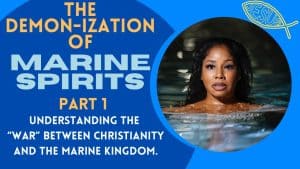
The video serves as an introductory exploration of Christianity and the Marine Kingdom for audiences with varying levels of familiarity with spiritual traditions and historical background. The speaker presents the topic from a perspective rooted in African spirituality and seeks to clarify misconceptions about the Marine Kingdom.
Background and Perspective
The narrator identifies as an initiate of Yemoja and Oshun, deities associated with water in African spiritual traditions. The speaker was raised within Christianity and maintains knowledge of biblical teachings, blending these with indigenous spiritual insights.
Focus of the Presentation
The central discussion revolves around the Marine Kingdom and its symbolic, religious, and cultural representations. Emphasis is placed on how water-related symbology and spiritual principles have been embedded in Christianity and other world religions, often without acknowledgment of their original cultural context.
Key Symbols and Historical Comparisons
Fish Symbol and Vesica Piscis
- The fish symbol, known as the Vesica Piscis, is presented as a core Christian symbol, second only to the cross.
- This symbol also represents the zodiac sign Pisces and is interpreted as an allusion to the feminine reproductive system.
- The symbol appears in multiple religious contexts, including depictions of the Virgin Mary and in early Christian catacombs.
Pope’s Hat and Dagon
- The Pope’s miter resembles the open mouth of a fish.
- This hat is compared to that of ancient Dagon priests, associated with a sea deity in various traditions.
- This connection is presented as an example of continuity between ancient marine deities and Christian symbolism.
Spiritual Symbolism and Patriarchy
The presentation discusses the transition from matriarchal spiritual systems to patriarchal ones:
- The ocean and water are associated with feminine energy, subconscious power, and nurturing.
- Patriarchal systems redefined these elements as chaotic, irrational, or evil.
- Terms such as “lunacy” are linked to the moon (Luna) and, by extension, feminine energy.
Ancestral Vows and Spiritual Torment
- The speaker explains that many people experience spiritual torment due to ancestral vows made with marine spirits.
- Such vows can be either benevolent or malevolent and may stem from past lives or familial spiritual obligations.
- Deliverance from such experiences is framed not as removal but as reconciliation and understanding.
Reinterpretation of Christian Concepts
- Symbols like the anchor, fish, and ankh are reinterpreted to reveal hidden marine or feminine elements.
- The “Holy Spirit” in original Hebrew is explained as a feminine presence (Ruach HaKodesh), challenging later patriarchal reinterpretations.
- Baptism is linked to ancient marine-related initiation rites.
Cultural and Historical Implications
- The presentation critiques the demonization of indigenous spiritual systems and the feminine principle.
- It challenges the view that wisdom and spiritual legitimacy began with colonial religions.
- Historical connections are made to Pangaea and indigenous spiritual unity across ancient landmasses.
Conclusion
The speaker argues that:
- The Marine Kingdom is not inherently evil.
- Misunderstandings stem from colonial, patriarchal, and cultural distortions.
- Reconciliation with one’s ancestry and spiritual origins is necessary for balance and healing.
The session ends with an invitation to explore further content in a forthcoming part two and follow the speaker for additional insights.
Comments are closed.