
Table of Contents
Orpheus, the legendary musician and poet of Thrace, appears in my research less as a hero of one story than as a name the ancients reached for when they spoke of the first arts, the ocean and the mysteries. These are the pages where I wrote about him.
The singer of Thrace
On Mount Pangaion I note a myth that links the mountain to Orpheus, the famed musician and poet, and the version in which he met his end there, torn apart by the Maenads after he rejected the worship of Dionysus. Mountains lists Pangaion with its gold and silver mines and its association with Orpheus. On Nymphs Eurydice is the dryad wife of Orpheus who died from a snake bite and whom he pursued into the underworld. On The Argonauts and Mount Pelion he sails with Jason among the Argonauts, beside Hercules, Castor and Pollux and Atalanta.
Orpheus and Eurydice
Riley’s Ovid, in Metamorphoses, tells the descent for Eurydice in Book 10.
The sting of the serpent
He says the new-made bride was killed by a serpent while she walked in the grass with a train of Naiads.
The issue was more disastrous than the omens; for the newmade bride, while she was strolling along the grass, attended by a train of Naiads, was killed, having received the sting of a serpent on her ancle.
Ovid, Metamorphoses, trans. Henry T. Riley, G. Bell & Sons, London and New York, 1889, Book X, p. 341
He turned his eyes
Pluto and the Fates allow her return on one condition. In Riley’s account, Orpheus looks back too soon, and she sinks away again.
He, enamoured, fearing lest she should flag, and impatient to behold her, turned his eyes; and immediately she sank back again.
Ovid, Metamorphoses, trans. Henry T. Riley, G. Bell & Sons, London and New York, 1889, Book X, p. 343
Orpheus after the flood
In Plato’s Laws by Plato, in Benjamin Jowett’s translation, the Athenian stranger asks Cleinias to imagine the cities of the plain and the coast destroyed by a great flood, with every invention lost. Cleinias answers that the arts were unknown for ages and that Orpheus belongs to a recent beginning:
And no more than a thousand or two thousand years have elapsed since the discoveries of Daedalus, Orpheus and Palamedes,—since Marsyas and Olympus invented music, and Amphion the lyre—not to speak of numberless other inventions which are but of yesterday.
Plato, Laws, translated by Benjamin Jowett
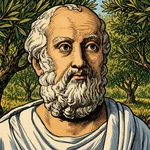
Later in the dialogue the Athenian stranger says that in early times men are said to have lived a sort of Orphic life, using all lifeless things but abstaining from all living things, and offering cakes and fruits dipped in honey instead of the flesh of animals.
Orpheus and the ocean
Ignatius Donnelly, on Corroborating Circumstances, cites the Orphic line, through Plato’s Cratylus, that the river of Ocean was the first to marry and took his sister Tethys as his wife, as part of his case that the ancients remembered an ocean origin. My summary of Donnelly on American Evidences of Intercourse with Europe or Atlantis makes the same point: the traditions of Homer and Orpheus treat the ocean as the source of gods and life.
The seal of Orpheus
On Jesus – Pleiadian consciousness I show a third century AD hematite seal-amulet with a crucified figure labelled Orpheus, Baccus, the cross crowned by a moon and seven stars, read as the Pleiades.
Phanes in the Orphic theology
Proclus describes the Orphic god Phanes in The Commentaries of Proclus on the Timaeus of Plato (Thomas Taylor’s translation, 1820).
The god from the egg
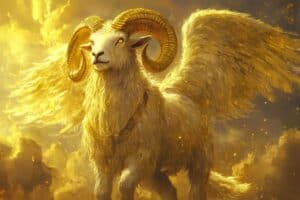
In his account Phanes has the heads of a ram, a bull, a serpent and a lion, and comes out of the first egg. Proclus equates him with Plato’s animal itself.
The first God therefore, with him, has the heads of many animals, viz. of a ram, a bull, a serpent, and a fierce lion. He also proceeds from the primogenial egg, in which the animal exists spermatically; and Plato knowing this calls this mighty God animal itself.
Proclus, The Commentaries of Proclus on the Timaeus of Plato, trans. Thomas Taylor (1820), vol. 1, book II, p. 361
Orpheus instructed in Egypt
From the same temples as Solon
In Isis Unveiled (1877), Blavatsky places Orpheus with Pythagoras, Herodotus and Plato as students of the Egyptian temples, and she notes Artapanus on Orpheus as a disciple of Moses:
The doctrines of several Greek philosophers, who had been instructed in Egypt, demonstrates their profound learning. Orpheus, who, according to Artapanus, was a disciple of Moyses (Moses), Pythagoras, Herodotus, and Plato owe their philosophy to the same temples in which the wise Solon was instructed by the priests.
H. P. Blavatsky, Isis Unveiled (1877), Vol. I, p. 532

Related pages
- Mount Pangaion
- Mountains
- Nymphs
- The Argonauts and Mount Pelion
- Laws by Plato
- Corroborating Circumstances
- American Evidences of Intercourse with Europe or Atlantis
- Jesus – Pleiadian consciousness
For every page I tagged with Orpheus, see the Orpheus tag archive.

