
Table of Contents
Encounters with Early European Groups
The speaker begins by discussing the initial encounters between Native Americans and Europeans. The first Europeans encountered by the speaker’s people were the Spaniards, referred to as “Nak’ai.” Later, individuals of mixed Native and Spanish heritage were identified as “Notkpai.” Subsequent interactions included groups referred to as “Naken n’kiten,” meaning Black Mexicans, and eventually the “Bagána,” or Anglo people, who arrived in large numbers.
The speaker reflects on his late wife’s interest in genealogy, noting her ancestry traced back to the 1630s or 1650s, revealing connections between her ancestors and the Nansa tribe. He also observes that a significant portion of the population in the United States may have some Native American ancestry, estimating it as high as 80%.
The American Dream and Its Historical Context
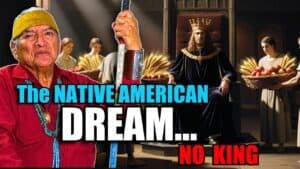
The speaker highlights the concept of the “American Dream,” which attracts people worldwide to seek opportunities such as property ownership, business ventures, and family support. This concept is contrasted with pre-1492 Europe, where most individuals served monarchs and had no personal property.
The arrival of settlers, including Puritans and Pilgrims seeking religious freedom, is discussed. These groups relied on financial backing from governments or monarchs to journey to America. Upon arrival, many settlers faced starvation and death. Native Americans played a critical role in their survival by teaching them essential skills, such as planting crops and hunting.
The speaker explains how dividing land among families allowed settlers to achieve greater productivity and self-sufficiency, setting the foundation for the American Dream. This principle of individual effort and community support continues to shape modern aspirations.
Native Contributions and Cultural Preservation
The speaker emphasizes Native American contributions to the survival and success of early settlers. He underscores the significance of understanding history accurately and recognizing the vital role Native peoples played in shaping the United States.
In his reflection on his heritage, the speaker expresses pride in being an American Indian and acknowledges the freedoms and opportunities available in the United States. He highlights the importance of gratitude during the harvest season, mentioning traditional foods such as kneel-down bread, blue cornmeal mush, and steamed corn stew.
The speaker notes the challenge of pursuing the American Dream on reservations and hopes for leaders to create pathways for greater opportunity. He calls for gratitude for the freedoms available in the United States and encourages further research into these historical and cultural topics.
Closing Remarks
The speaker concludes by inviting viewers to learn more about Native traditions and encourages gratitude for the unique freedoms in the United States. He urges an appreciation of history and the interconnectedness of American and Native histories.
Viewers are invited to subscribe to the channel and visit the website for more insights and teachings: navottraditionalteaching.com.
Comments are closed.