

Table of Contents
Attica, the region around Athens, keeps surfacing in my research at the meeting point of flood legends, Atlantean kings and the Frisian priestess Min-erva. These are the pages where I wrote about it.
Kings of Attica after the flood
On Ovid’s Four Ages I quote Apollodorus on Deucalion’s flood and on the children of Deucalion and Pyrrha:
Deucalion had children by Pyrrha: first Hellen, whose father some say was Zeus; and second Amphictyon, who reigned over Attica after Cranaus; and third a daughter, Protogeneia.
Apollodorus, Bibliotheca
Ignatius Donnelly cites an older flood. On The Deluge Legends of Other Nations the account he quotes ties the first Greek cataclysm to Ogyges, the most ancient of the kings of Boeotia or Attica, a quite mythical personage lost in the night of ages. On Some Consideration of the Deluge Legends he notes that this deluge of Ogyges preceded that of Deucalion.
Attica and the gods of Atlantis
On The Gods of the Phoenicians also kings of Atlantis Donnelly reads the Phoenician legends as saying that Chronos gave Attica to his daughter Athena, as the Greek legends also tell.
Min-erva in Attica
On The Oera Linda Book the introduction to William R. Sandbach’s translation dates Min-erva’s arrival in Attica to about 1600 years before Christ, the period when Greek mythology was beginning to form. On The Oera Linda Book Reviewed – placing the event in 6,115 BCE Min-erva examines the country called Attica and finds that the people were all goatherds, living on meat, wild roots, herbs and honey. On Pallas Athena: High Priestess in the Temple of Truth I follow her arrival in Attica at the head of a Frisian colony with the fleet of the sea-king Jon.
The book itself, in Sandbach’s translation, describes that first look at Attica. Scholars generally treat the manuscript as a 19th-century hoax, so this is the book’s story of how Min-erva and her people arrived.
When Min-erva had examined the country which is called by the inhabitants Attica, she saw that the people were all goatherds, and that they lived on meat, wild roots, herbs, and honey. They were clothed in skins, and had their dwellings on the slopes (hellinga) of the hills, wherefore they were called Hellingers.
Sandbach, The Oera Linda Book (1876), p. 99
The naming of Athens
In the same passage the book gives its own reason for the name Athens. Min-erva, it says, chose the name so later people would know the settlement was received in friendship.
By the advice of Min-erva it was called Athens, because, she said, those who come after us ought to know that we are not here by cunning or violence, but were received as friends (átha).
Sandbach, The Oera Linda Book (1876), p. 99
The land itself
On Mount Cithaeron the Cithaeron range forms the natural boundary between Boeotia and Attica.
Plato on the ancient land of Attica
In the Timaeus and Critias, in Benjamin Jowett’s translation, Critias describes Attica as it was 9000 years before Solon, before many deluges washed the soil away.
The skeleton of the land
He says many great deluges have taken place during those nine thousand years, and that what remains is only the bones of the wasted body, the mere skeleton of the land.
Many great deluges have taken place during the nine thousand years, for that is the number of years which have elapsed since the time of which I am speaking; and during all this time and through so many changes, there has never been any considerable accumulation of the soil coming down from the mountains, as in other places, but the earth has fallen away all round and sunk out of sight. The consequence is, that in comparison of what then was, there are remaining only the bones of the wasted body, as they may be called, as in the case of small islands, all the richer and softer parts of the soil having fallen away, and the mere skeleton of the land being left.
Plato, Critias, 111a-c (Jowett)
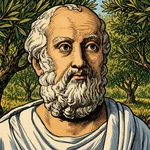
The Acropolis before Deucalion
The Acropolis, he says, was not as it is now. A single night of rain washed the earth from the rock, and there followed an inundation which was the third before the great destruction of Deucalion.
In the first place the Acropolis was not as now. For the fact is that a single night of excessive rain washed away the earth and laid bare the rock; at the same time there were earthquakes, and then occurred the extraordinary inundation, which was the third before the great destruction of Deucalion.
Plato, Critias, 111e-112a (Jowett)
Related pages
- Ovid’s Four Ages
- The Deluge Legends of Other Nations
- Some Consideration of the Deluge Legends
- The Gods of the Phoenicians also kings of Atlantis
- The Oera Linda Book
- The Oera Linda Book Reviewed – placing the event in 6,115 BCE
- Pallas Athena: High Priestess in the Temple of Truth
- Mount Cithaeron
For every page I tagged with Attica, see the Attica tag archive.

