
Table of Contents
Mithra, or Mithras, the Persian god of light, reaches my research from three directions: the Zoroastrian sources, the Roman mystery cult with its bull, and the lists of gods in Oahspe. These are the pages where I wrote about him.
Mithra in Persia
On Zoroastrianism: Ahura Mazda I note that Ahura Mazda was first worshipped alone, and that during the reign of Artaxerxes II he was worshipped together with Mithra and Anahita as a triad. On Fragapatti (Etherean God) I compare Fragapatti with Mithra, a god of light and order in Zoroastrianism who shares his role of promoting justice and spiritual purity, but who differs from him through his polytheistic setting and his warrior aspects.
The bull and the stars
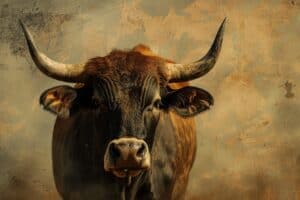
The Roman mystery religion of Mithraism centres on Mithras slaying a sacred bull. On The bull I describe this tauroctony as a symbol of the triumph of good over evil and of the renewal of life. Randall Carlson, on The Ancient Origins of Halloween, points out that Mithras stabs the bull in the shoulder, where the Pleiades are, and that seven stars accompany him. On Hermeticism and Ancient Mysteries Robert Sepehr reads the slaying of the bull by the sun deity as the passage from the Age of Taurus to the Age of Aries.
The Lord of Light
On Mitra, The Lord of Light the speaker presents Mithraism as a science of light, in which the Sun is the cosmic father and the source of life and consciousness, and the path to self-realization is described as swallowing the Sun. Rodick Martin, on Is Religion Part of the Reptilian Agenda?, names Mithras among the Sun figures, with Nimrod in Babylon and Horus in Egypt, whose stories he sees as part of a blueprint that later reappeared in Christianity.
Mithra in Oahspe
Oahspe uses the name in several places. The Book of Saphah dates a first Mithra about 4,000 years before kosmon and a second about 2,000 years before kosmon. In God’s Book of Eskra Karapa, called the false Mithra, is one of the chiefs of Kabalactes’ staff, and a Mithra of Parsi’e is among the men who preached and were put to death to seal their words in blood.
Le Plongeon on the mysteries of Mithra
In 1886 Augustus Le Plongeon published Sacred Mysteries among the Mayas and the Quiches. He does not describe the Mithra initiations at length, but he reports Porphyry’s account of the cavern that Zoroaster dedicated to the Sun.
Le Plongeon on Zoroaster’s cavern
In Le Plongeon’s telling, Zoroaster divided a cavern into geometrical figures of the climates and elements, and later celebrants of the mysteries took to consecrating caves.
I will not here describe at length the initiations to the mysteries in honor of the Sun God, Mithra, instituted by Zoroaster, but only state that Porphyrius, on the testimony of Eubulus, says that this philosopher and reformer having selected a cavern in a pleasant locality in some mountains near Persia, dedicated it to Mithra, the Sun, creator and father of all beings; that he divided it into geometrical figures intended to represent the climates and elements; in a word that he imitated in a small way the order and disposition of the universe by Mithra. After him, it became customary to consecrate caverns for the celebration of mysteries; as we see yet in Japan.
Augustus Le Plongeon, Sacred Mysteries among the Mayas and the Quiches (1886), p. 27
Related pages
- Zoroastrianism: Ahura Mazda
- Fragapatti (Etherean God)
- The bull
- The Ancient Origins of Halloween
- Hermeticism and Ancient Mysteries
- Mitra, The Lord of Light
- Is Religion Part of the Reptilian Agenda?
- The Book of Saphah
- God’s Book of Eskra
For every page I tagged with Mithras, see the Mithras tag archive.

