
Table of Contents
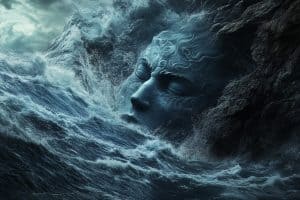
Ægir is a significant figure in Norse mythology, revered as the personification of the sea. His mythological role is tied to the ocean’s generous and perilous nature. Below is an overview of Ægir and his daughters, the Nine Wave Maidens:
Ægir: The Sea Jötunn
Role: Ægir is a giant (jötunn) who embodies the sea and its boundless power.
Personality: Ægir is portrayed as a hospitable and enigmatic figure. He is known for hosting grand feasts for the gods in his underwater hall, illuminated by shimmering gold.
Associations: Ægir is connected to wealth, as the sea was a source of prosperity through fishing and trade. He is also linked to shipwrecks and death, reflecting the dangers of the ocean.
Family: Ægir is married to Rán, another sea deity who represents the ocean’s darker, more treacherous aspects. Together, they have nine daughters.
The Nine Wave Maidens
In some traditions, the nine daughters of Ægir and Rán are collectively known as the Wave Maidens or Nine Mothers of Heimdall. Each daughter personifies a particular aspect of the waves.
The names of the Nine Wave Maidens vary slightly across sources but typically include:
- Himinglæva – “That through which one can see the heavens” (associated with transparency or calm waves).
- Dúfa – “The Pitching One” (linked to rolling waves).
- Blóðughadda – “Bloody-Haired” (waves tinged red, possibly during storms or sunsets).
- Hefring – “Riser” (waves cresting and rising).
- Unnr/Uðr – “The Frothing One” (frothy or turbulent waves).
- Hrönn – “Welling Wave” (waves swelling or surging).
- Bylgja – “Billow” (a large rolling wave).
- Dröfn – “Foam-Flecked” (foaming or breaking waves).
- Kólga – “Cool Wave” (associated with icy, cold waters).
Mythological Role:
The Nine Wave Maidens are sometimes seen as personifications of ocean waves, embodying different moods and states of the sea.
In some traditions, they are described as the mothers of Heimdall, the watchman of the gods. This aspect of the mythology is ambiguous, possibly symbolic of Heimdall’s connection to creation and the natural world.
Symbolism
Ægir and Rán together represent the ocean’s duality: Ægir as the bountiful provider and Rán as the capricious taker of life.
The Nine Wave Maidens highlight the beauty, danger, and variety of the sea, reflecting the deep connection Norse people had with maritime life.
Legacy
Ægir and the Wave Maidens appear in various Norse poetic and prose sources, including the Poetic Edda and Prose Edda, written or compiled in the 13th century by Snorri Sturluson.
Stories
The Story of Ægir, Rán, and the Nine Wave Maidens
While no single comprehensive narrative focuses exclusively on Ægir, Rán, and their daughters, they appear in various stories and poems in Norse mythology, often representing the relationship between gods, humans, and the sea.


Comments are closed.