
Table of Contents
- Introduction to Choice and Energy
- Mystical and Physical Laws in Human Dynamics
- Historical and Archetypal Repetition
- Group Dynamics and Health
- Personal Transformation and Resistance
- The Power of Self-Awareness
- Addictions and Consciousness
- Spirituality and Collective Responsibility
- The Role of Universal Laws
- Human Connection to the Ecosystem
Introduction to Choice and Energy
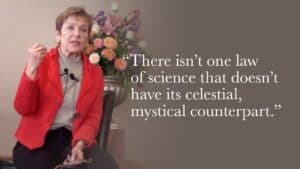
Caroline Myss begins by discussing the concept of choice as the central power of human experience. Caroline Myss explains that every reaction and response is a choice, even those that seem automatic or unconscious. Energy, always in motion, is affected by these choices. This dynamic reflects a fundamental universal law: every physical law has a mystical counterpart.
Mystical and Physical Laws in Human Dynamics
She emphasizes the interplay between mystical and physical laws, stating that all choices influence the creation or dissolution of matter. Choices operate on different levels and at varying speeds, affecting the material world. She introduces the idea of the “herd mind,” where individuals surrender personal reasoning to collective thought, often leading to irrational group behavior.
Historical and Archetypal Repetition
Myss draws parallels between historical patterns and archetypal cycles, highlighting how wars and societal conflicts repeat unless individuals consciously break these patterns. She connects this to mystical laws, suggesting that what occurs within an individual is mirrored in society at large.
Group Dynamics and Health
Group mentality impacts collective and individual health. Myss states that epidemics reflect a toxic collective mindset. She explains that healing is constrained by the collective beliefs of the group, as the group’s influence can hinder individual progress and acceptance of alternative treatments.
Personal Transformation and Resistance
Healing requires individuals to break free from tribal influences and pursue personal growth. Myss discusses how personal transformation often meets resistance from one’s community, as any deviation challenges collective norms. She explores the tension between individuality and collective expectations, illustrating how this dynamic impacts healing and personal development.
The Power of Self-Awareness
Myss urges individuals to explore and understand themselves beyond their wounds, emphasizing the importance of knowing one’s light, potential, and shadow. She argues that many people remain trapped in their wounds, finding social currency in victimhood rather than progressing into personal power.
Addictions and Consciousness
Addiction, in Myss’s framework, is a symptom of blocked growth and suppressed conscience. She outlines how individuals become addicted to behaviors, substances, or emotional patterns to avoid confronting their own truths. She asserts that healing requires self-awareness and the ability to release toxic patterns.
Spirituality and Collective Responsibility
Myss critiques the decline of true spiritual practice, noting how it has been reduced to superficial rituals or mental exercises disconnected from deeper mystical truths. She highlights the importance of moving beyond religious dogma to embrace universal spiritual principles that align with natural laws.
The Role of Universal Laws
Myss explains that universal laws operate independently of religion and are rooted in the interconnectedness of all things. Prayer, she notes, makes the universe intimate, while miracles occur when universal laws bend. She advocates for extracting the mystical truths from religious traditions and applying them to achieve balance within and in nature.
Human Connection to the Ecosystem
She concludes by emphasizing that humanity is an integral part of the ecological system. Achieving personal balance contributes to the balance of nature, as individuals mirror the universal patterns of the environment. Myss asserts that through self-awareness and alignment with mystical laws, humanity can restore harmony both within and externally.
Comments are closed.