
Table of Contents
https://www.youtube.com/watch?v=CX3UGkJW510&ab_channel=AdunolatheOracle
Context and Purpose
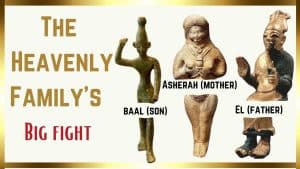
The presentation explores ancient Canaanite theology, particularly the divine family structure comprising El, Asherah, and Baal. It addresses historical reinterpretations and demonization of these deities in later religious traditions, especially within Judeo-Christian contexts.
Source and Verification
The material is based on historical, archaeological, and theological sources, accompanied by divinatory practices to verify spiritual interpretations. The speaker emphasizes that the information aims to inform, not convert.
Theological Structure
The Canaanite pantheon presents a divine triad:
- El – the highest deity, symbolizing the head of the divine body.
- Asherah – the consort of El, associated with fertility and the sea.
- Baal – their son, a significant figure later reinterpreted as a demon in Abrahamic traditions.
This triad mirrors later theological developments, including the Christian Trinity.
Monotheism vs. Polytheism
The argument is made that traditional labels of monotheism and polytheism are inaccurate. Deities such as orishas, loa, and others are considered aspects of a unified divine body. In this framework:
- Each deity functions as a part of the whole, similar to organs in a body.
- The concept of “Barbello” in Gnostic thought is introduced as the undivided spiritual source, beyond gender or anthropomorphic form.
Divine Hierarchy and Realms
A spiritual hierarchy is outlined:
- Third and fifth dimensions: Plant, animal, and human life.
- Elevated ancestors and ascended masters.
- Angelic realms and divine figures (orishas).
- The god-body and ultimately Barbello, the source energy.
Gendered deities exist within lower realms. The highest divine essence is genderless and undivided.
Historical Shift and Division
In Canaanite history and mythology:
- El was the supreme deity.
- Asherah and Baal were vital members of the divine structure.
- Baal grew in influence and diverged from El’s authority, disrupting divine order.
This disruption caused spiritual and earthly chaos, reflecting broader societal consequences of disorder.
Esoteric and Political Implications
The theological division led to:
- The demonization and erasure of Asherah and Baal from mainstream religious texts.
- A patriarchal reformation that shifted divine authority away from female figures.
- A spiritual and symbolic reflection of disordered familial and societal structures.
Modern Spiritual Lessons
The narrative draws parallels between divine dysfunction and modern human issues:
- Respect for divine order is linked to social and familial well-being.
- Violations of universal laws, even by divine beings, result in chaos.
- Honoring both divine masculine and feminine principles is essential for balance.
Conclusion
There is a call for:
- Reintegrating Asherah into global spiritual consciousness.
- Adherence to universal and divine law.
- Restoring balance in family and community systems to foster healthier societal structures.
The discussion suggests that proper alignment with divine principles can reduce social dysfunction, hereditary issues, and psychological struggles across generations.
Comments are closed.