
Table of Contents
Translated by Lionel Giles (1904)
Introduction
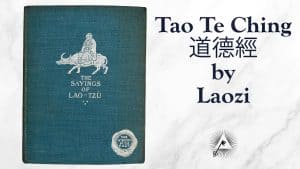
The text, translated and introduced by Lionel Giles, was published in 1905. This recording is a production by Master Key Society, read by Sam Suk, and is intended for research, study, and discussion. Footnotes are omitted for optimal listening.
Tao in its Transcendental Aspect and Physical Manifestation
- The Tao that can be expressed is not the eternal Tao.
- Without a name, it is the origin of Heaven and Earth; with a name, it is the mother of all things.
- The eternal Tao is colorless, soundless, and incorporeal.
The Principle of Spontaneity
- Tao watches over the beginning of all things.
- Its law is its spontaneity.
Governance in Accordance with Tao
- Rulers who follow Tao maintain simplicity and non-interference.
- Excessive laws and regulations lead to disorder and theft.
- Governing a nation is likened to cooking a small fish—minimal interference is essential.
The Doctrine of Inaction
- Tao teaches through inaction and achieves through non-interference.
- Simplicity and absence of desire lead to tranquility.
Humility and Lowliness
- The sage takes the lower place and gains superiority.
- Princes and kings use titles like “lonely” or “friendless” to emphasize humility.
Tao in Action
- Action aligned with Tao is without self-assertion or possession.
- Development is achieved without domination.
Paradoxes
- Existence and non-existence are interdependent.
- The strong and rigid are associated with death, while the soft and weak signify life.
- The soft overcomes the hard, and the weak overcomes the strong.
Miscellaneous Sayings
- Knowing oneself is enlightenment.
- The sage values simplicity and moderation.
Final Notes
The Tao Te Ching embodies a philosophy that has influenced Chinese thought and culture. Its teachings on governance, humility, and non-interference offer timeless principles for leadership and life.
This recording is part of the Master Key Society’s efforts to promote classical texts for study and reflection.
Comments are closed.