
Table of Contents
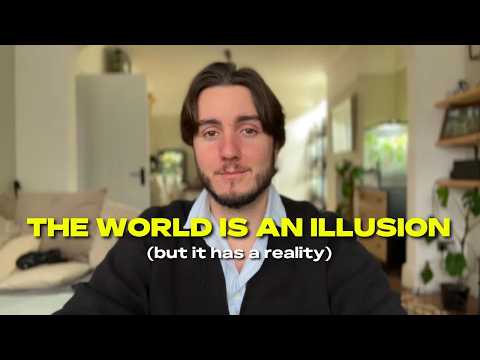
Saja Fendel argues that things which begin and end borrow their being from something steadier. A fence, in his picture, is wood. A wave is water. A film is the screen. He then says a universe counts as a universe only because objects sit in it. With no object, he says, there is neither time nor space. Clocks and moving shadows are just other objects used as rulers. A gap between thoughts, he treats as a timeless field, the same field some scientists name pure potentiality. A clay vase is his next picture. The vase is a temporary name. The clay is what is there, with no inside and no outside. Consciousness, he says, is that kind of reality. From there he turns to the body. Color, he says, is made by the mind. An apple is not red on its own. Eyes closed, the body is a sensation. Eyes open, it is a color. Taken only from what is felt, he says the body has no size and no outline, and the fingers have no hard borders.
Key points
- Saja Fendel says things that begin and end borrow their being from something steadier.
- With no object, he says, there is neither time nor space.
- A gap between thoughts is his picture of a timeless field.
- A clay vase is a temporary name. The clay is what is there.
- Taken from what is felt, he says the body has no size and no outline.
Short quotes
Time and space are only relative to the objects that are within it.
Saja Fendél, Saja Fendél on time and the body
He says time and space depend on the objects sitting in them. Watch at 1:09
Likewise, consciousness, the pure field of pure potentiality is reality.
Saja Fendél, Saja Fendél on time and the body
He says consciousness, as a field of potential, is what is real. Watch at 3:24
If you just go off your direct experience, the body has no size or shape.
Saja Fendél, Saja Fendél on time and the body
Taken only from what is felt, he says the body has no size and no outline. Watch at 5:34
Video by Saja Fendél. Watch on YouTube.