
Table of Contents
- Varginha Incident Overview
- Witness Encounter with the Creature
- Military Response and Cover-Up
- Persistent Stench
- Military Officer’s Testimony
- Men in Dark Suits
- Doctor’s Account
- Military Transport and U.S. Involvement
- Deceased Officer’s Burden
- Forensic Pathologists’ Statements
- Documentary Challenges
- Archaeological and Cultural Validation
Varginha Incident Overview
The discussion recounts the 1996 Varginha Incident in Brazil, where three women encountered an extraterrestrial being, followed by a military cover-up involving Brazilian and U.S. forces, as detailed in a documentary.
Witness Encounter with the Creature
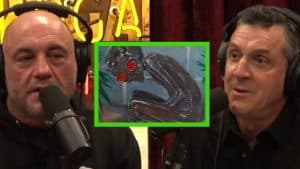
In January 1996, three women—Liliana, Valkiria (aged 14 and 16), and Katia (21)—saw a weak, feeble creature crouched against a cinder block wall in broad daylight, within 8–10 feet (3.05 meters). Katia locked eyes with it, sensing a telepathic plea for help, describing it as scared and suffering.
Military Response and Cover-Up
Military and police barricaded Varginha after the sighting, dismissing the creature as a deformed man or a woman giving birth, explanations witnesses found laughable. Armed forces controlled a hospital, conducting X-rays on a body in a black bag, which emitted an overwhelming stench.
Persistent Stench
Witnesses, including the women and hospital staff, reported a paralyzing, putrid stench from the creature, likened to an intensified skunk odor. This lingered for days to weeks, requiring hospital wing sanitization and defying attempts to flush it from nasal cavities.
Military Officer’s Testimony
A military officer, Eric Lopes, and Marco Chereze, who died before the interview, captured the creature. Chereze grabbed it with bare hands, placed it in a vehicle, and transported it to a clinic, then Regional Hospital, and finally Humanitas Hospital, confirming its extraterrestrial nature.
Men in Dark Suits
The women’s mother reported men in dark suits intimidating the family, offering a briefcase of $100 bills to retract their story and relocate. This marked the speaker’s first report on such figures, despite initial reluctance due to their association with “Men in Black” stereotypes.
Doctor’s Account
A doctor at Regional Hospital described a chaotic scene with armed military and police arriving with a body bag. He took X-rays of the creature’s head, abdomen, arms, legs, and thorax, but was denied access to the images, which were confiscated with orders to deny the event.
Military Transport and U.S. Involvement
The creature was held overnight in a truck at a military base, then moved to EsPCEx in Campinas for examination. A U.S. Air Force plane, landing without Brazilian authorization, retrieved something from Campinas, flown via helicopters to Varginha and back, before departing to the U.S., where the trail ends.
Deceased Officer’s Burden
Marco Chereze’s sister, Marta, confirmed his involvement. Initially reluctant, he admitted the incident’s truth before his death, expressing relief after 26 years of secrecy under military surveillance, highlighting the psychological toll of withholding such knowledge.
Forensic Pathologists’ Statements
Two forensic pathologists recently provided autopsy reports on Chereze, marking the first time such documentation has surfaced, corroborating the incident’s impact and the military’s efforts to suppress it.
Documentary Challenges
The speaker, a 30-year veteran filmmaker, struggled to reintegrate into normal life after witnessing these accounts, describing the incident as the “biggest story ever.” The emotional weight of interviewing credible witnesses, including a military officer and doctor, profoundly affected him.
Archaeological and Cultural Validation
The speaker emphasizes the witnesses’ consistent testimonies, rejecting conventional explanations. The military’s extreme measures, including barricades and U.S. involvement, suggest a significant event beyond mundane causes, validated by personal interactions and physical evidence like footprints and the stench.
Comments are closed.