
Table of Contents
An idol is a god you can carry, melt down or smash. The Bible and the Quran are full of them, and in my research they keep showing up at the same turning points: just after a covenant, just before a flood, or when a king decides to clean house. These are the pages where idols come up.
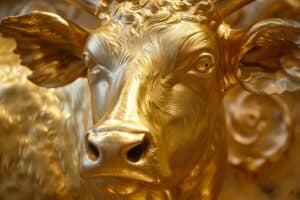
The golden calf
On Golden objects the golden calf of Exodus 32 is made from the people’s earrings while Moses is on the mountain. The full story of the journey is on Exodus.
The idols of the people of Nuh
The Quran names five idols from before the flood. On Idols Wadd, Suwa’, Yaghuth, Ya’uq, and Nasr are worshipped by the people of Nuh (Noah) the verse is quoted:
And they said, 'Never leave your gods and never leave Wadd or Suwa’ or Yaghuth and Ya’uq and Nasr.'
Quran, Surah Nuh 71:23
Wadd is the first of the five. His name is linked with love, and his statue was later worshipped at Dumat al-Jandal in Arabia.
The bronze serpent
Not every idol started as one. On King Hezekiah reigned from approximately 715 to 686 BCE, remembered for his religious reforms Hezekiah breaks the bronze serpent Nehushtan, an object from the time of Moses that the people had begun to burn incense to.
Baal and the prophets
On Baal I collect the god whose altars the prophets kept tearing down. On Prophets: Course correctors appear at moments when a dominant power drifted into idolatry the prophets appear again and again as the voices calling the people back from idols. And on Worshiping one god among a pantheon of gods – are Judaism and Christianity henotheistic? I ask what the constant fight against other gods says about how many gods the early worshippers believed in.
Donnelly: idols as congealed history
Ignatius Donnelly, the Minnesota politician who wrote Atlantis: The Antediluvian World, followed it in 1883 with Ragnarok: The Age of Fire and Gravel. He argued that the flying dragons and winged gods of ancient art were painted in the colors of the comet, and in his account the old idols preserve real events.
The idols of the pagan world are, in fact, congealed history, and will some day be intelligently studied as such.
Ignatius Donnelly, Ragnarok: The Age of Fire and Gravel (1883), part IV, chapter VI, p. 425

Related pages
- Golden objects
- Idols Wadd, Suwa’, Yaghuth, Ya’uq, and Nasr are worshipped by the people of Nuh (Noah)
- King Hezekiah reigned from approximately 715 to 686 BCE, remembered for his religious reforms
- Baal
- Prophets: Course correctors appear at moments when a dominant power drifted into idolatry
- Worshiping one god among a pantheon of gods – are Judaism and Christianity henotheistic?
For every page I tagged with idols, see the idols tag archive.

