
Table of Contents
Overview
The legend of the Mouros Encantados appears in the folklore of Portugal View Map and Galicia View Map. The narrative describes a group of individuals with a Moorish background who arrived in the region, performed construction work, and were encountered by a religious figure who imposed a curse.
Timeline and Setting
Date and Period
- Accounts do not provide specific dates.
- Some texts relate the events to the period of Moorish presence, between the 8th and 12th centuries.
Locations
- The legend appears in narratives from Portugal and Galicia.
- Textual records originate from locations such as Lisbon View Map, Coimbra View Map, and Santiago de Compostela View Map.
Narrative Details
Arrival of the Group
- A group of individuals with a Moorish background arrived in the region.
- The narrative links their arrival with population movements and events in the Mediterranean area.
- Some texts refer to the group as giants. This reference indicates a size that exceeds the usual human measure. Other texts present the group as human beings who perform construction work.
Construction Work
The group is recorded as having constructed several types of installations, which include:
- Stone structures that may represent shelters or remains of settlements
- Roads connecting communities or regions
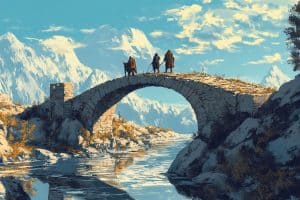
- Bridges spanning watercourses
- Walls indicating boundaries or serving defensive functions
- Channels or aqueducts noted in certain accounts
Encounter with the Religious Figure
- A religious figure observed the construction activities of the group.
- The figure performed a ritual act that resulted in a curse imposed on the group.
Curse and Outcome
- The curse is recorded as binding the group to the region.
- The narrative explains the continued presence of the constructions in the landscape.
- Some texts refer to the group as giants, while others record them as human individuals with construction expertise.
Textual Sources
- The legend is preserved in texts compiled by institutions in Portugal and Galicia.
- Records include oral traditions and written accounts maintained in libraries and archives across cities such as Lisbon, Coimbra, and Santiago de Compostela View Map.


Comments are closed.